Woman spinning by Nicolaes Maes
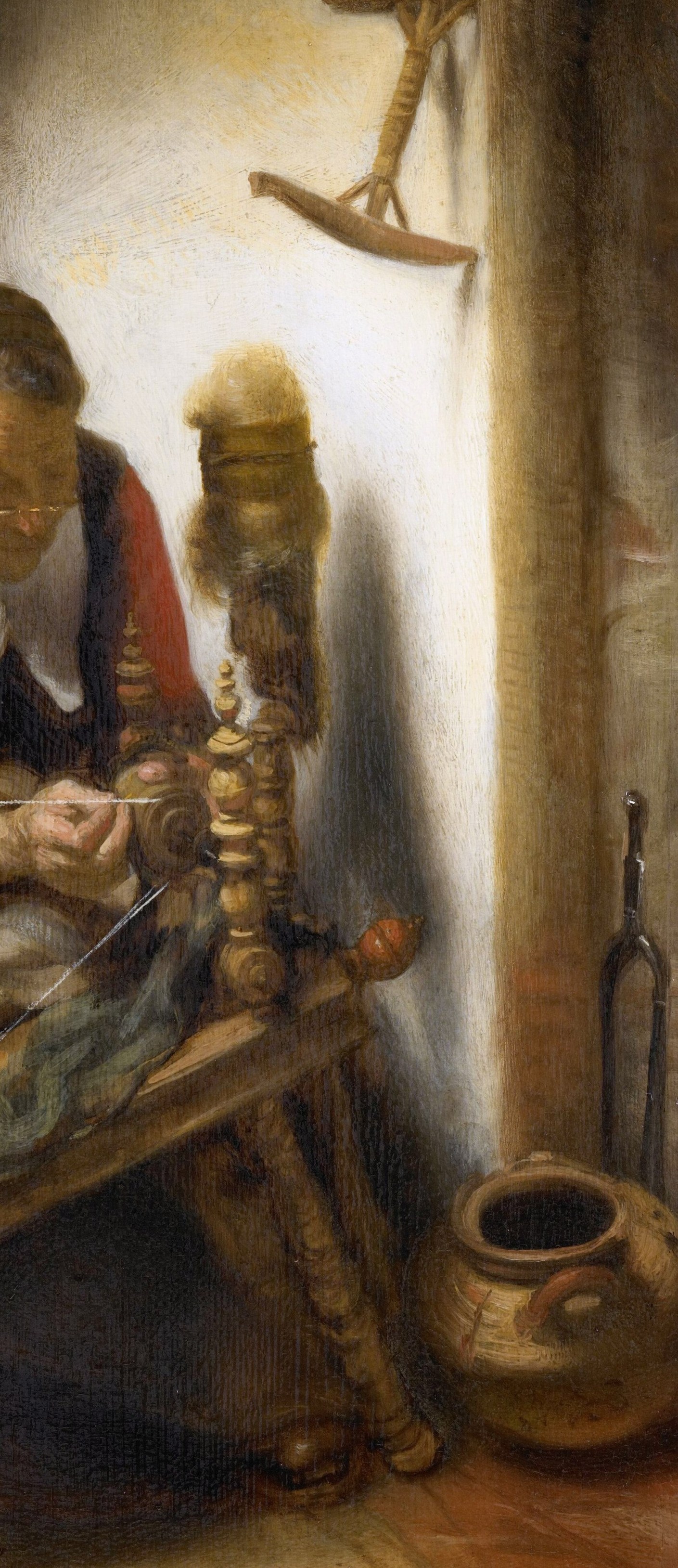
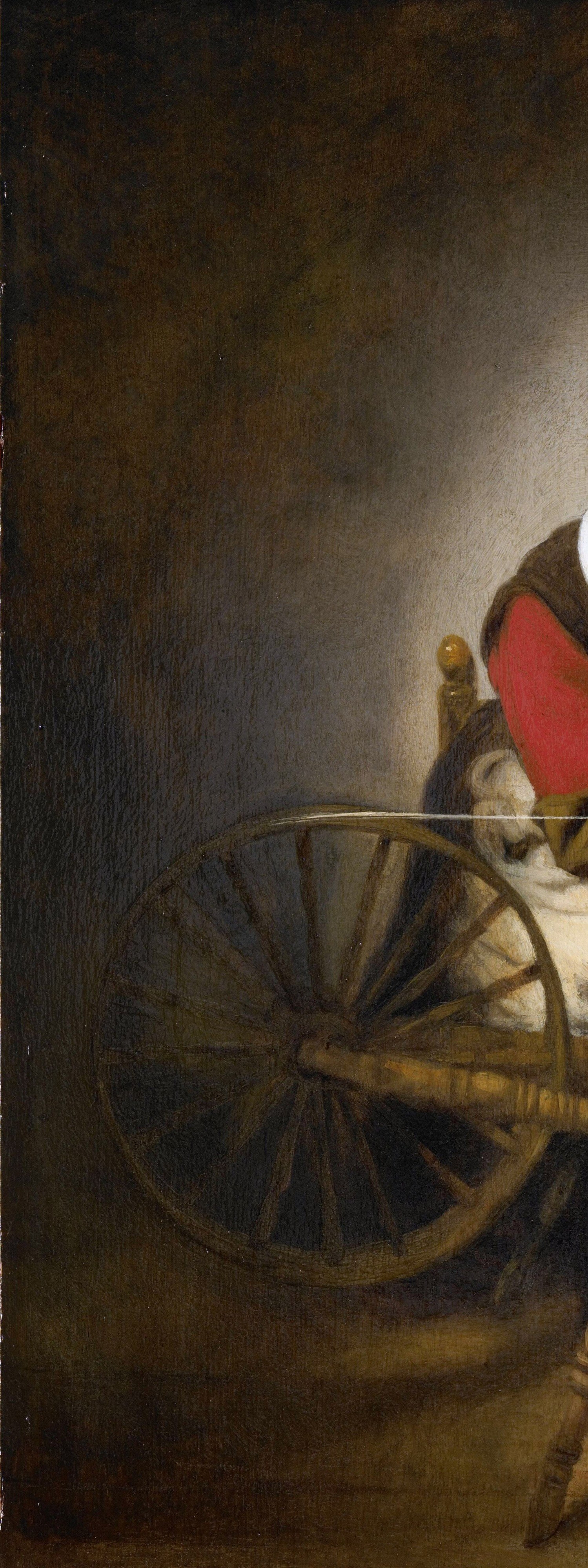
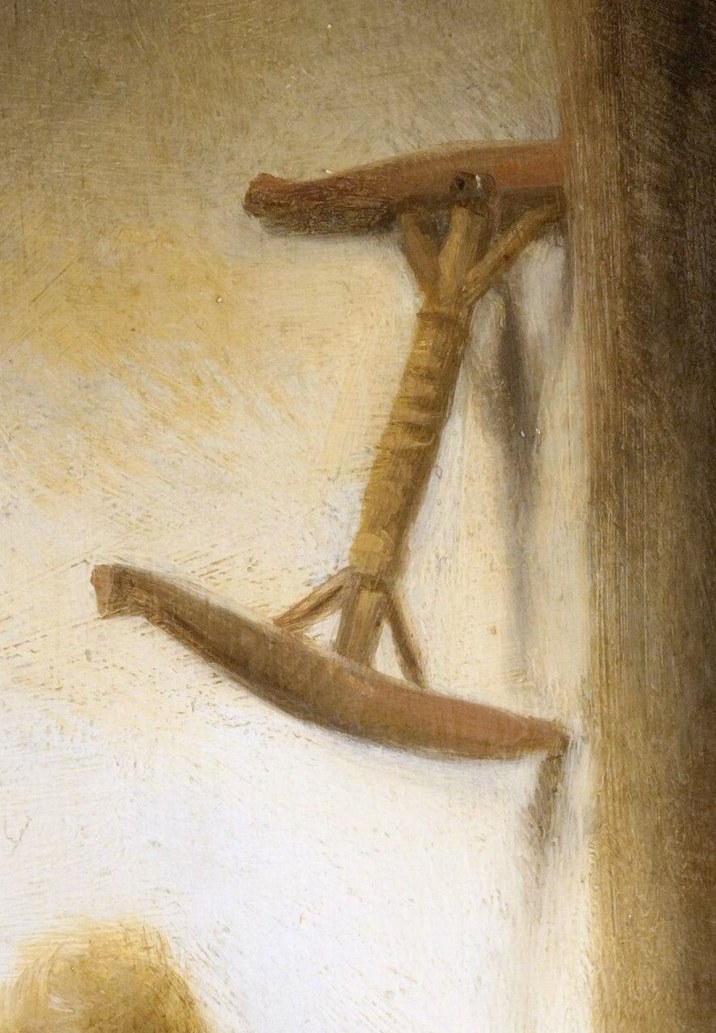
At first glance, Nicolaes Maes's Woman Spinning (1655, Rijksmuseum) is a straightforward Dutch genre scene: a woman at her wheel in a quiet room. But hidden in the shadows of the background is a detail the museum itself cannot explain. A wooden tool hangs on the wall, and after nearly four centuries, no one knows what it was for.
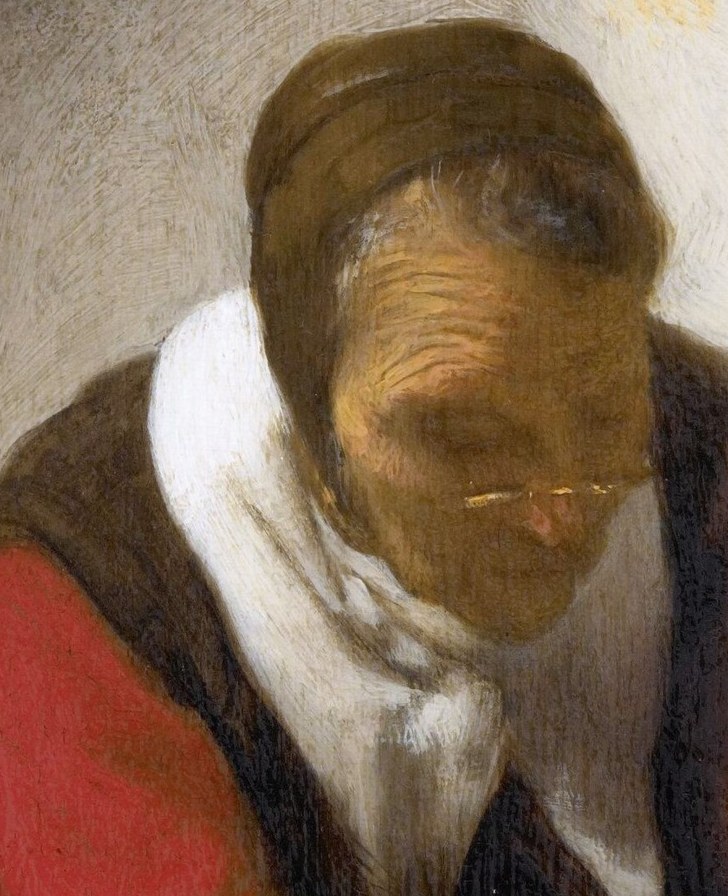
The painting rewards a slow look. Maes trained in Rembrandt's Amsterdam workshop, and you can see it in the light falling through the window. The same chiaroscuro that made his teacher famous. The woman's face is deeply lined, her hands precise on the thread. She is not idealized. She is real.
Maes painted this early in his career, before leaving Dordrecht for Amsterdam where he became the city's leading portraitist. For twenty years he painted the ordinary: women spinning, mothers with children, neighbors at the door. Then he reinvented himself and never looked back.
The tool on the wall remains unidentified. A distaff, maybe, or something else entirely. A small reminder that even the most familiar paintings still hold questions no one has answered.
Details
Transcript
1655. A student of Rembrandt paints an ordinary room. Her face is worn. Years at the wheel. The light through the window is Rembrandt's technique. Now look behind her. Into the dark. A wooden tool. Three centuries. No one knows its purpose.