Mariana of Austria (1634–1696), Queen of Spain by http://www.wikidata.org/.well-known/genid/ca4c6a604f33f1e1cace06d62ad925d0
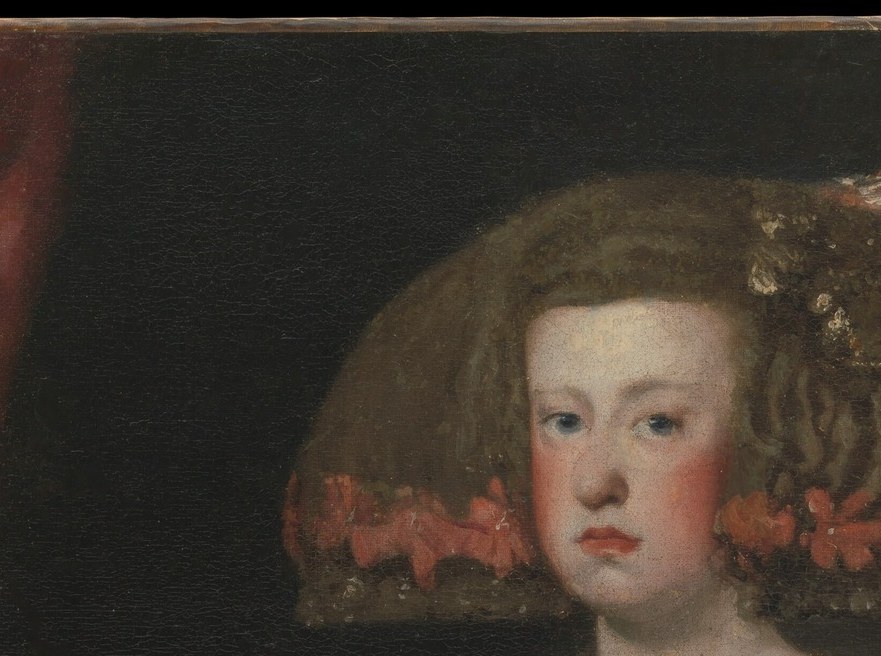
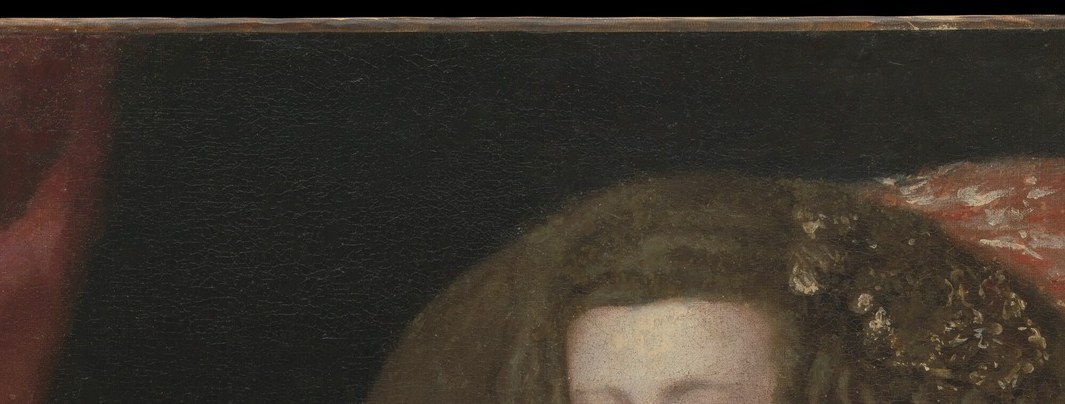
This is Diego Velazquez's portrait of Mariana of Austria, Queen of Spain, painted around 1655. It hangs in the Museo del Prado, and on first glance it reads as pure dynastic grandeur: silver brocade, a stiff lace collar, pearls at the throat. But spend a moment with her face and hands, and the painting tells a quieter story.
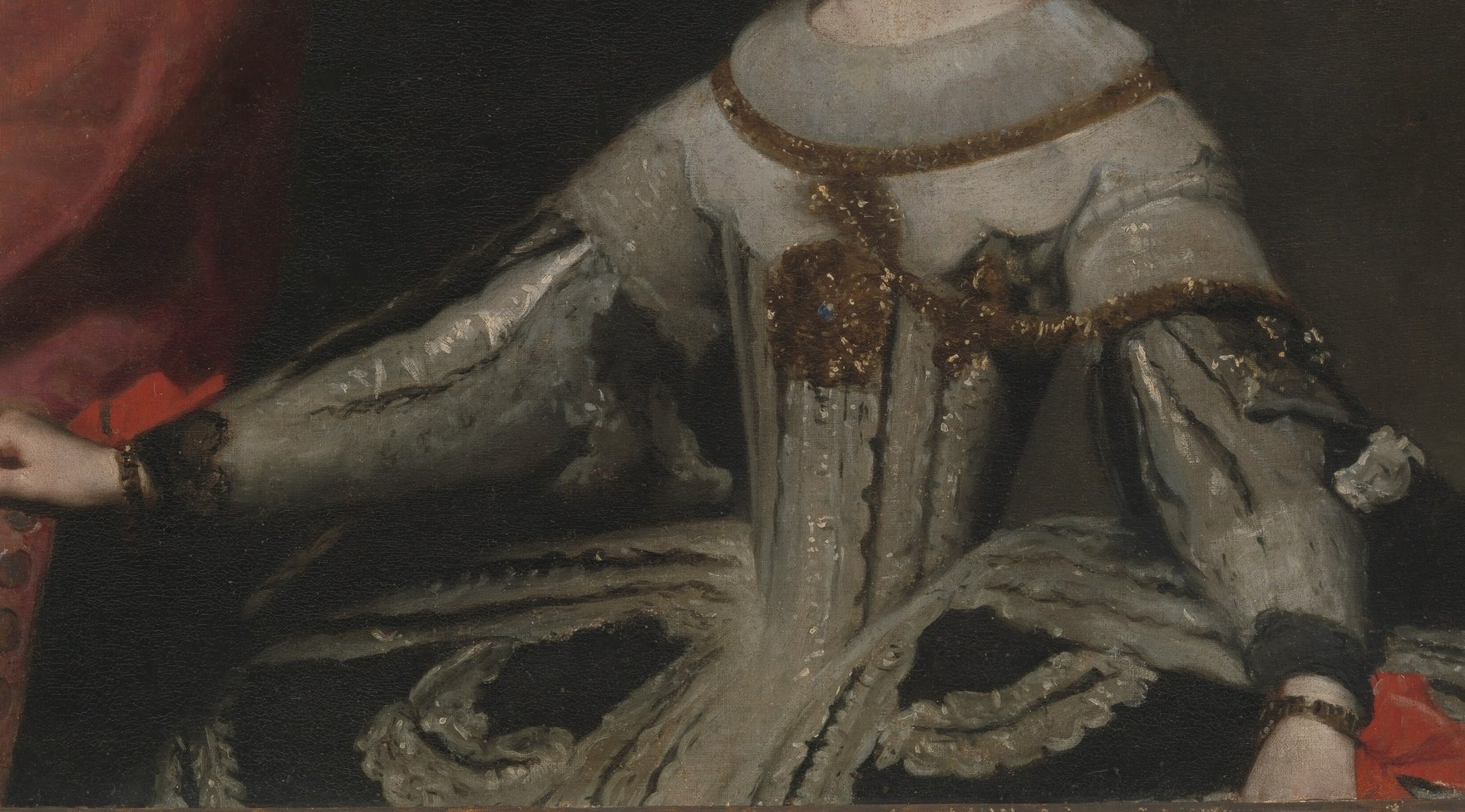
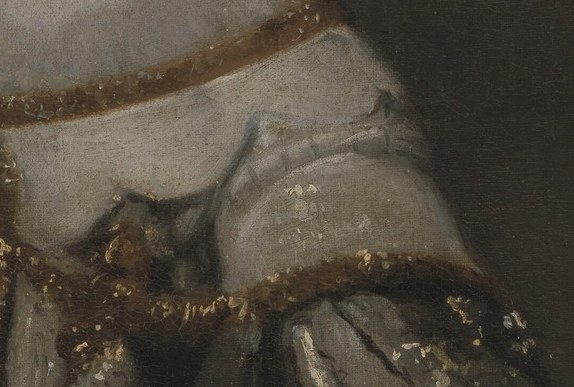
Mariana was barely fourteen when she sat for this. She had just arrived in Madrid from Vienna, sent to marry her uncle, King Philip IV, a man nearly three decades older. She did not speak the language. She had never seen the court that would now be her cage. Velazquez shows the costume in sculptural detail, the thick impasto on the silver skirt makes the fabric feel almost architectural, while leaving the girl inside it very still, very small.
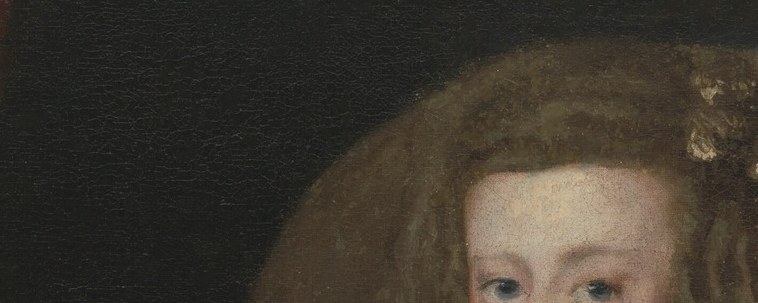
The detail that matters most: her left hand on the chair arm. The fingers grip the gilded edge with a tension you would miss on a phone screen. Her right hand rests on the skirt almost hesitantly, as if she is not quite sure she is allowed to touch anything. Above the hands, above the armor of lace and gold embroidery, her eyes look outward with a vacancy that is not boredom. It is the look of someone learning, very young, what it costs to be a queen.
Mariana would rule Spain as regent after Philip's death, outliving five of her six children. The crown jewels and the throne arm were real. The weight in her left hand was real too.
Details
Transcript
She was barely fourteen when this was painted. Mariana of Austria had just arrived in a country she had never seen. The dress is silver brocade, stiff enough to stand on its own. A red flower hat says celebration. Her face says something else. Her right hand rests on the skirt almost tentatively. But her left hand grips the throne arm with real tension. She was sent to marry her uncle. She spoke no Spanish. Velazquez painted the heavy-lidded eyes looking out, asking nothing.