A Study of Trap Rock (Buttermilk Falls) by John Henry Hill
A Study of Trap Rock (Buttermilk Falls), painted by John Henry Hill in 1863, at The Metropolitan Museum of Art, offers a quiet refuge from the turbulent world in which it was created.
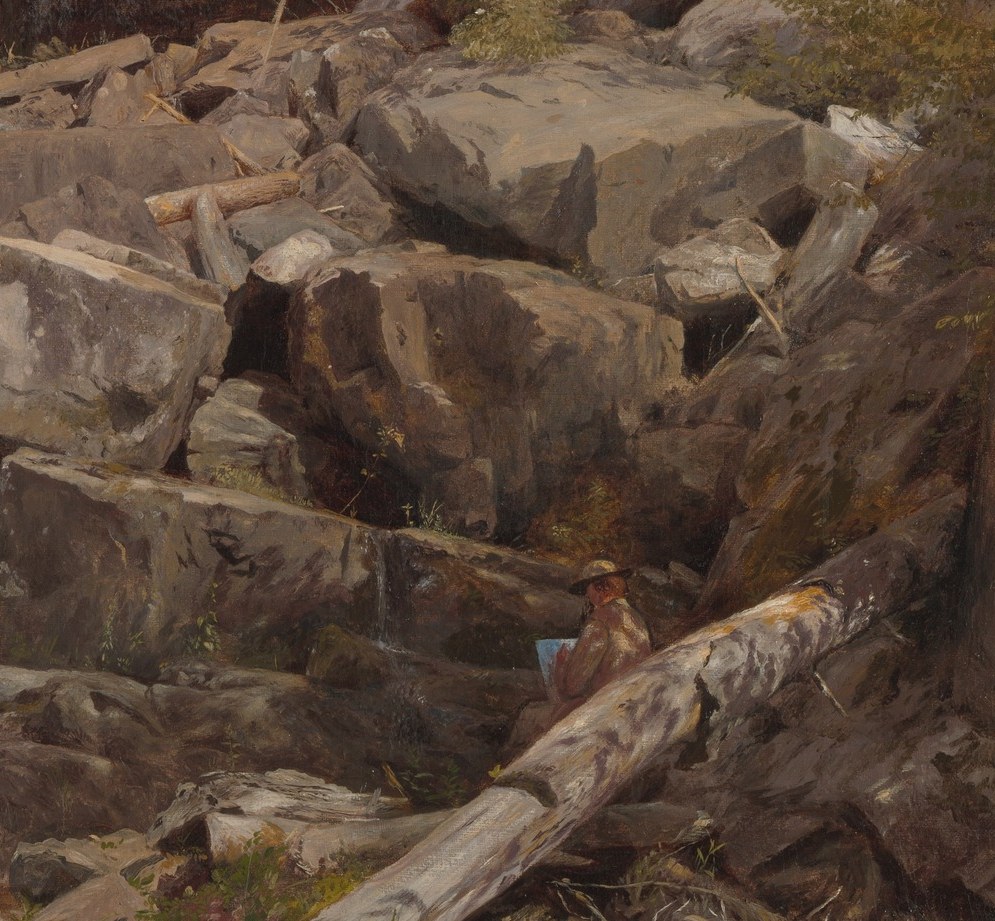
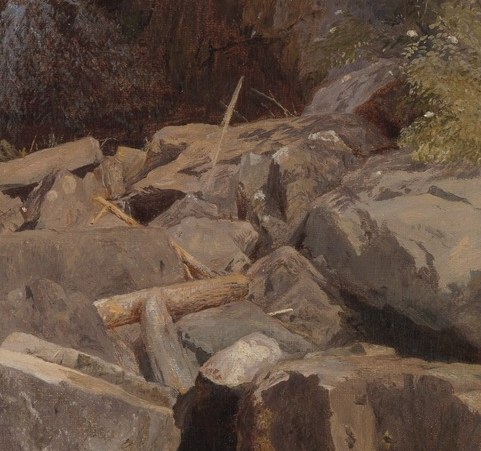
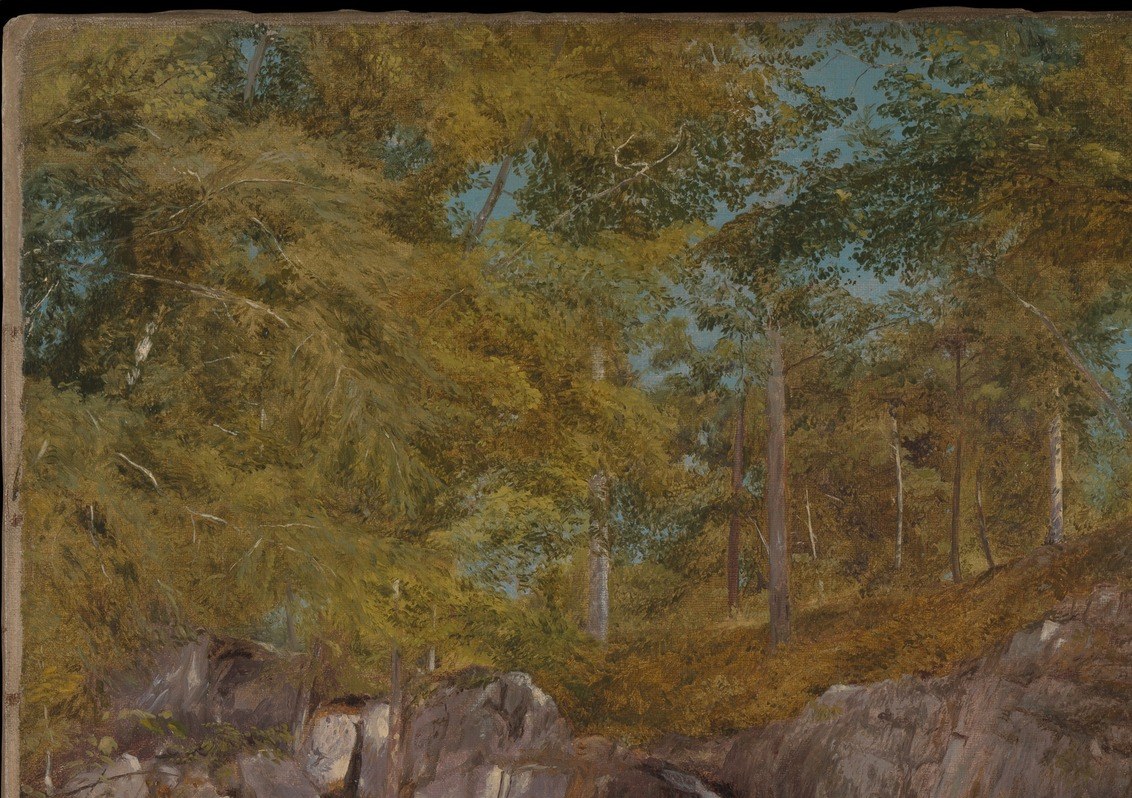
Hill was known for his meticulous dedication to natural observation. Here, he captures the rugged beauty of trap rock boulders and a cascading waterfall with incredible detail, almost as if he were cataloging every element of the scene. Look closely, and you'll find the artist himself, a small figure sketching amidst the grandeur, a subtle signature of his lifelong passion.
Created during the American Civil War, this painting is a testament to the artist's focus on the enduring beauty of the natural world, even as the nation was torn by conflict. Hill’s work marks a shift towards detailed realism, documenting specific topography rather than idealized landscapes.
What details in nature do you find most captivating?
Details
Transcript
This painter was obsessed with the details of nature. He spent his life meticulously documenting every rock and stream. Look closely, and you can see him at work in the landscape. He painted himself into his own world of rock and water. This was painted in 1863, during the Civil War. Yet he chose to capture a quiet moment of beauty and solitude.