The Levite at Gibeah by Eeckhout, Gerbrand van den
Gerbrand van den Eeckhout, a favored student of Rembrandt, painted *The Levite at Gibeah* around 1644. This oil on canvas masterpiece, now in an unnamed museum, captures a moment of high moral tension from a biblical story.
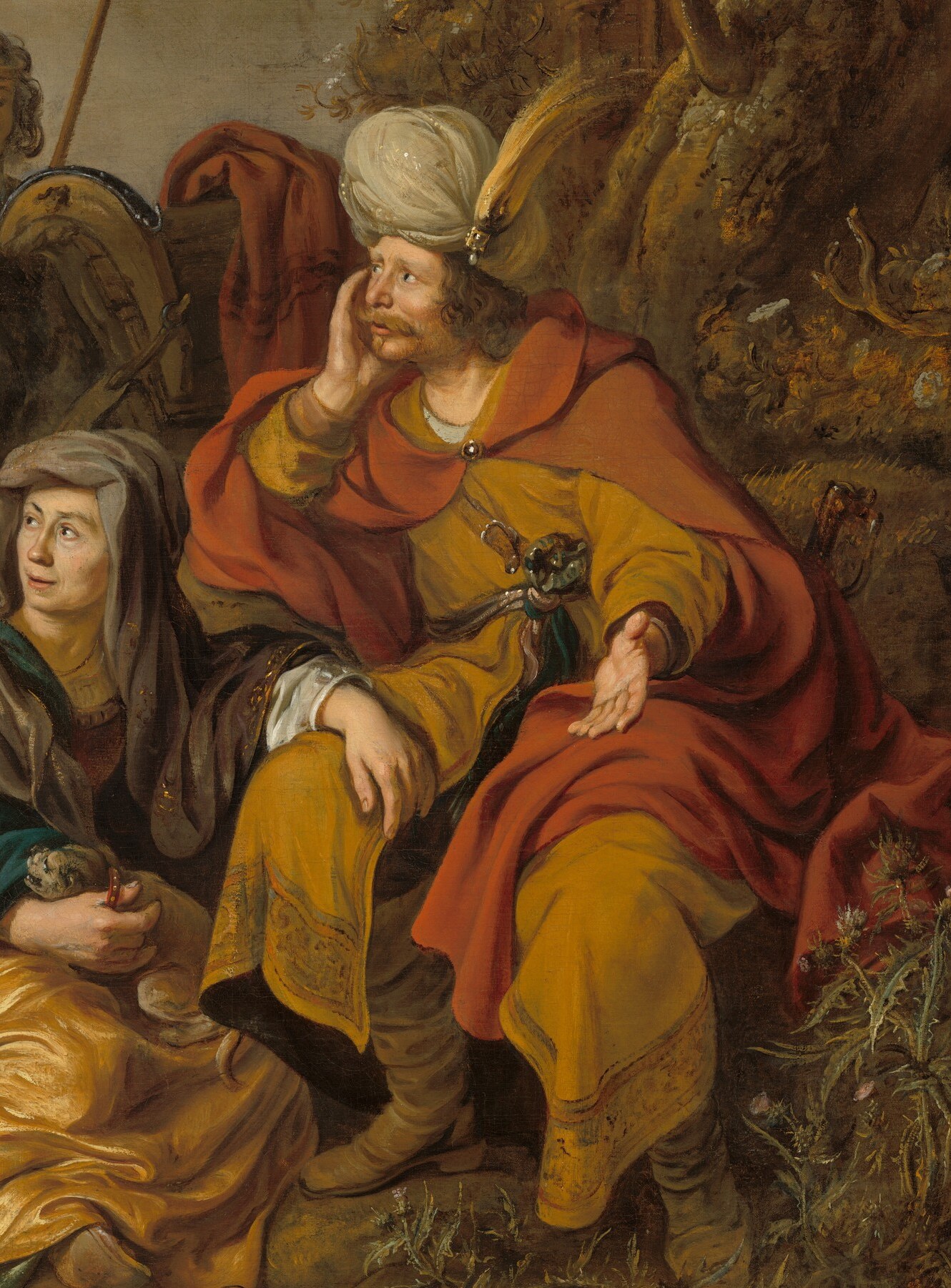
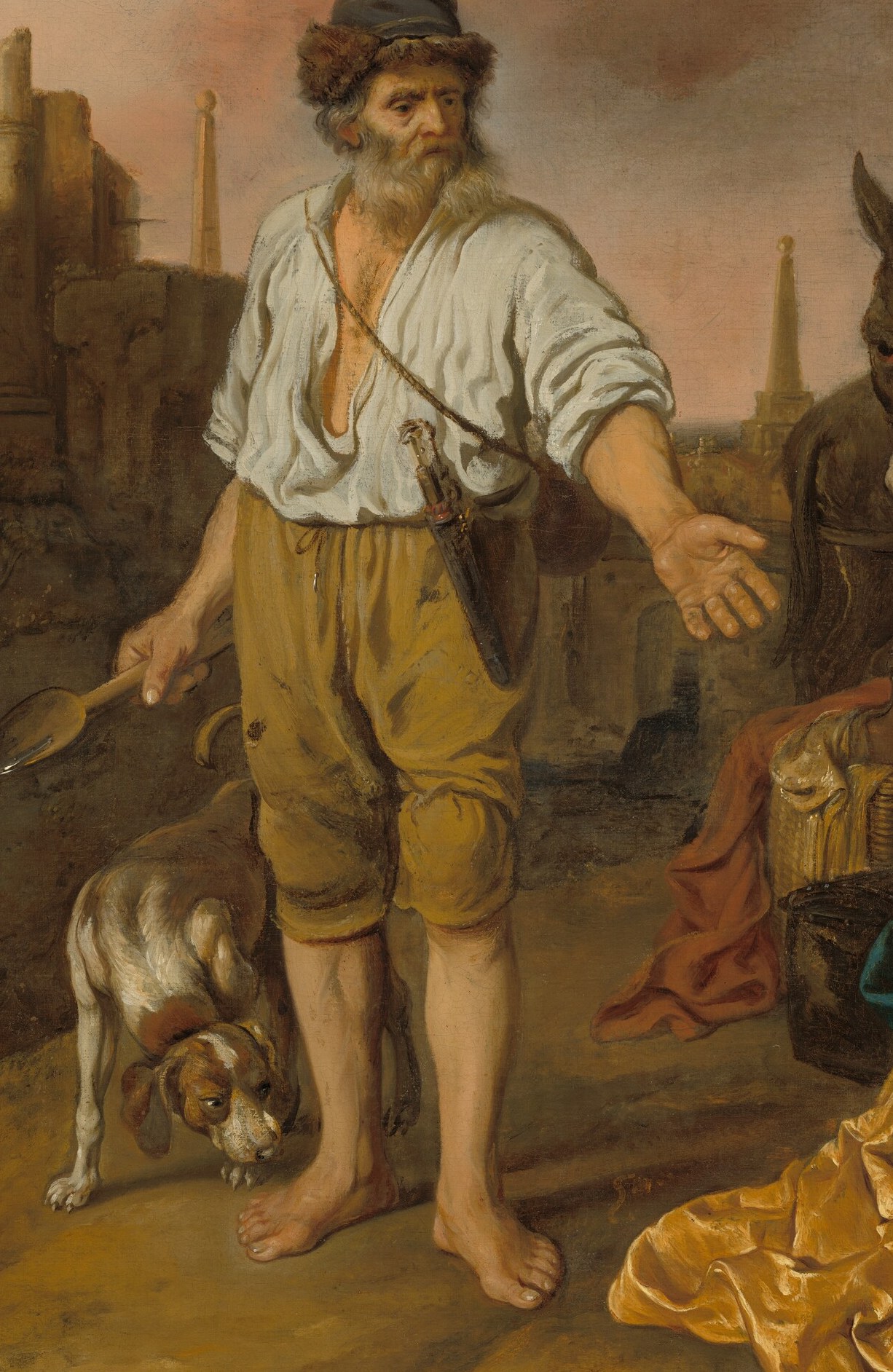
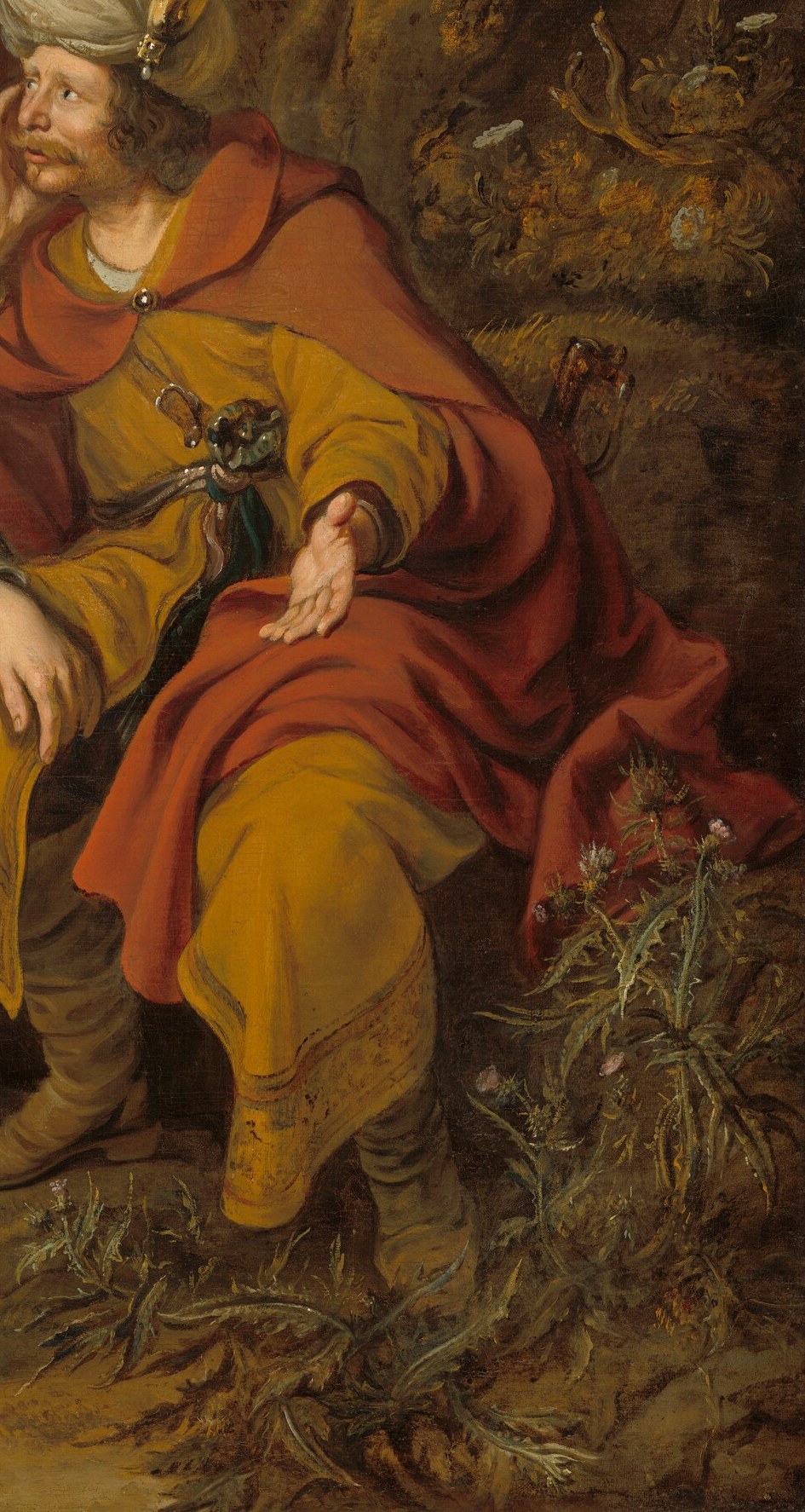
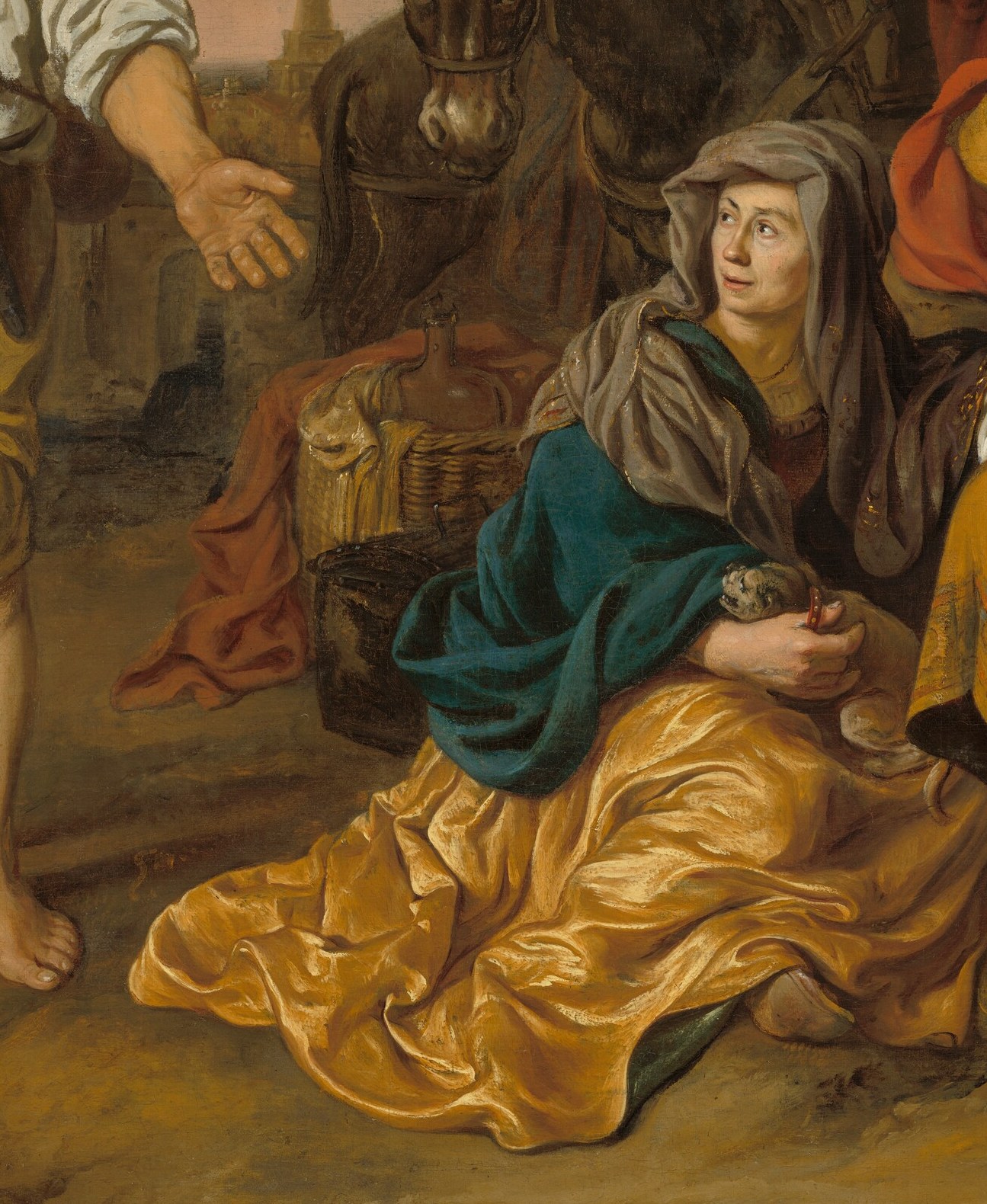
Eeckhout's masterful use of chiaroscuro draws your eye to the figures. Notice the Levite's distressed gesture and the intense gaze of the seated man, conveying the unfolding drama. The gnarled tree branches add to the scene's foreboding atmosphere, hinting at the grim events to come.
This work is characteristic of the Flemish Baroque, with its dramatic lighting and dynamic composition. Eeckhout was not only a painter but also an etcher, poet, and art collector, reflecting his wide-ranging interests during the Dutch Golden Age.
What details do you notice that heighten the sense of unease?
Details
Transcript
This painting tells a story of moral tension. The artist was a favored student of Rembrandt. Look at the man in the turban, listening intently. He is the Levite, discovering a grievous crime. His open hand and questioning gaze convey distress. The gnarled branches create a sense of foreboding. The painting suggests impending violence from a biblical tale.