View at Amalfi, Bay of Salerno by George Loring Brown
View the artwork: View at Amalfi, Bay of Salerno →
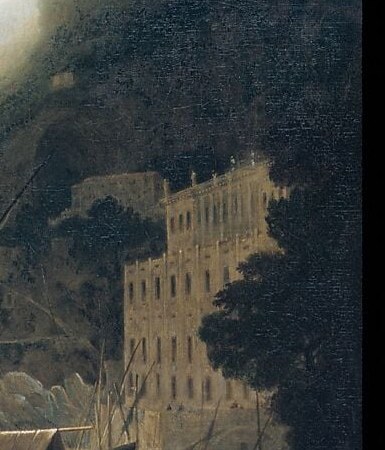
George Loring Brown painted 'View at Amalfi, Bay of Salerno' in Rome in 1857, during the height of the American Grand Tour. This was not a one-of-a-kind inspiration but a product: scholars believe Brown produced several finished canvases from a single small oil sketch, varying each slightly for different buyers.
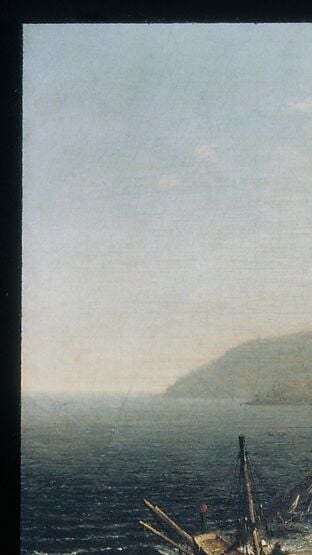
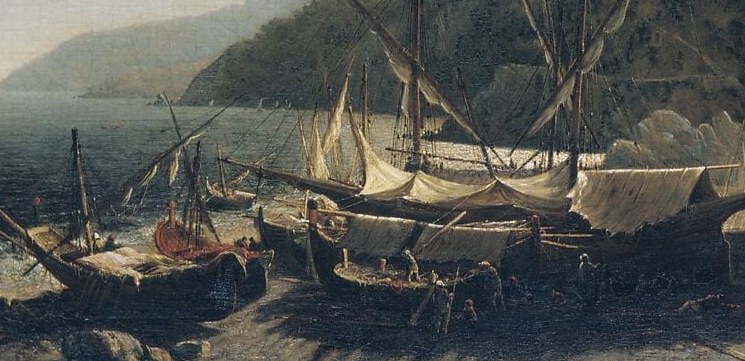
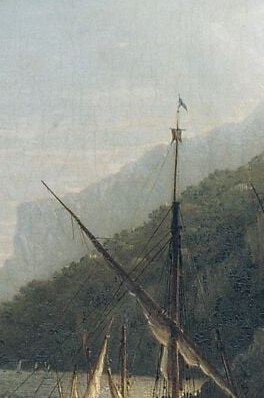
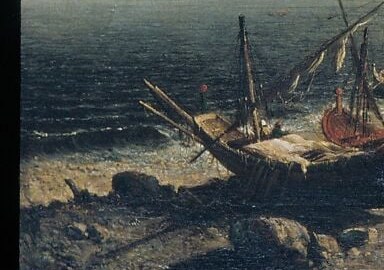
Look straight into the foreground water. It reads as black, but Brown built it from brown and violet patches, a tonal method he called macchiorelli, so the pale beached hull beside it would glow without a single stroke of white. Then trace the rigging lines against the sky: those hair-thin ropes are the yardstick for the painting's craft. If they wavered, the illusion would break.
Brown earned the nickname 'Claude' by copying Claude Lorrain in the Louvre as a young man. He brought that vocabulary of luminous harbors to Rome and spent twenty years turning the Bay of Salerno into a commodity for American travelers. This canvas entered the Met in 1903 as a gift from William Church Osborn.
The painting is a document of a town that looked very different by 1900, but it is also a record of an artist who understood exactly how light works in paint.
#arthistory #americanart #grandtour
Details
Transcript
Wet stone. Oil paint. And an American in Rome. His buyers wanted Italy. He gave them light itself. The dark water is a trick. It isn't black, it's brown and violet, laid in patches. Against that near-black, the pale hull glows without a single brushstroke of white sun. Now look up. Those spider-web lines in the rigging are the test. He was called 'Claude' Brown, after Lorrain. He'd copied him in the Louvre, then sold the trick back to Americans in Rome.