Artwork
View at Amalfi, Bay of Salerno
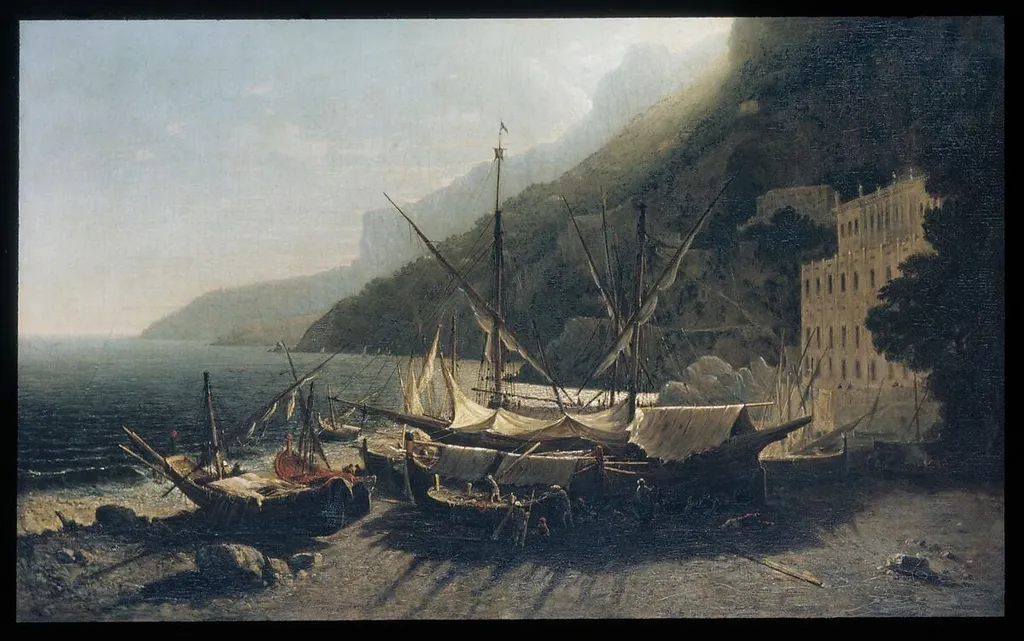
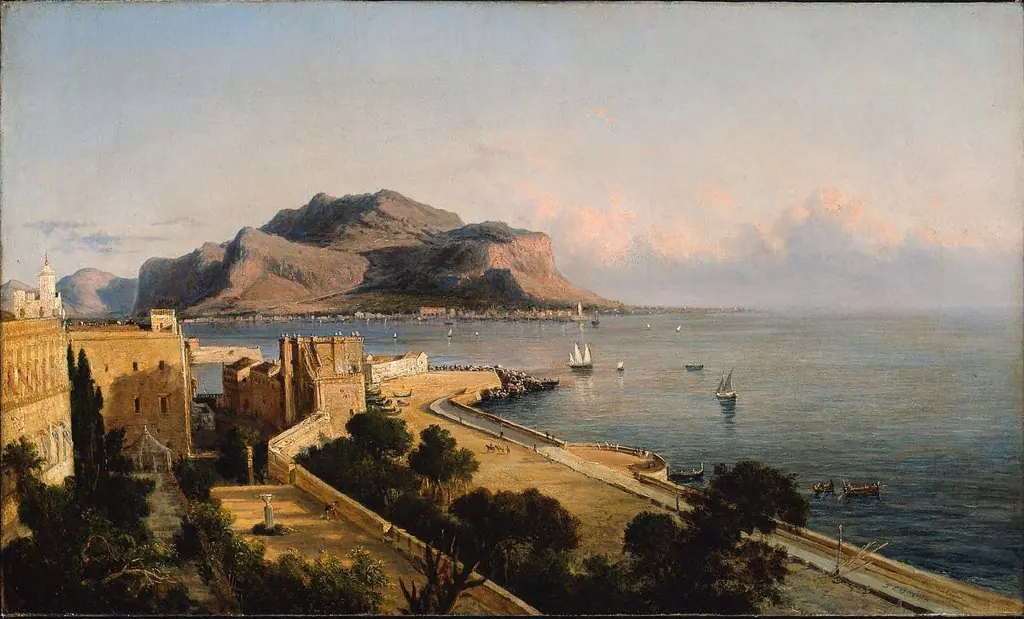
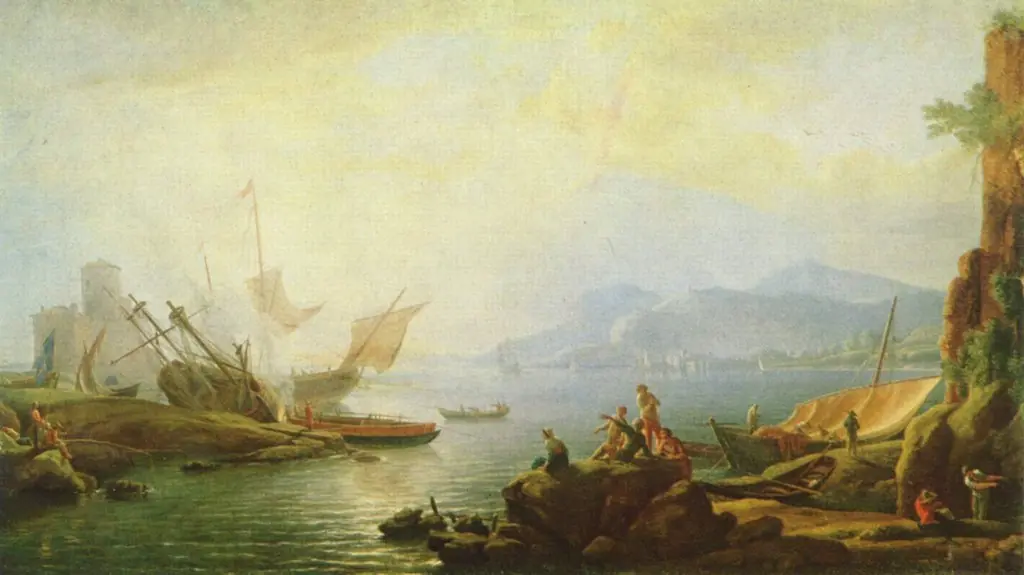
View at Amalfi, Bay of Salerno is an oil painting by the American Impressionist artist George Loring Brown. It dates from 1857 and is held in the collection of the Metropolitan Museum of Art.
About this work
In 1857, George Loring Brown was so busy painting Italian souvenirs for American tourists in Rome that he hired an assistant to lay out compositions.
In 1857, George Loring Brown was so busy painting Italian souvenirs for American tourists in Rome that he hired an assistant to lay out compositions. The panoramic view of the Bay of Salerno likely grew from a small 1856 oil sketch, one of several variants he made from a single study. The roughly 33-by-54-inch canvas echoes the harbor scenes of Claude Lorrain. William Church Osborn gave it to the Metropolitan Museum of Art in 1903.
Subject & Meaning
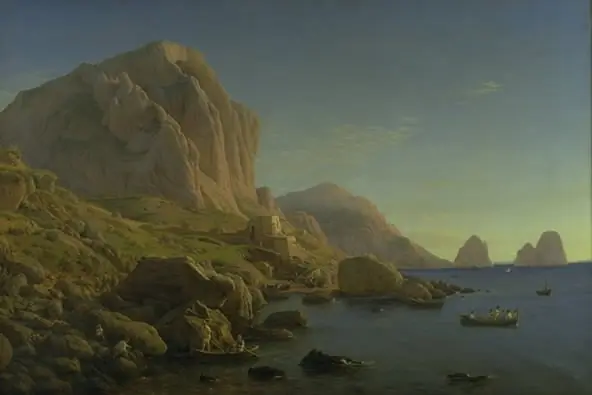
The painting depicts a coastal scene at Amalfi on the Gulf of Salerno, part of the Mediterranean Sea. It includes a beach, rocky cliffs, and buildings along the shore, with several boats, including a barque and sailboats, in the water. Clouds fill the sky above the sea and coast.
This landscape composition represents the picturesque Italian coastline, focusing on natural and architectural elements in a harmonious view.
History & Provenance
George Loring Brown painted View at Amalfi, Bay of Salerno in 1857. The painting's early provenance includes ownership by Jonathan Sturges, and later by Virginia Reed Osborn (Sturges) and William Church Osborn. It is now held in the collection of the Metropolitan Museum of Art. No details regarding a specific commission have been recorded.
Overview
George Loring Brown's 1857 oil on canvas, "View at Amalfi, Bay of Salerno," captures a celebrated Italian coastal scene. Painted in Rome, this work exemplifies Brown's successful career creating picturesque souvenirs for American travelers on the Grand Tour. It stands as a testament to the expatriate artist's commercial acumen and the enduring transatlantic appreciation for Italian landscapes during the mid-19th century.
Technique & Style
Measuring approximately 33 by 54 inches, this oil painting showcases Brown's distinctive artistic approach. His deep admiration for the 17th-century French landscape painter Claude Lorrain is evident, leading to Brown's nickname "Claude." The work also displays stylistic affinities with the precise, atmospheric renderings characteristic of German artists Jakob and Rudolph Alt, blending influences into a unique vision.
Context
This painting serves as a tangible record of the cultural exchange between America and Italy in the 19th century. Brown, an an American expatriate, capitalized on the burgeoning tourism market, providing mementos of the Grand Tour experience. The artwork reflects both his commercial success in meeting this demand and the prevailing taste among Americans for romanticized Italian coastal vistas.
Artist & collection

Artist
George Loring Brown was born in Boston on February 2, 1814, and began his career apprenticed to the wood engraver Alonzo Hartwell, later working as an illustrator of children's books.