Adoration of the Trinity by Albrecht Dürer (German, 1471–1528)
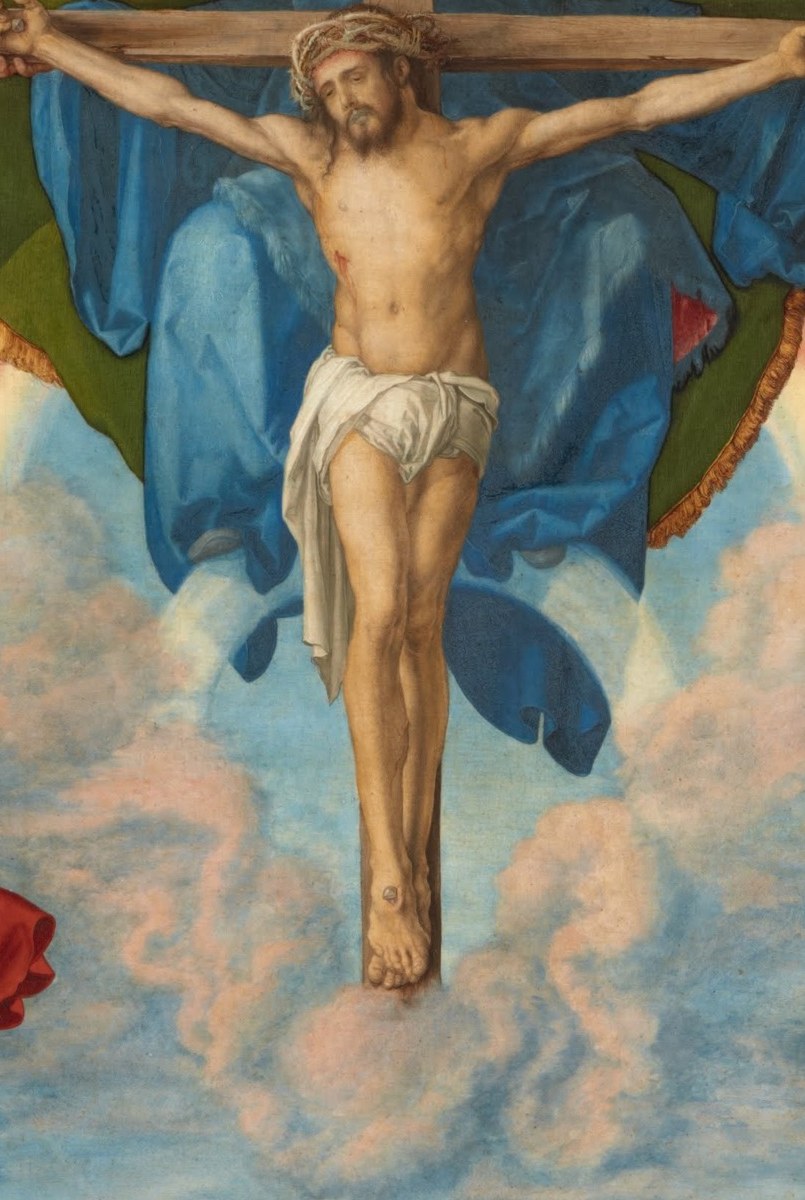
Albrecht Dürer's "Adoration of the Trinity," painted in 1511, is a monumental oil on panel housed in Vienna's Kunsthistorisches Museum. This intricate work depicts the Holy Trinity being worshipped by a vast assembly of heavenly and earthly figures.
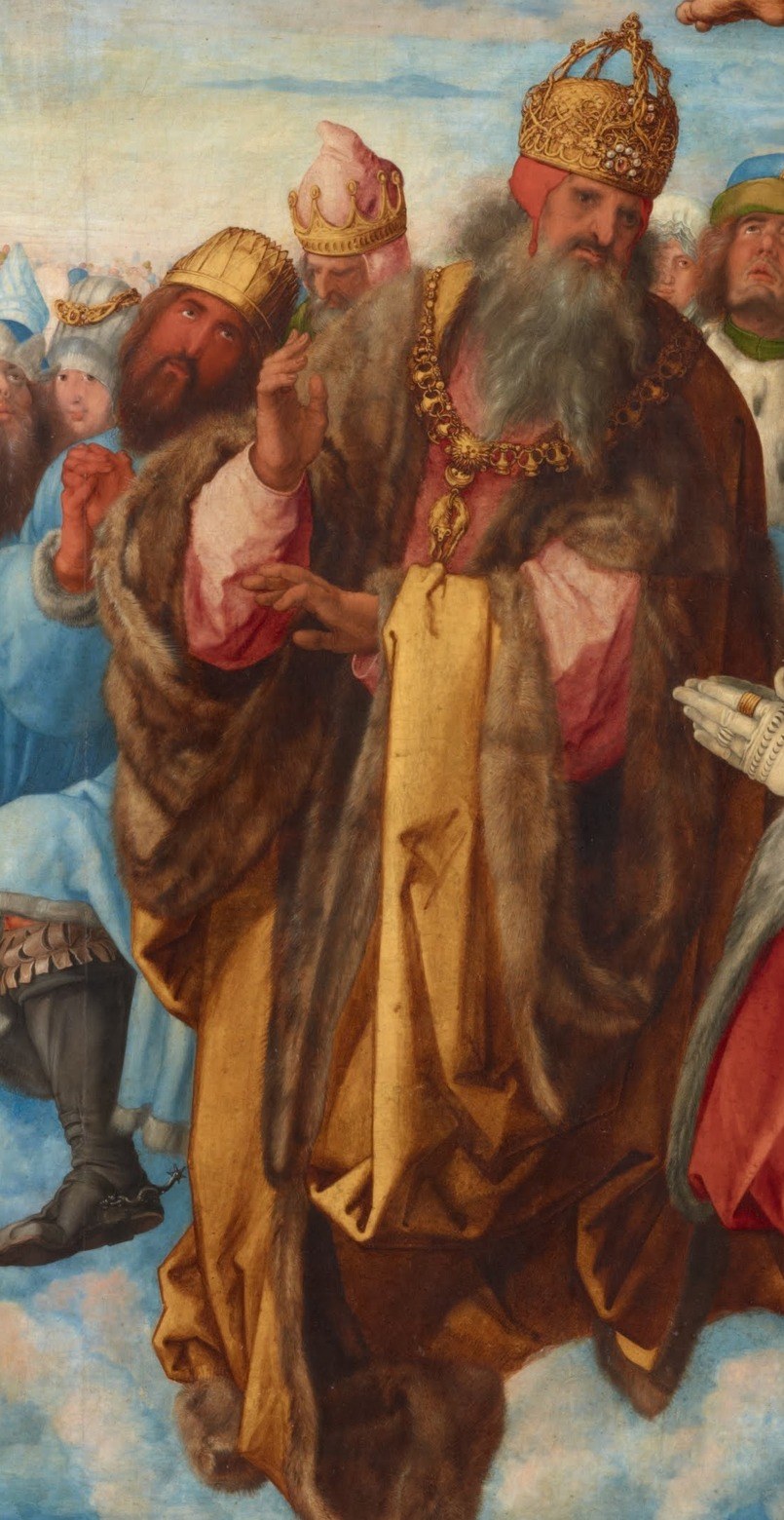
At the painting's heart, Christ on the cross is flanked by God the Father and the Holy Spirit, surrounded by a celestial host of angels. Below them, a vibrant crowd of richly dressed devotees from all walks of life gathers in prayer and reverence.
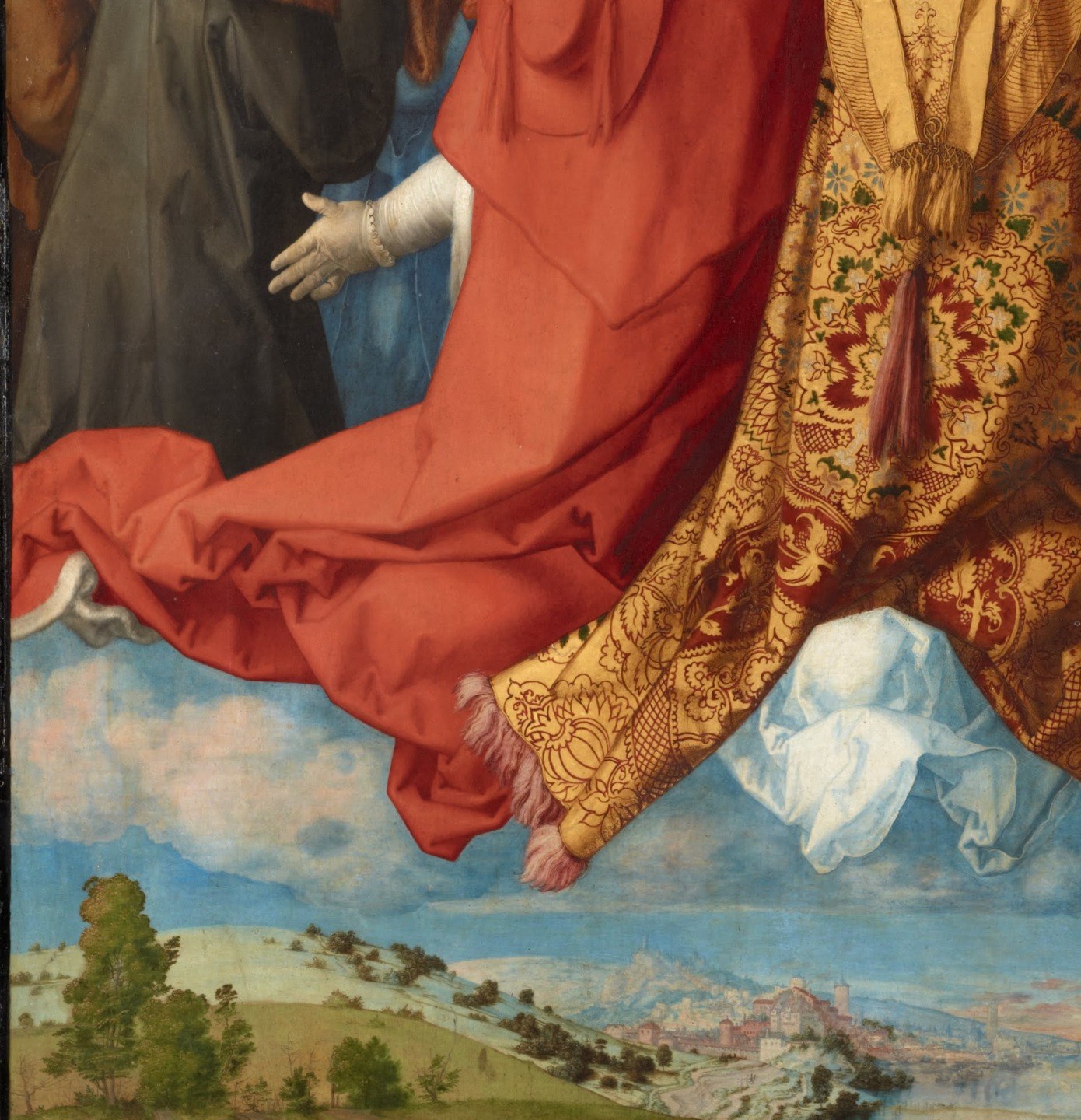
Dürer, a master of the Northern Renaissance, meticulously detailed every aspect, from the expressions of the angels to the elaborate textiles. Uniquely, he included a tiny, almost hidden self-portrait at the bottom right, holding a tablet with his signature and the date. It's a testament to his confidence and artistic identity.
This painting, also known as the Landauer Altarpiece, showcases Dürer's blend of Gothic devotion and humanist ideals. What other hidden details do you think artists include in their work?
Details
Transcript
This crowded scene shows heaven and earth adoring the Trinity. Christ is on the cross, surrounded by angels. Below, a multitude of richly dressed figures pray. The German artist Albrecht Dürer painted this in 1511. But look closely, at the bottom right corner. Here he included a self-portrait, holding a tablet. On the tablet, his signature and the year, 1511.