A Strand of the Sea by Abraham Begeyn
This bustling scene, "A Strand of the Sea" by Abraham Begeyn, painted in 1662, offers a vivid glimpse into the commercial heart of 17th-century Holland. Part of the State Hermitage Museum collection, it shows a period when maritime trade was the engine of Dutch prosperity.
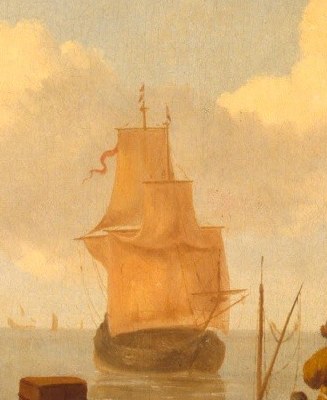
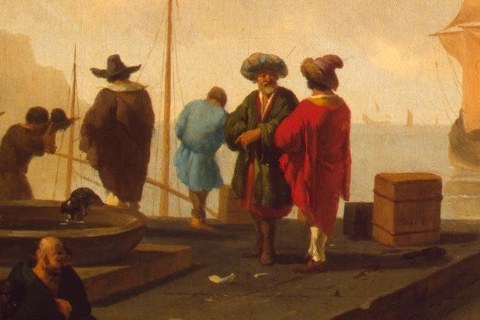
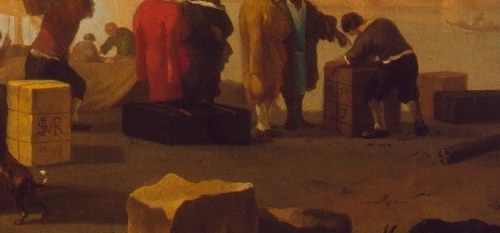
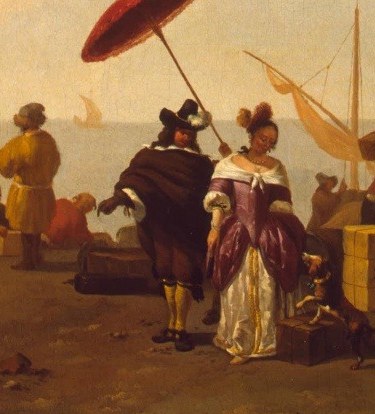
Look closely at the dockside: figures in period dress are engaged in the daily commerce of the port, surrounded by crates and cargo awaiting transport. A large merchant ship sails in the distance, underscoring the global reach of Dutch trade. Even small details, like the woman with her striking red parasol or the goat wandering freely, bring the scene to life.
Begeyn masterfully uses light and shadow to create depth, from the detailed rigging of the ship to the dramatic, fluffy clouds above. This painting, a testament to the artist's keen observation, captures the energy and social dynamics of a working seaport.
What other details do you notice that tell the story of this busy port?
Details
Transcript
It's 1662. The Dutch Golden Age is in full swing. Trade made Holland rich. See the merchant ship sailing out? This dock is a hive of activity, importing and exporting goods. Crates, barrels, and bundles are being moved. A woman with a vibrant parasol watches the scene unfold. Even a goat wanders among the port traffic. This painter shows us the real life of a 17th-century port.