Francesca da Rimini by William Dyce
William Dyce's Francesca da Rimini (1837) hangs in the Scottish National Gallery, but its story begins in Dante's Inferno. Dyce chose to paint a moment of human tenderness between two doomed lovers rather than their eternal punishment. He was only 31 years old.
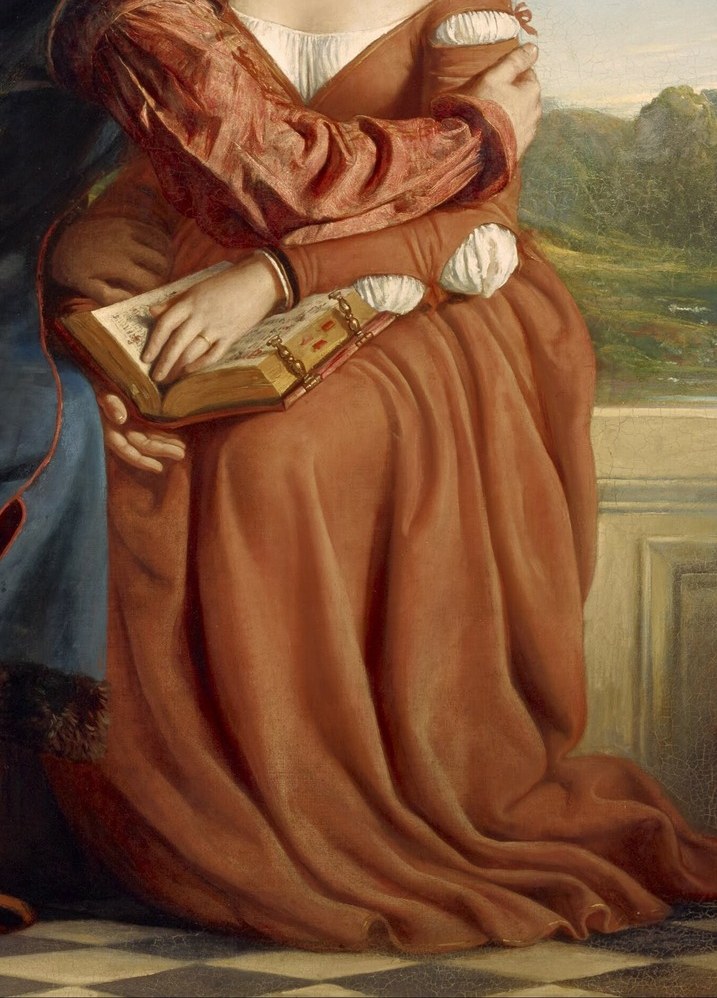
Look at the book between them. In Dante's poem, Francesca and Paolo were reading the story of Lancelot and Guinevere together when they fell in love. Her delicate hands still rest on the open page. Her eyes are downcast. His are shut.
Francesca was married to Paolo's brother. When the affair was discovered, both were killed. Dante placed them in the second circle of Hell, whirling forever in a storm. But Dyce, a Scottish painter who would later help establish public art education in Britain, gave them this quiet moonlit moment instead.
He painted what the Inferno does not: the love before the fall.
Details

Transcript
Dante knew their story. He wrote it into his Inferno. They were reading this book when it began. Her hands still rest on the open page. Downcast eyes. Parted lips. His eyes are closed. His face is turned to hers. Dante says the book was Lancelot and Guinevere. Dyce was 31. He painted tenderness, not punishment.