The Seven Sacraments by Rogier van der Weyden
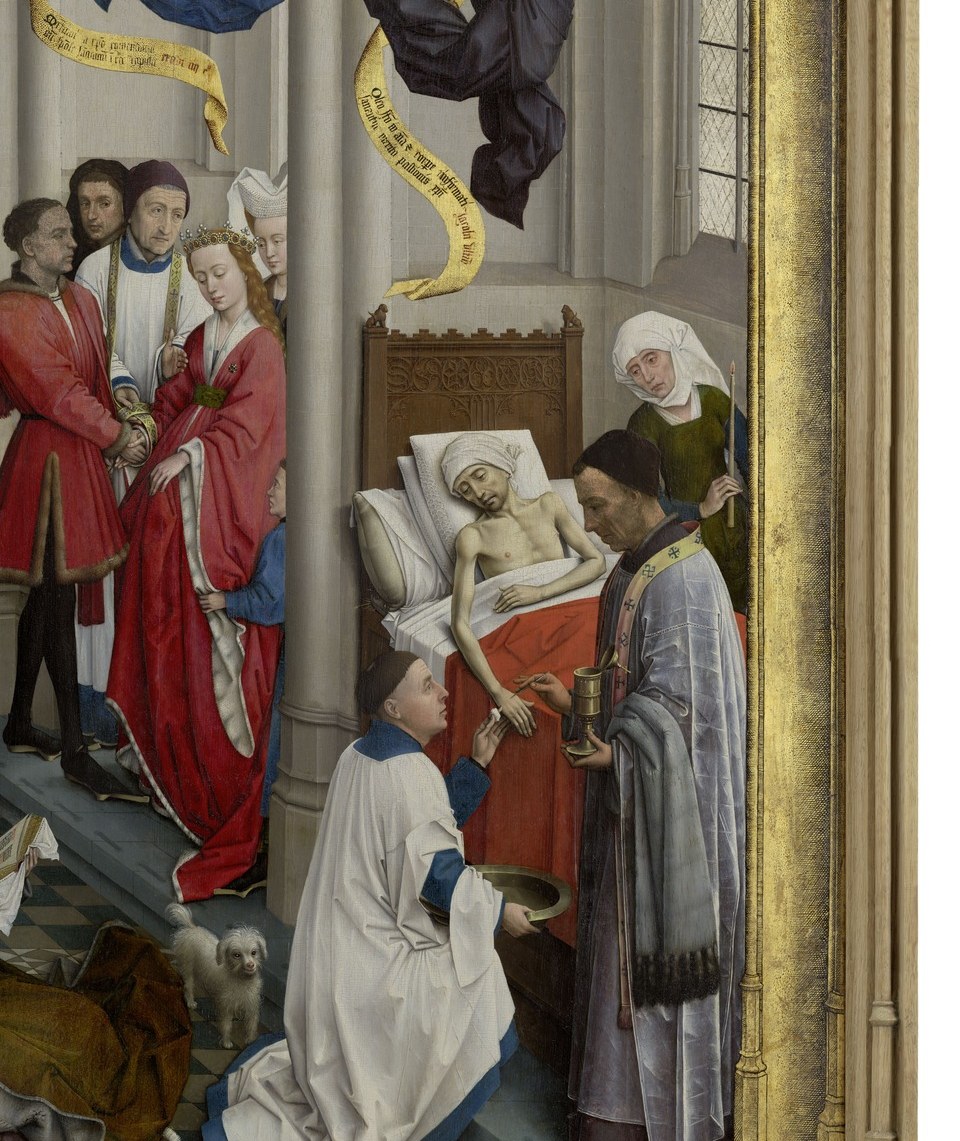
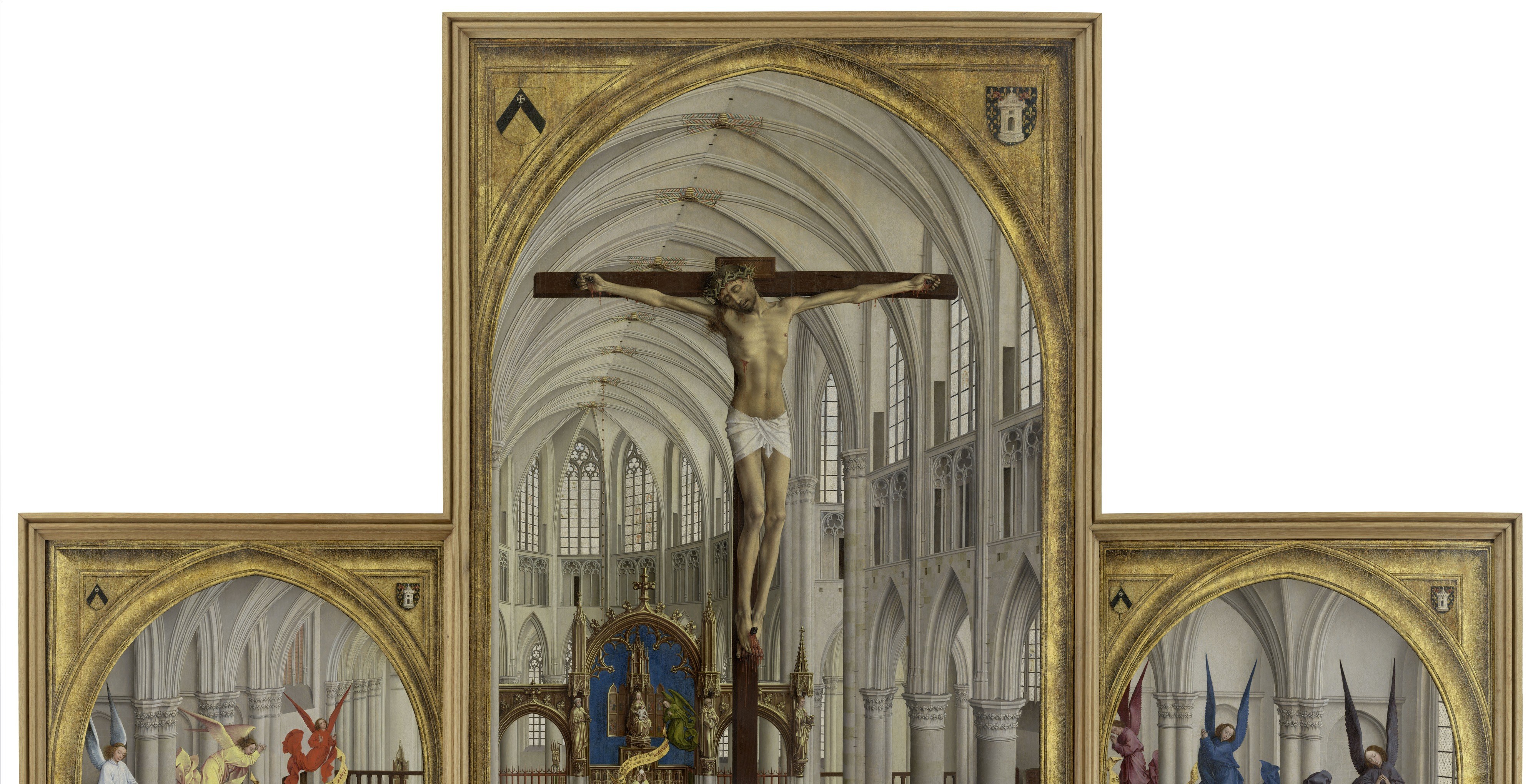
The Seven Sacraments Altarpiece by Rogier van der Weyden, painted around 1445 to 1450, systematizes an entire faith. Across three panels set in a unified Gothic nave, all seven sacraments of the Roman Catholic Church play out simultaneously, from Baptism at the far left to Extreme Unction at the far right. It is a visual catechism in oil, now housed at the Royal Museum of Fine Arts in Antwerp.
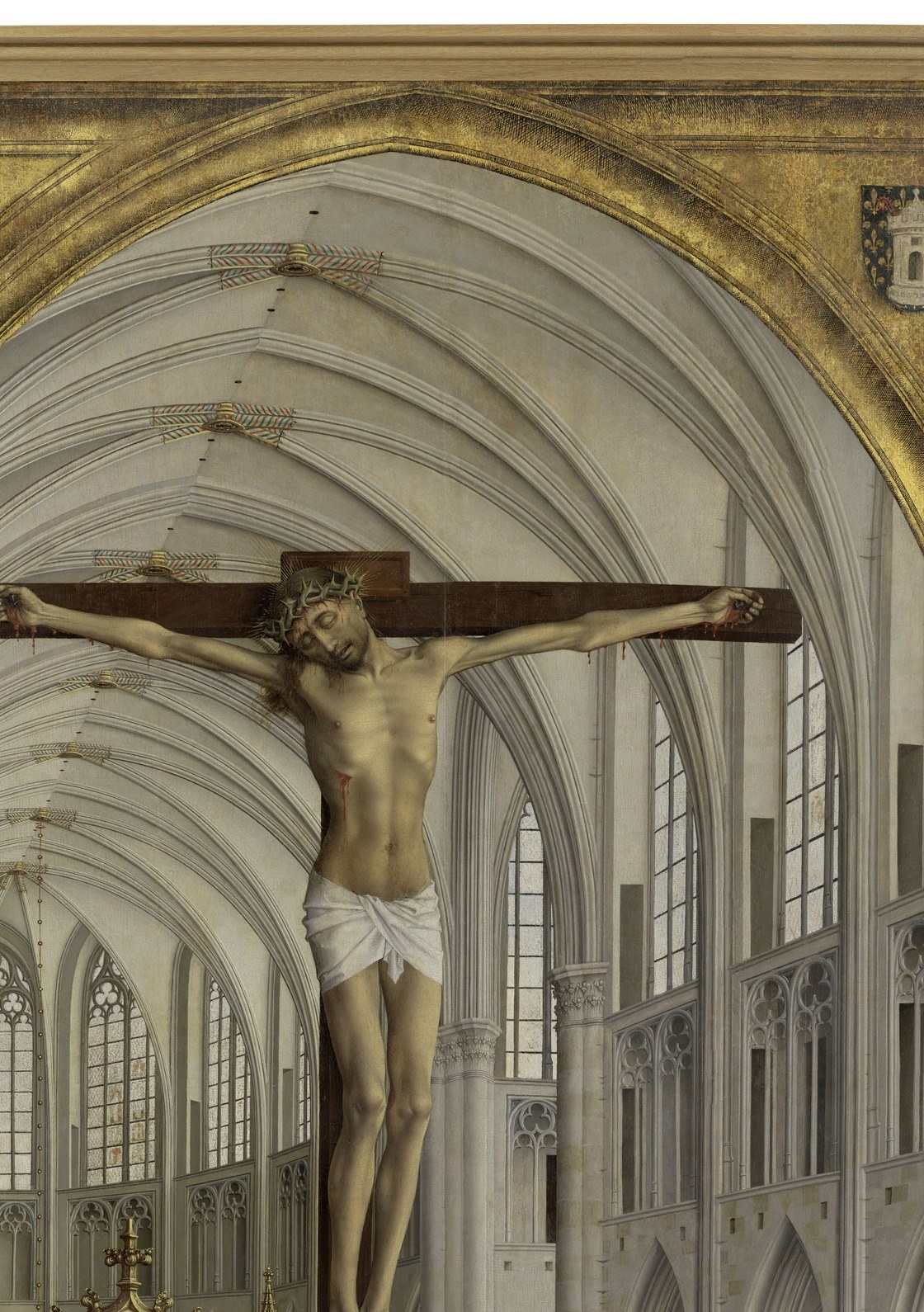
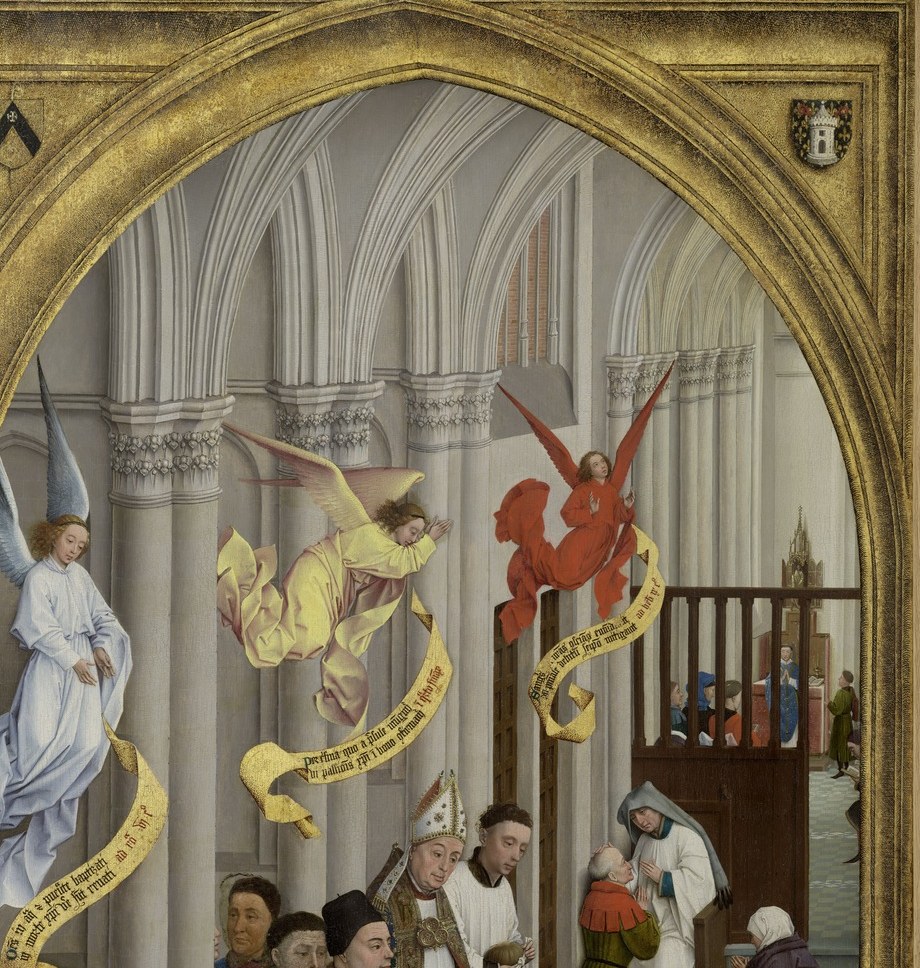
Look at how deliberate the architecture is. The central Crucifixion is suspended directly above the altar table, aligning Christ's body with the consecrated host, a vertical argument that the sacrifice on the cross and the Eucharist present at Mass are one. Each sacrament is keyed by a hovering angel carrying a label scroll in Latin; the painting was made to instruct as clearly as it was to impress.
The work was probably commissioned for a church in Poligny, France, by Bishop Jean Chevrot, a significant patron and a counselor to the Duke of Burgundy. Van der Weyden was at his commercial peak, eclipsing even Jan van Eyck for a time, and an altarpiece of this scale and cost was a clear statement of institutional power and doctrinal orthodoxy.
What strikes me most is the interior logic: every life stage has its appointed scene within a single continuous space, and the price paid for this clarity was substantial. What other Renaissance altarpieces treat the sacraments as a complete set in a single unified room?
Details

Transcript
A crucifixion rises directly above an altar. The paint aligns Christ's body with the Eucharist on the table below. One angel hovers left, one right, every rite is labeled. The commissioner was likely a bishop, Jean Chevrot of Poligny. The altarpiece cost a fortune and made van der Weyden Europe's most wanted painter. A child receives Confirmation from a mitered bishop. Far right, the last rite closes what the Baptism on the far left began.