Maryland Heights: Siege of Harpers Ferry by MacLeod, William
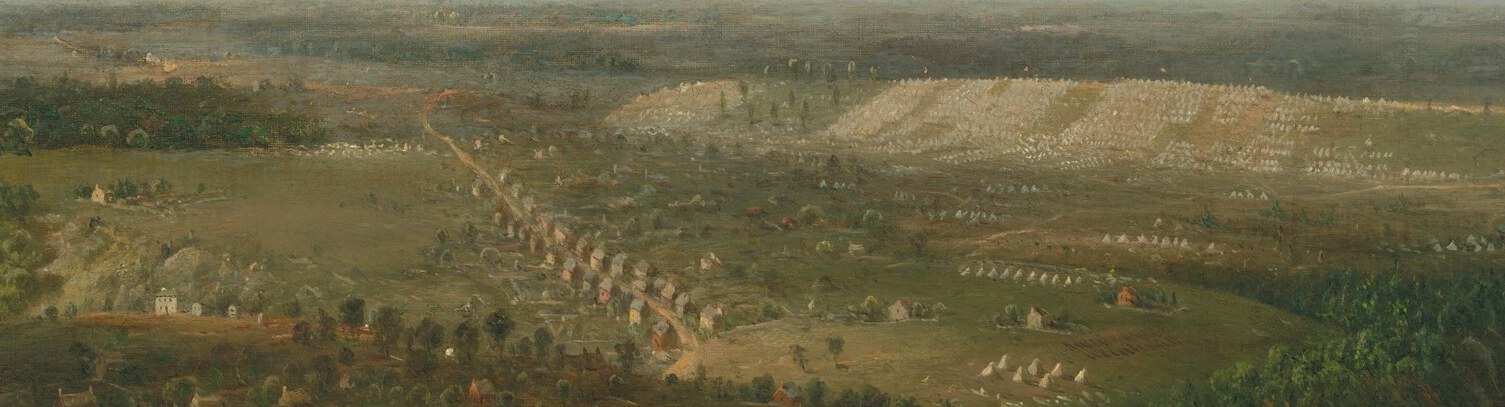
William MacLeod's 1863 painting, "Maryland Heights: Siege of Harpers Ferry," offers a dramatic perspective on a key Civil War moment. It captures the strategic importance of the landscape, showing Union forces commanding the heights above Harpers Ferry.
From the watchful soldiers on the cliff to the sprawling encampment below, every detail underscores the scale of the military operation. Look closely at the cannon battery, a stark reminder of the conflict's intensity, and the faint smoke in the distance, indicating an active battlefield.
Created during the war itself, this oil on canvas served as a contemporary record for the public, reflecting the national interest in documenting pivotal events. MacLeod's realistic approach emphasizes topographical accuracy, blending earth tones with atmospheric effects to convey depth and tension.
It stands as a visual testament to a critical episode in the Maryland Campaign, inviting us to consider the immense human and strategic elements at play.
Details
Transcript
This painting records a critical moment from the American Civil War. It shows Union forces atop Maryland Heights, overlooking Harpers Ferry. Below, a vast encampment signals the logistical scale of the conflict. Notice the battery of cannons, poised for action on the heights. And in the distant town, a subtle plume of smoke hints at ongoing battle. The artist, William MacLeod, captured this scene in 1863, amidst the war. The flag on the pole proudly declares the Union's presence. This painting documents a pivotal event, seen through a soldier's eyes.