Antelope Shooting - Assinneboine by Catlin, George
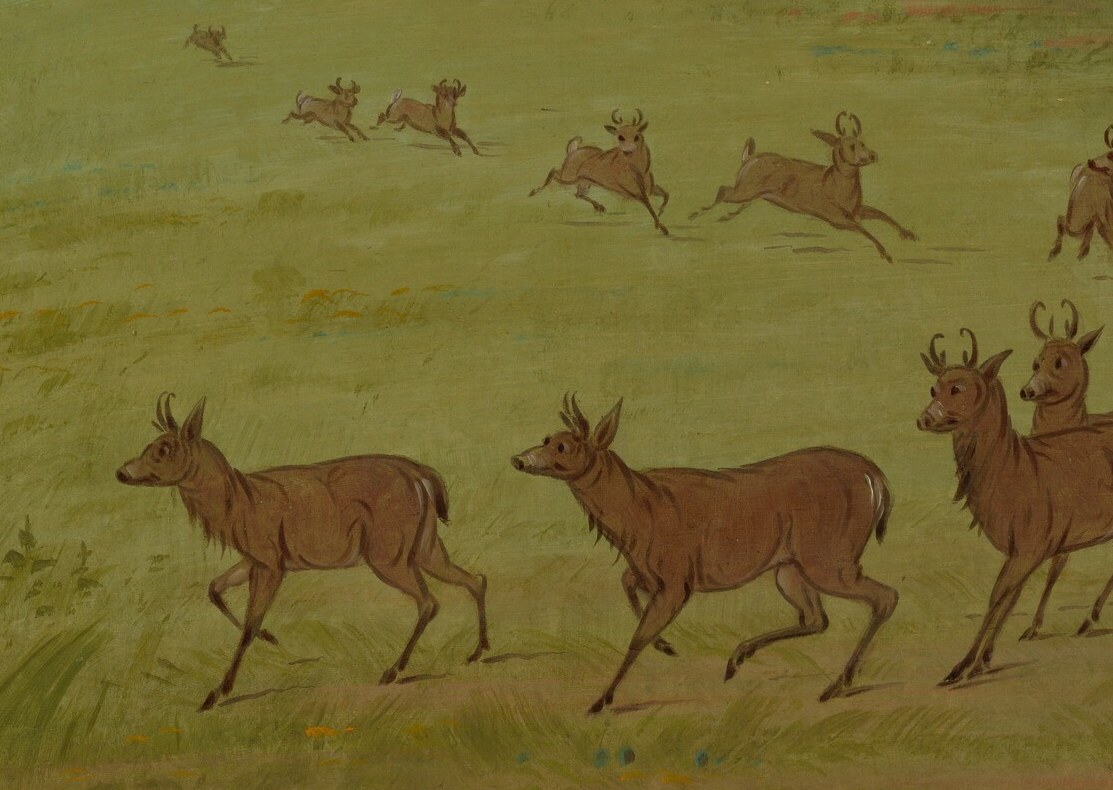
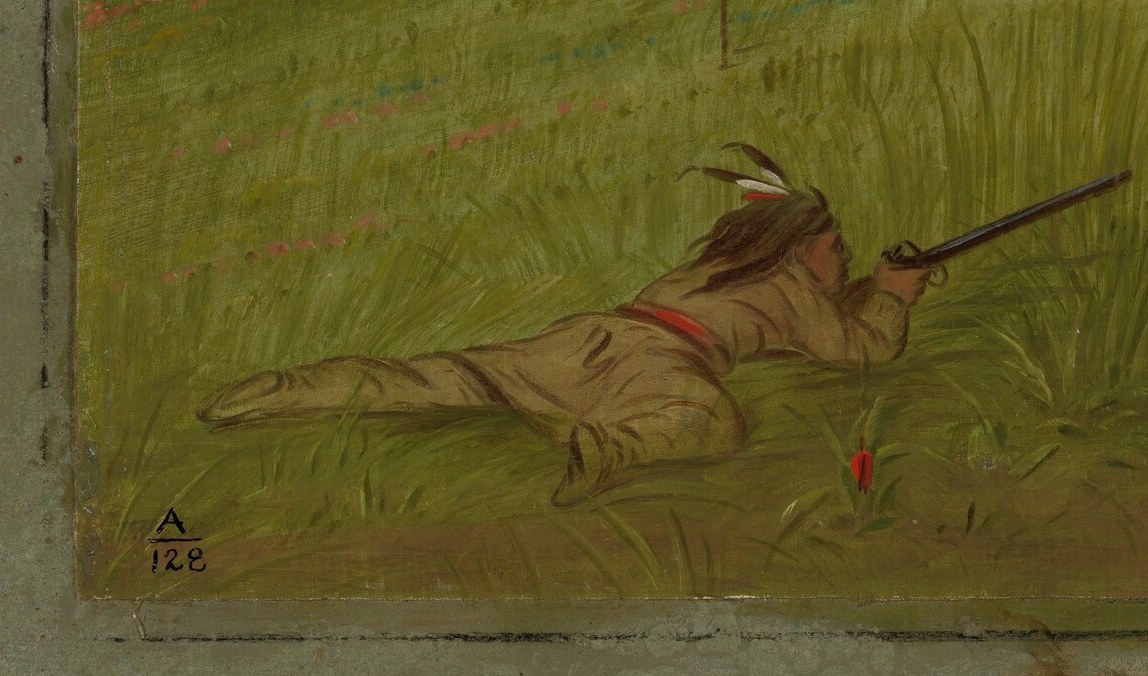
In *Antelope Shooting - Assinneboine*, painted between 1861 and 1869, George Catlin documents a fascinating hunting technique of the Assinneboine people. This oil on canvas, housed in a prominent museum, showcases the artist's dedication to recording Indigenous lifeways during his travels across the American West.
Look closely at the scene: a hunter lies hidden, aiming at a group of antelope. But the key detail is the small red flag. The Assinneboine were known to use a flag or piece of cloth to pique the antelope's curiosity, drawing them closer for an easier shot.
Catlin, a lawyer turned artist, made five expeditions to the western territories in the 1830s. His extensive body of work aimed to preserve visual evidence of Native customs at a time of rapid frontier expansion, balancing documentary accuracy with a painterly sense of immediacy.
It's a powerful reminder of the ingenuity and deep knowledge of the land possessed by Indigenous peoples.
Details
Transcript
This painter traveled the American West to document Native life. He captures the Assinneboine hunting antelope. See how low this hunter is, aiming his rifle. But look closely at the red flag in the grass. Assinneboine hunters would lure antelope to them with a flag. The antelope's curiosity makes them easy prey.