伝土佐光信筆 四季竹図屏風|Bamboo in the Four Seasons by Tosa Mitsunobu
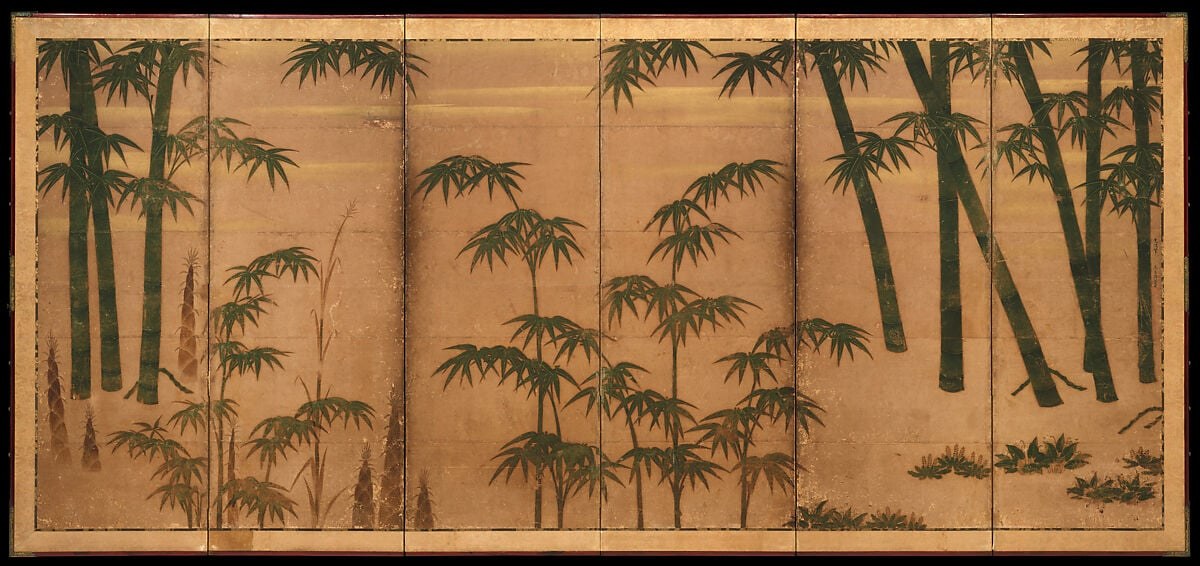
"Bamboo in the Four Seasons," a pair of six-panel folding screens by the Japanese painter Tosa Mitsunobu, created around 1502, is more than just a decorative piece. Housed in various collections, this work invites a closer look at its intricate details.
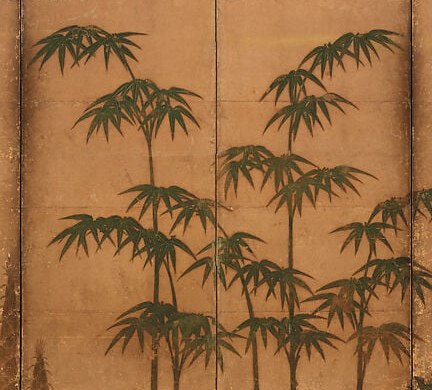
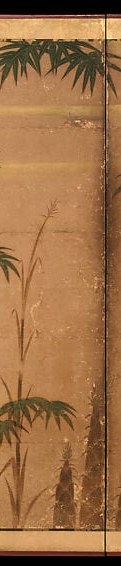
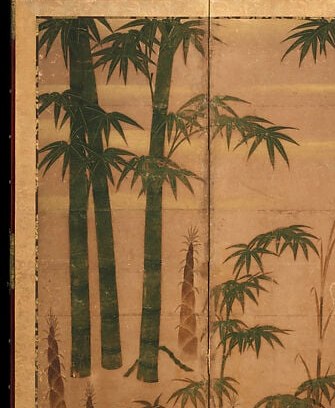
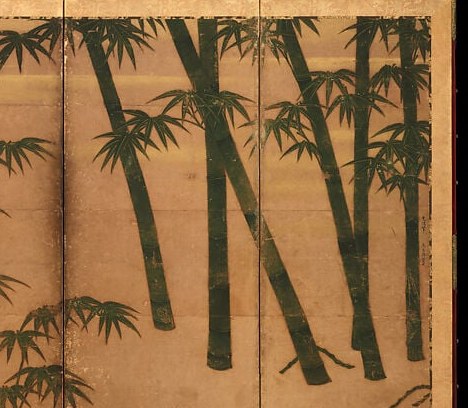
While the vibrant green bamboo is the immediate focus, notice the radiant gold-leaf background. It's not a flat surface; the subtle shimmer and texture catch the light, making the green hues appear to glow. Look even closer for the faint vertical lines that add a rhythmic quality to the background.
Crafted with ink, color, and gold leaf on paper, these screens were designed for aristocratic homes, reflecting the aesthetic preferences and wealth of their patrons. The meticulous brushwork and the use of opulent materials transformed a common natural motif into a luxurious statement, symbolizing strength and flexibility.
What other subtle textures or patterns do you notice in large-scale decorative artworks?
Details
Transcript
This isn't just a screen of bamboo. It was painted by Tosa Mitsunobu around 1502. The vibrant green bamboo stands out against gold leaf. This gold leaf isn't uniform, it shimmers with light. Look closely for faint vertical lines in the background. These subtle lines may hint at the paper's texture or panels.