Arowak Village by Catlin, George
George Catlin, a lawyer-turned-painter, dedicated his career to documenting Native American life in the 19th century American frontier. "Arowak Village," painted in 1862, offers a unique visual record of an Indigenous settlement amidst its natural environment.
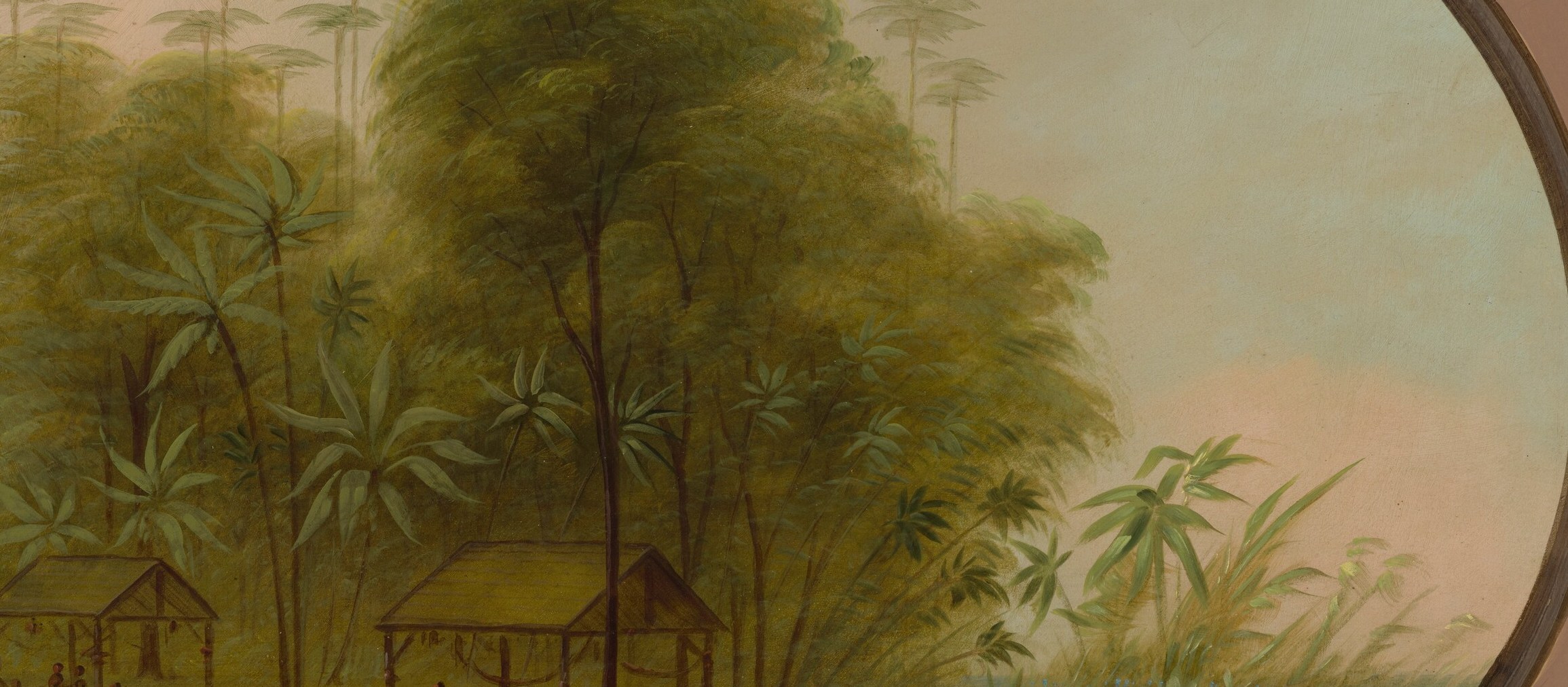
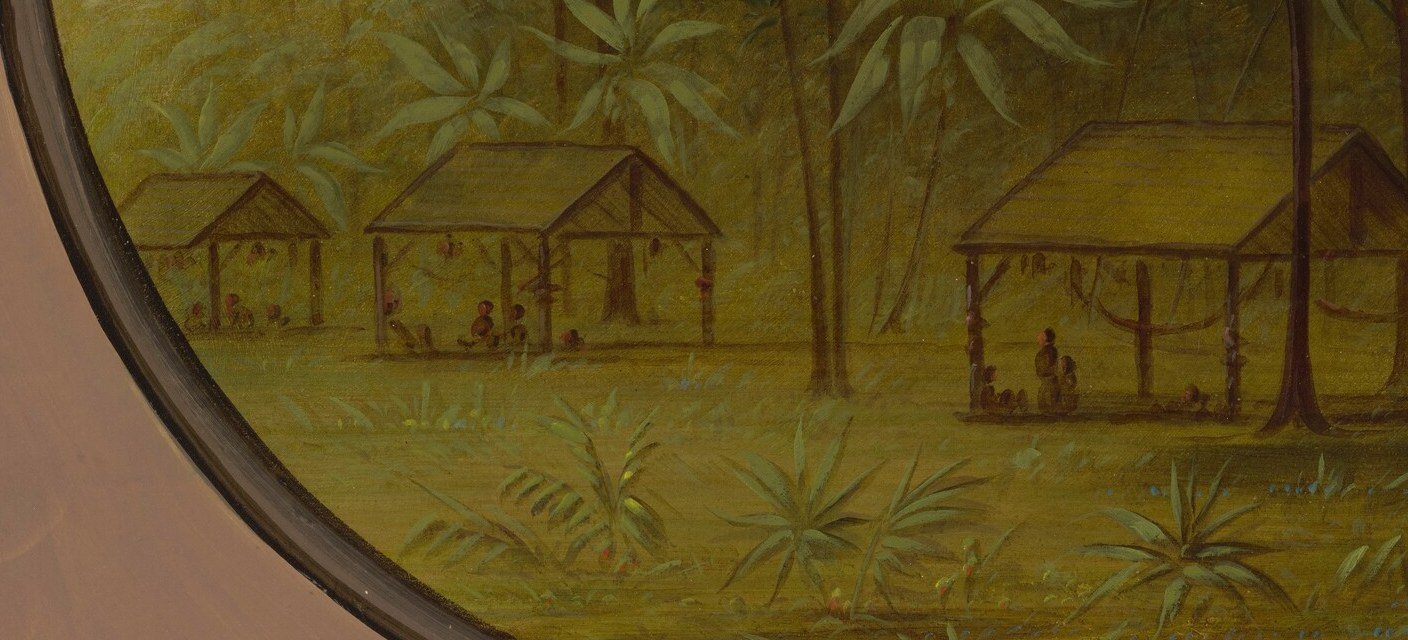
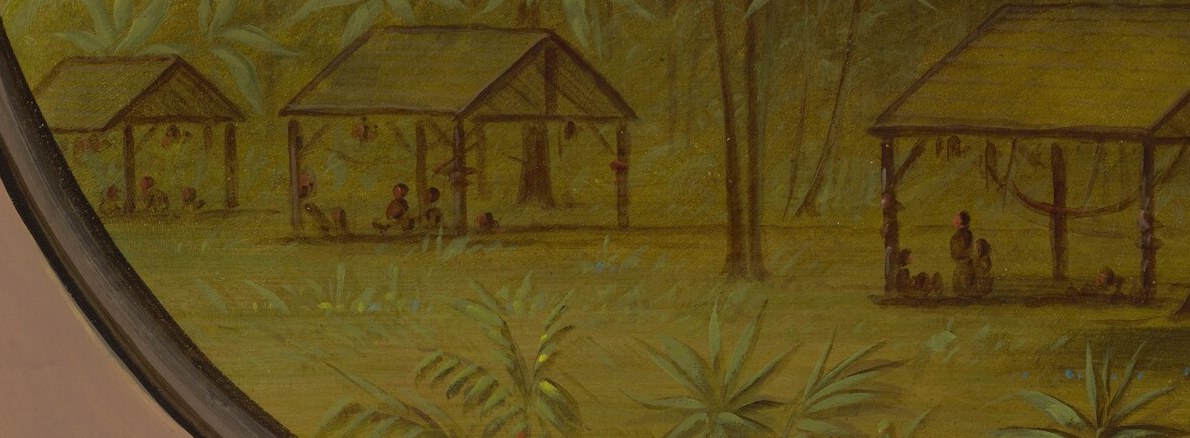
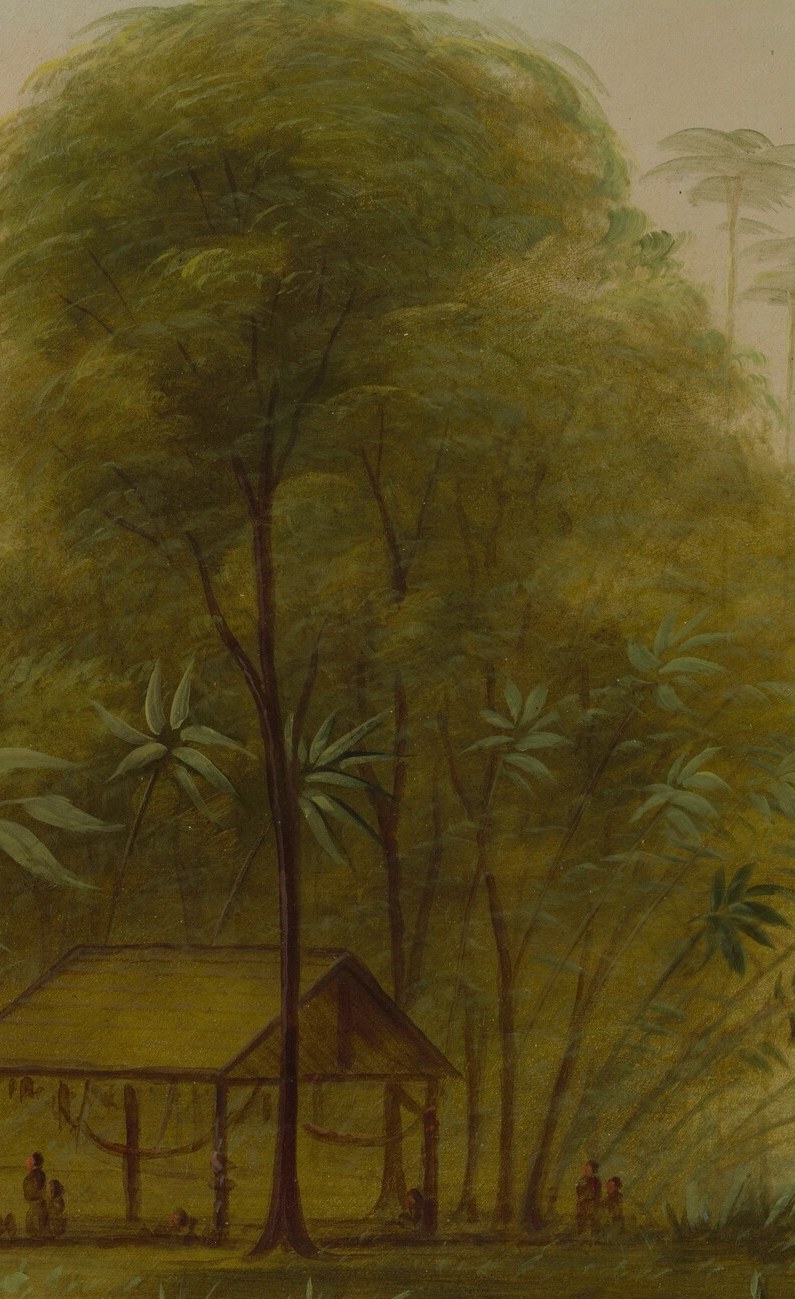
In this oil on card painting, look closely at the cluster of thatched huts, where subtle details suggest the daily routines of the Arowak people. The central, towering tree serves as a focal point, grounding the village within the vast landscape.
Catlin undertook five expeditions into the western territories during the 1830s, creating an invaluable archive of Indigenous cultures through his art. His works like this one are now preserved in institutions such as the National Gallery of Art in Washington, D.C.
What details in this scene most capture your imagination about life in the Arowak Village?
Details
Transcript
This painter traveled the American West in the 1830s. He documented Native American life in over 500 portraits and scenes. Here, he depicts an Arowak village, nestled in lush foliage. Smoke rises from these huts, suggesting daily life within. Though indistinct, figures are visible, engaged in activities. The prominent central tree acts as a landmark for the community.