Alexander Hamilton by Trumbull, John
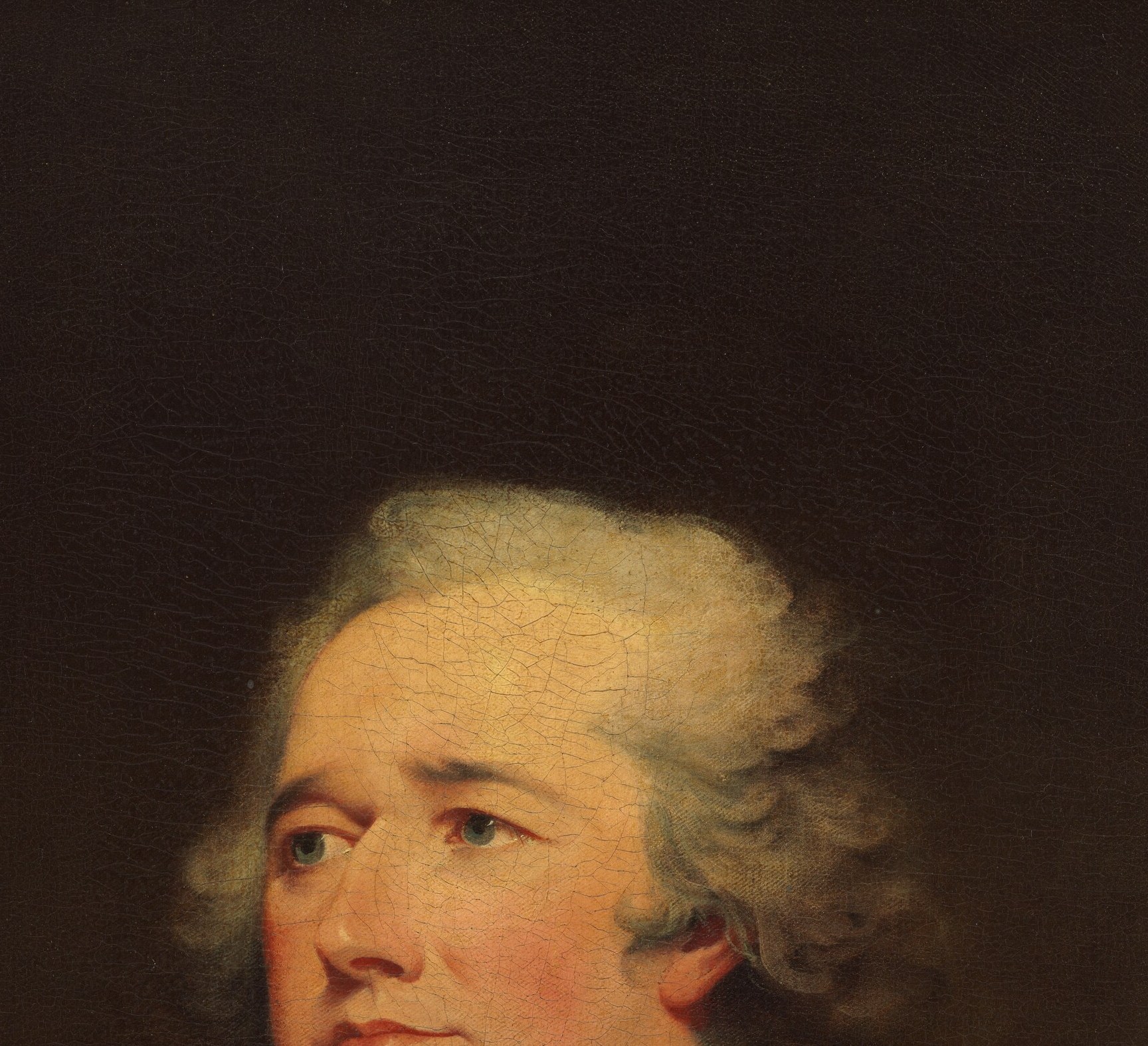
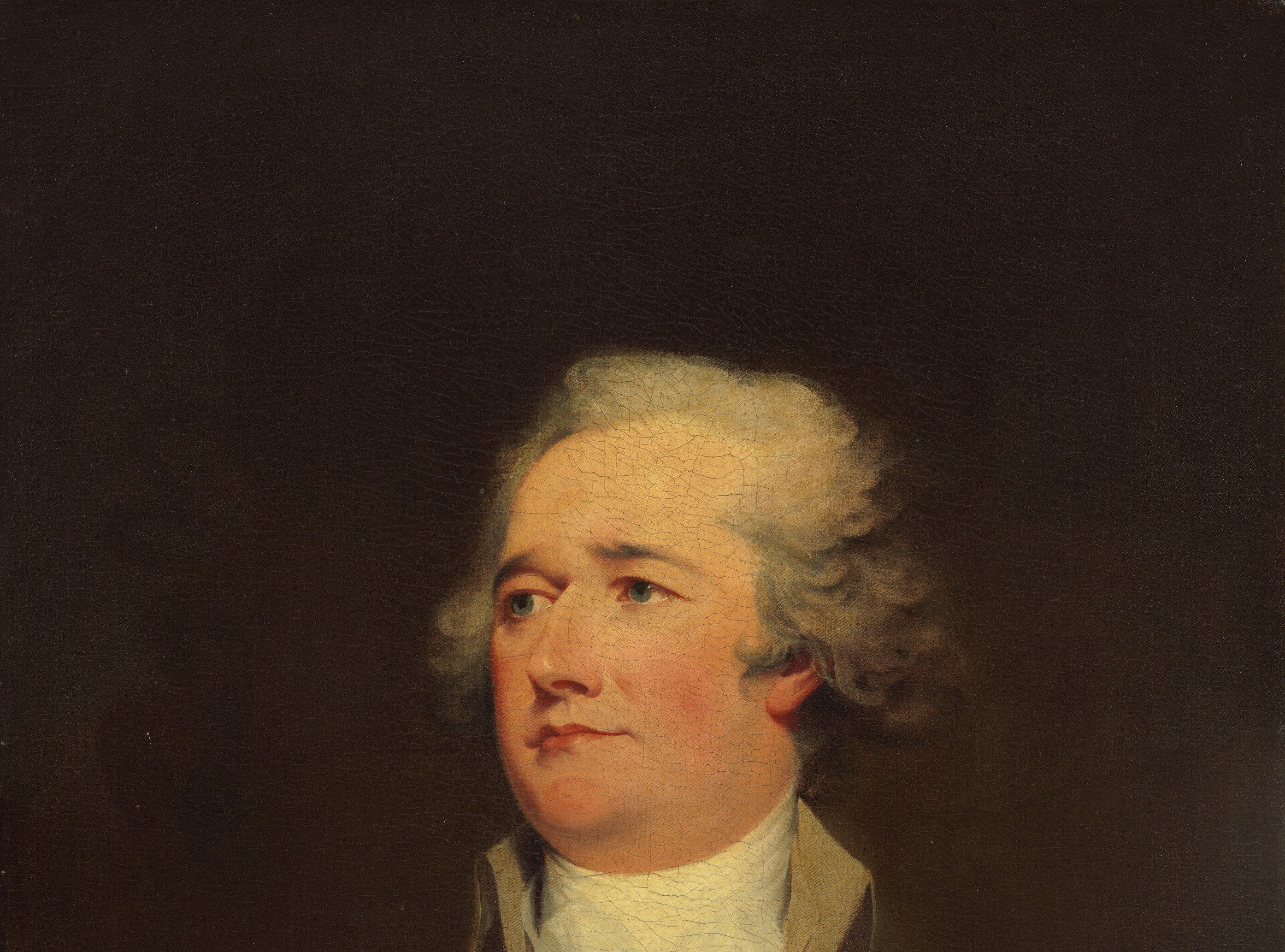
This is John Trumbull's portrait of Alexander Hamilton, painted around 1792. What makes it remarkable is not just who it depicts, but who held the brush. Trumbull and Hamilton had served together during the Revolutionary War. This is not a cold commission by a distant artist. It is a portrait by a fellow soldier.
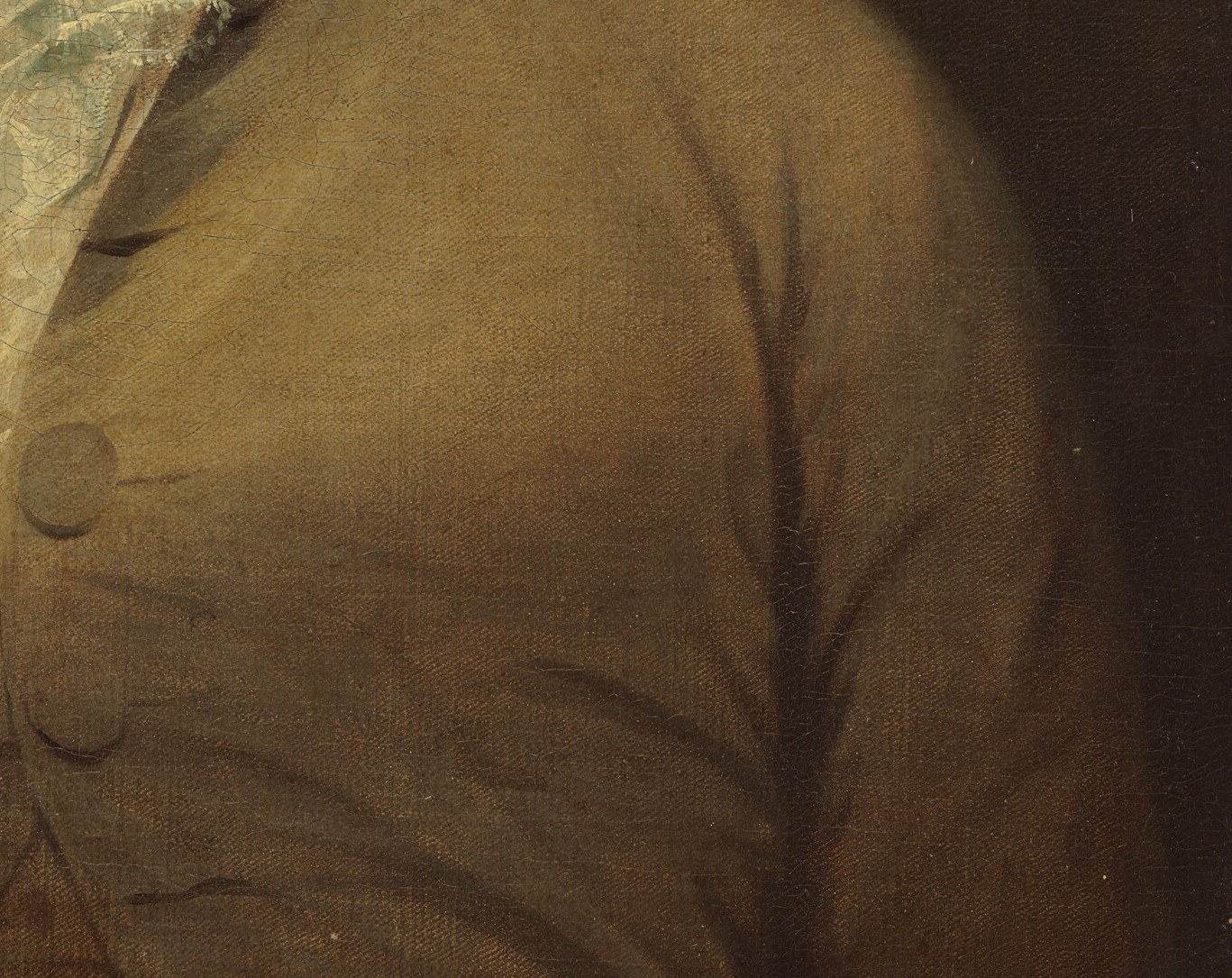
The cool, evaluating gaze is the emotional anchor. Hamilton's left eye catches a point of light, while his right eye remains slightly shadowed, creating a depth and a hint of melancholy that run against the grain of standard statesman portraiture. His hand rests on a stack of books, marking him as the author of the Federalist Papers. The loose cravat and tan-grey coat give him an approachable, scholarly air, far from the severe black of later official portraits.
Trumbull had been an aide-de-camp to General Washington and had known Hamilton personally for years. The shared experience of war informs the painting's quiet intimacy. Where a formal commission might have flattered or stiffened, this portrait merely looks. Hamilton appears reserved and intelligent, a man comfortable being observed.
A portrait made by a comrade will always see more than a portrait made by a stranger.
Details
Transcript
He was a Founding Father, a treasury secretary, a writer. But the artist was not just any portraitist. He was a fellow veteran of the Revolutionary War. A soldier who had fought at Hamilton's side. So look at his eyes. This is not the gaze of a politician performing for a stranger. This is the guarded, intelligent look of a man seen by someone he trusted.