宋 佚名 倣李成 寒林策驢圖 軸|Travelers in a Wintry Forest by After Li Cheng
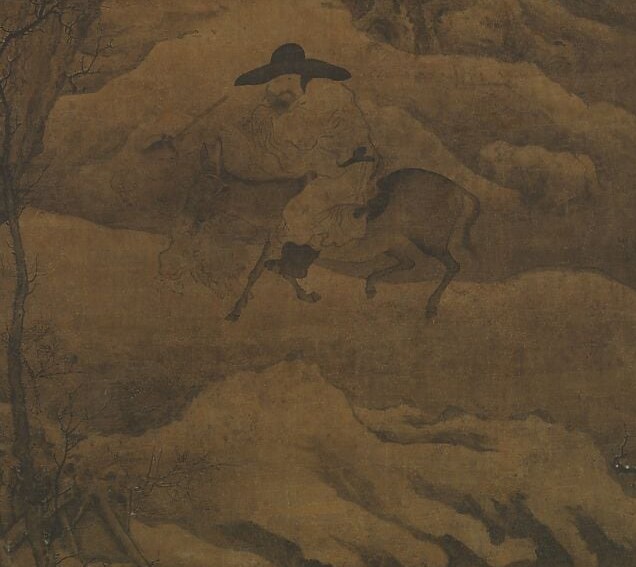
This is 'Travelers in a Wintry Forest,' a hanging scroll from early 12th-century China, attributed to an anonymous artist working in the style of Li Cheng. It lives in the Metropolitan Museum of Art. The painting carries a quiet scandal: for a very long time, it was believed to be by Li Cheng himself, the 10th-century master whose winter landscapes defined the genre. Then the eye of scholarship sharpened, and the attribution was revoked.
Look at the branching tips of the bare trees. The 'crab-claw' endings are Li Cheng's most famous fingerprint, and they are faithfully reproduced here. But look closer at the cliff mass. The texture strokes are faint and even, lacking the bold, angular energy of the genuine master. The ink wash in the misty background recedes beautifully, but the hand is softer, more cautious. Someone learned the lesson perfectly, but the muscle memory was their own.
For nine centuries, Chinese artists learned by copying. This was not forgery in the modern sense; it was transmission. A student would absorb a master's technique so completely that the line between them blurred. This scroll, likely painted around 1116, two hundred years after Li Cheng's death, is a document of that devotion. It was relabeled, demoted in the catalogues, yet it remains one of the great winter landscapes of the Northern Song tradition. The seals in the margins trace its passage through collectors' hands, each owner adding a layer of history to the silk.
The painting asks an uneasy question: if an unknown artist creates something this haunting, does the name really matter? Stand before it long enough, and the attribution argument dissolves into the mist itself.
Details
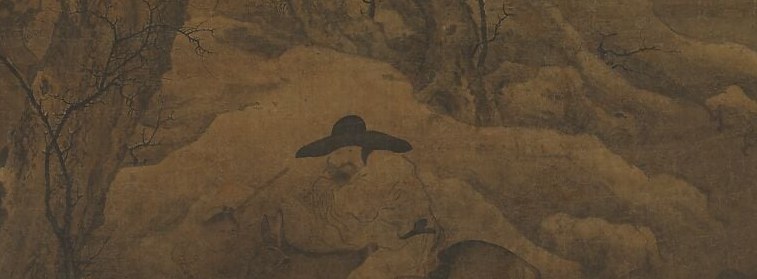
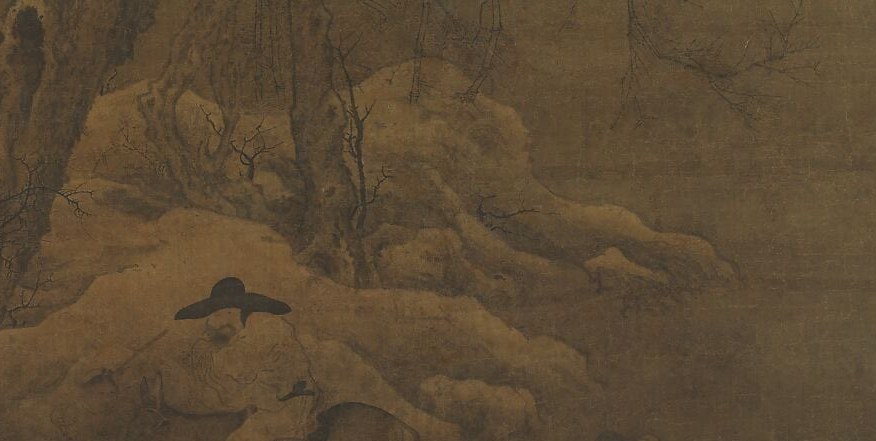
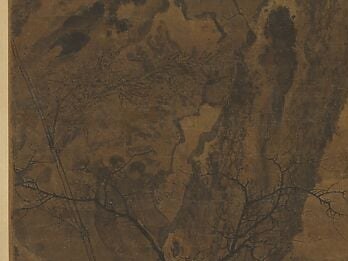
Transcript
For centuries, this was by Li Cheng, the winter master. His signature was those crab-claw branches. Then scholars noticed a problem. The ink handling is too soft. The rock texture too polite. It was downgraded. 'After Li Cheng.' Painter unknown. Yet it still stops the room. The snow, the silence, the void.