Admiral Jacob Binkes (born about 1640, died 1677) by Nicolaes Maes
Admiral Jacob Binkes, painted by Nicolaes Maes around 1676, is a portrait that served as evidence. Binkes died in battle in 1677, but his nephew spent decades locked in a lawsuit against the Dutch Admiralty, trying to recover a colossal sum of lost prize money. This painting was likely commissioned to keep the admiral present and powerful, a visual argument in court rather than a simple memorial.
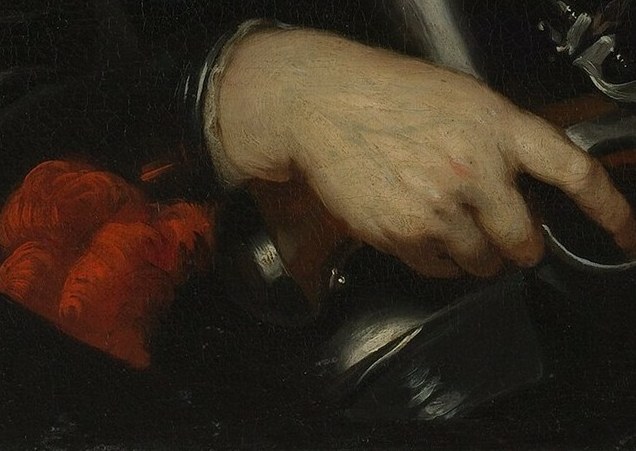
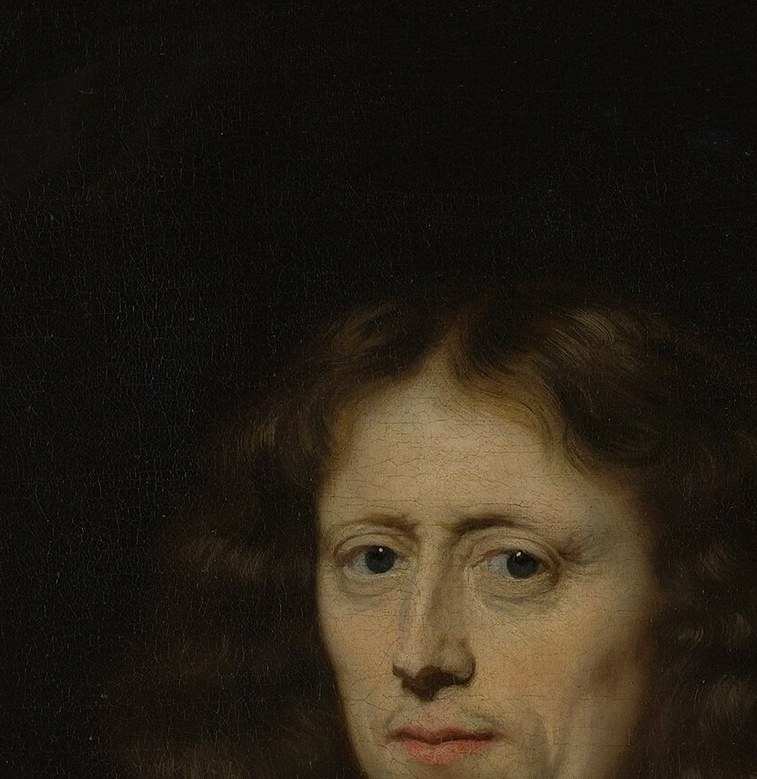
Look at the face. Maes, trained by Rembrandt, concentrates all psychological weight in the eyes and the slight asymmetry of the expression. The admiral looks directly at you with an alert stillness. Below, his hand rests near a red commander's baton, the single warm accent in a dark palette, drawing your eye straight to the mark of his rank.
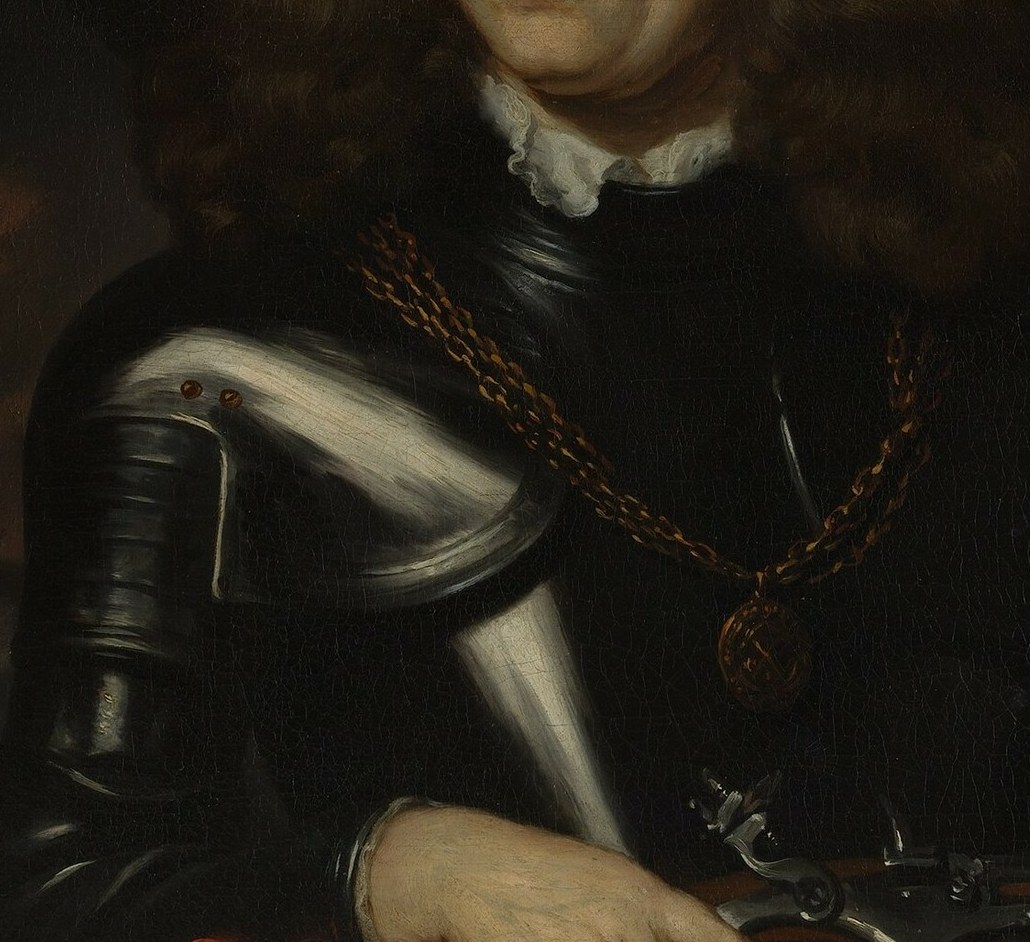
The armor itself is a statement. The polished steel cuirass reflects light subtly, marking this as a martial portrait, not a merchant's. The long, cascading curls are rendered with the fluency of a painter who knew texture communicated status. Maes was Amsterdam's leading portraitist, and he knew exactly how to project aristocratic command.
A portrait like this was a high-stakes tool. It had to convince a courtroom, and a country, that a dead man's honor was still worth real money.
Details

Transcript
He died in battle. This portrait came two years later. Look at the armor. Polished steel, painted like a mirror. And the red baton below: a commander's rank, claimed forever. His face is calm. But this painting was a gamble. His nephew sued the Dutch state for a fortune in lost prize money. The court case dragged on for decades. It needed an admiral, not a ghost. His portrait had to prove he was worth every guilder.