Portrait of a woman (1548) by Catarina van Hemessen
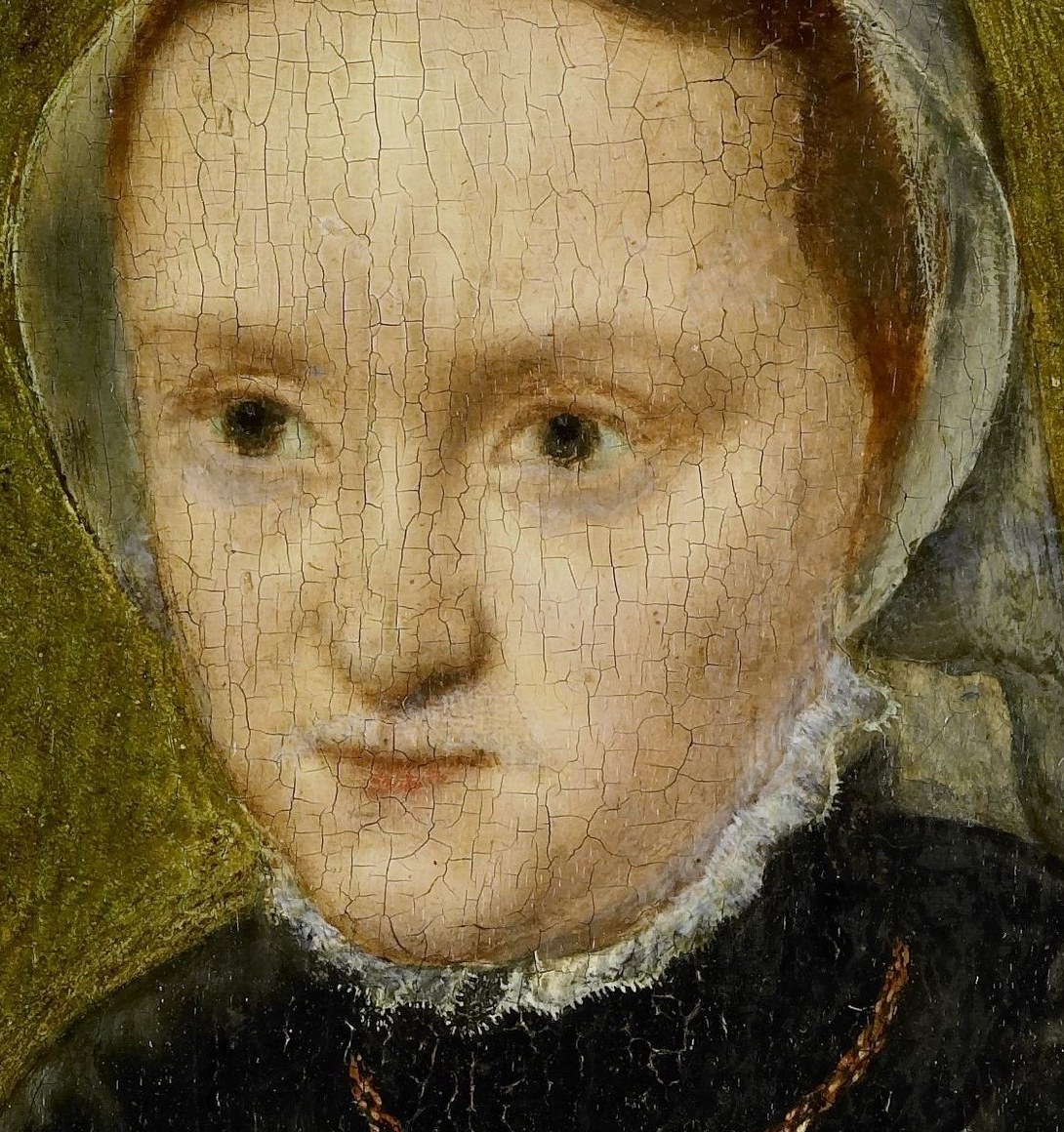
This self-portrait by Catarina van Hemessen, painted in 1548 and now in the Rijksmuseum, is one of art history's quiet landmarks. She is the earliest Flemish woman painter with verifiable surviving work. She signed this panel in her own name when women were barred from every painters' guild.
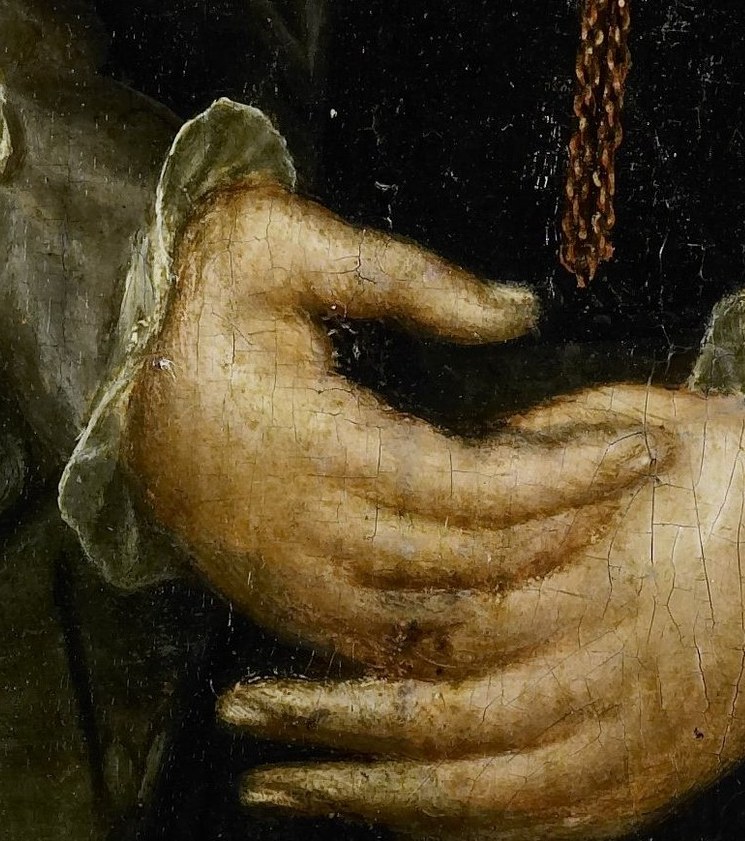
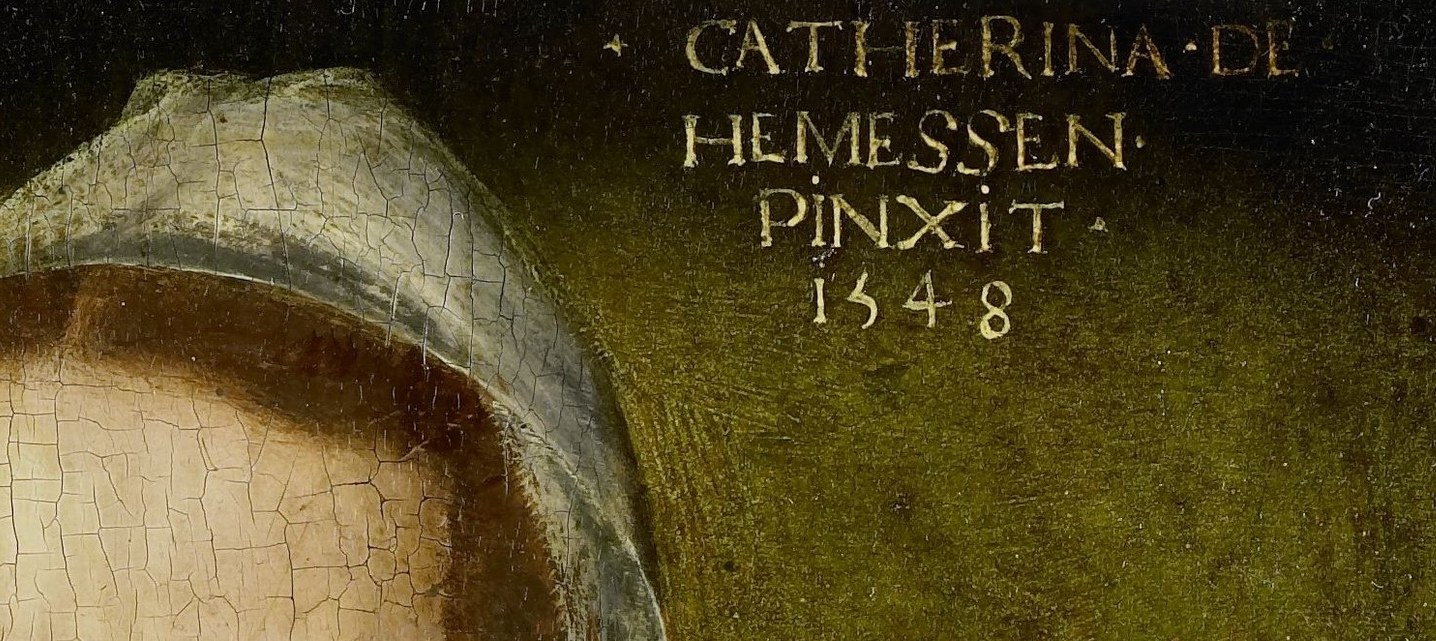
Look at the red string at her throat, the only vivid color in a severe black gown. Her folded hands perform the modesty her century demanded. The signature in the upper right reads 'Catherina de Hemessen pinxit 1548.' She claimed authorship in a world that told her she had no right to it.
Van Hemessen trained under her father, a successful painter, then produced small portraits of women before largely disappearing from the record after her marriage in 1554. Fewer than ten works survive. The modest pose was what the world asked of her. The signature was what she asked of it. Nearly five centuries later, her name is the one we still read.
Details
Transcript
In 1548, no Flemish painters' guild admitted women. She painted her own face, looking straight out at you. Hands folded. The pose of female virtue. A red string. The only vivid color in the black. She signed it: Catherina de Hemessen painted this, 1548. The earliest Flemish woman painter whose work survived.