The Hunters in the Snow by Pieter Brueghel the Elder
View the artwork: The Hunters in the Snow →
Pieter Bruegel the Elder's "The Hunters in the Snow" (1565, oil on oak panel) lives in the Kunsthistorisches Museum in Vienna, where it has quietly broken hearts for over four centuries. It is one of five surviving works from a cycle originally commissioned to hang in the private house of Nicolaas Jongelinck, a wealthy Antwerp merchant who wanted every season on his wall. This is December and January, a depth of winter so total it reads as a kind of stilled tragedy.
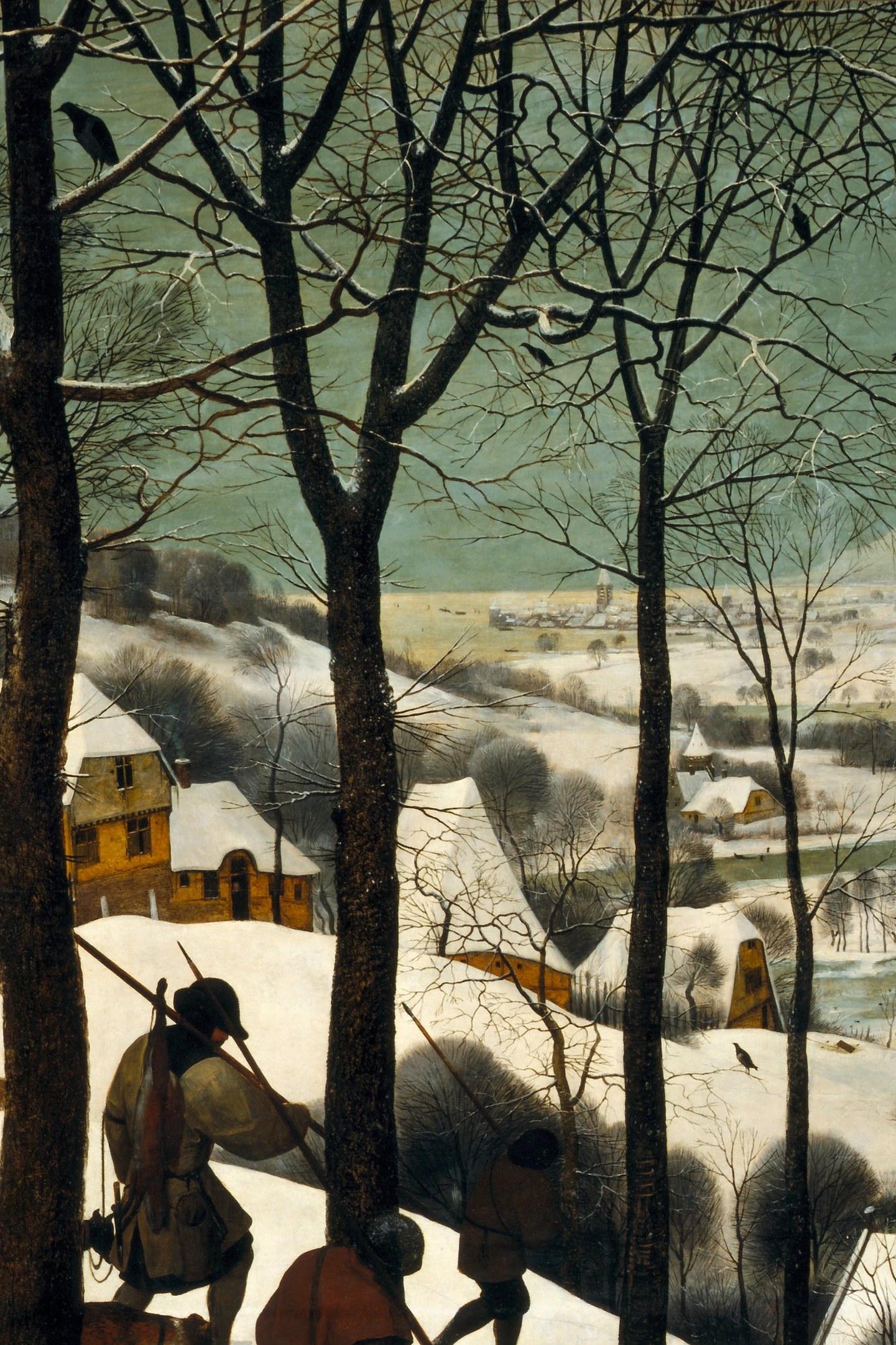
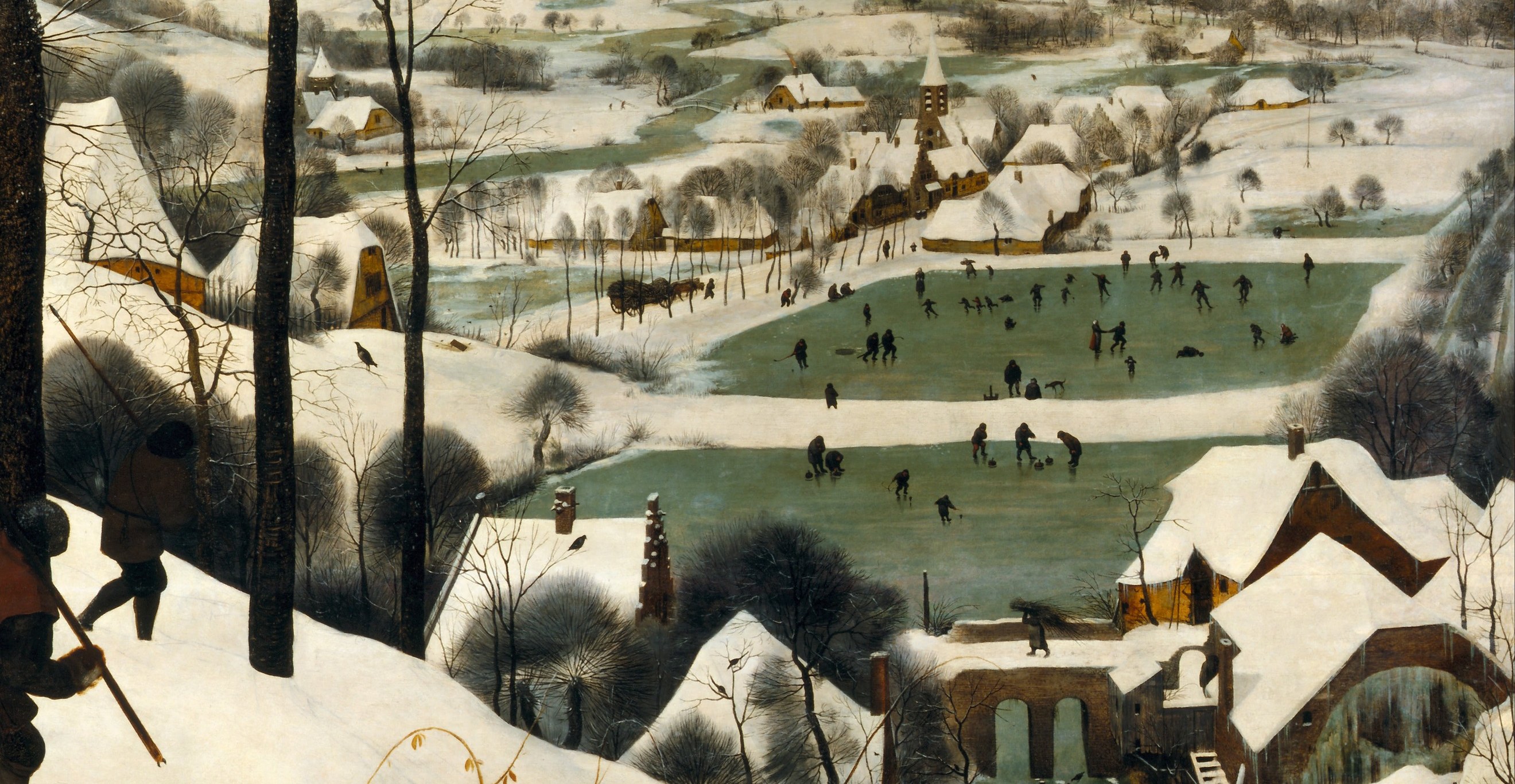
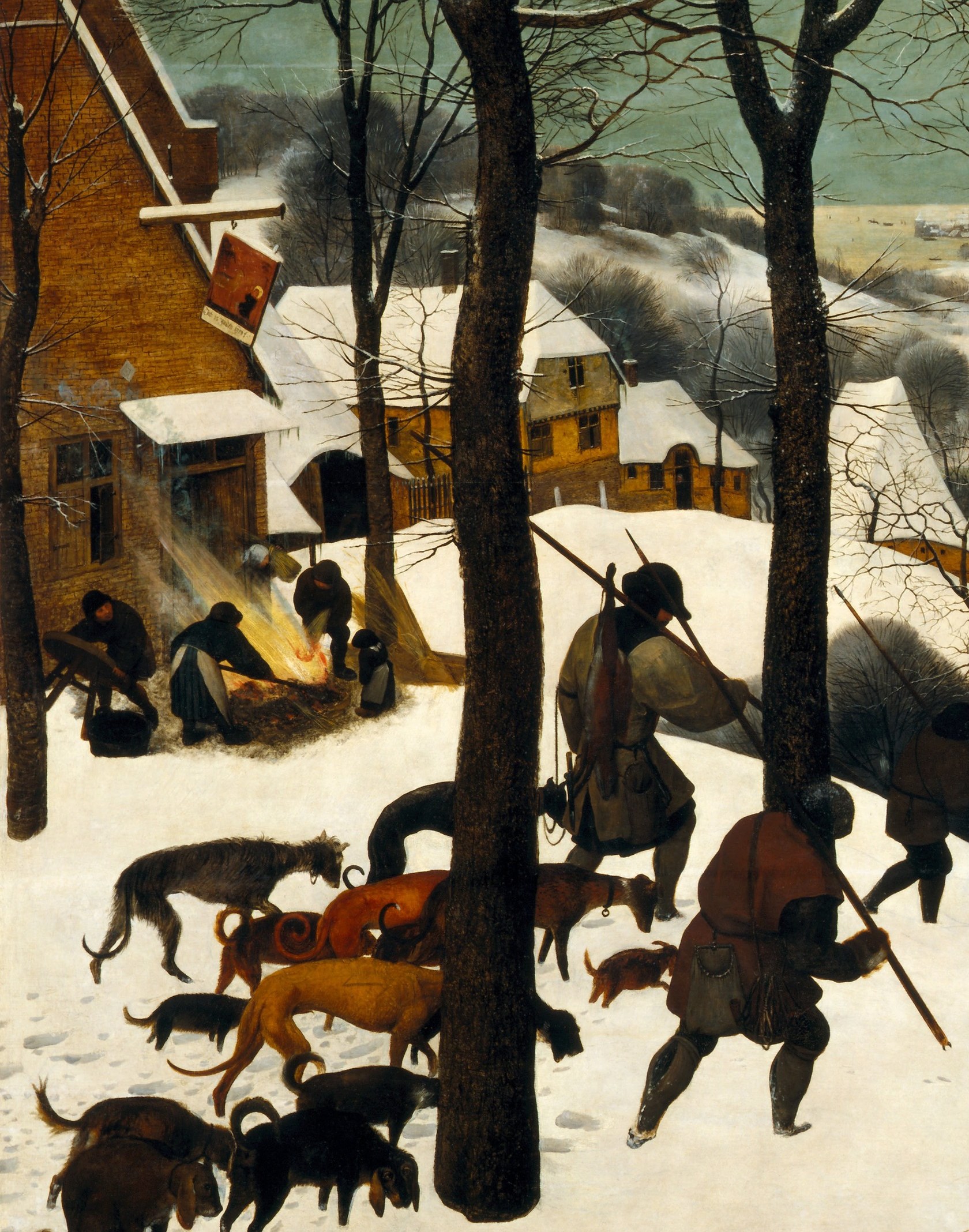
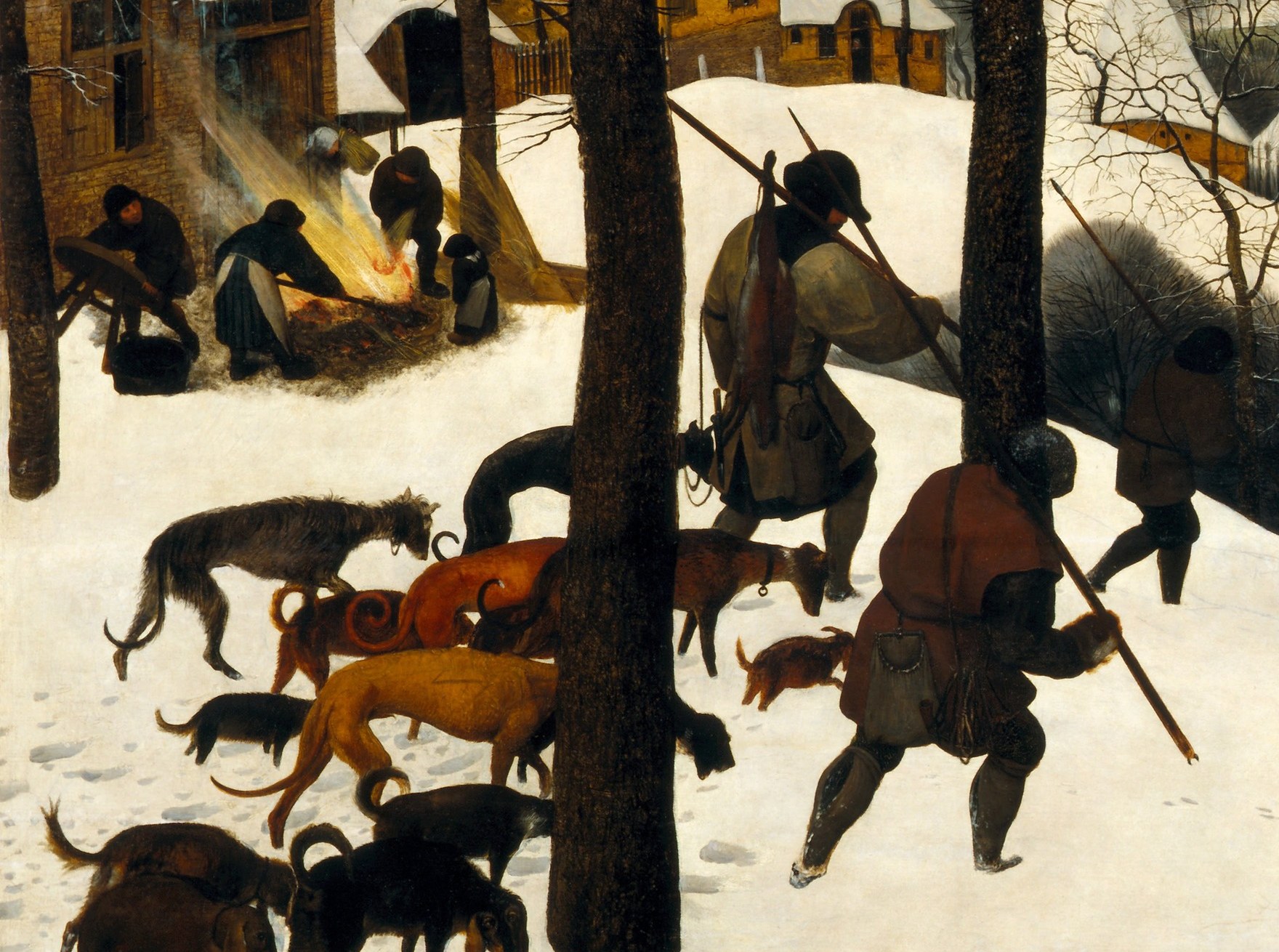
The painting splits almost cruelly. In the foreground, three hunters trudge uphill through drifts, their bodies folded against the weight of failure, their pack of thin dogs a perfect echo of their fatigue. A single dark fox hangs from a staff. That is all. Below and beyond them, the frozen valley fills with tiny, joyful skaters and a village going on with its life. The fire outside the inn is the only warm thing in the world.
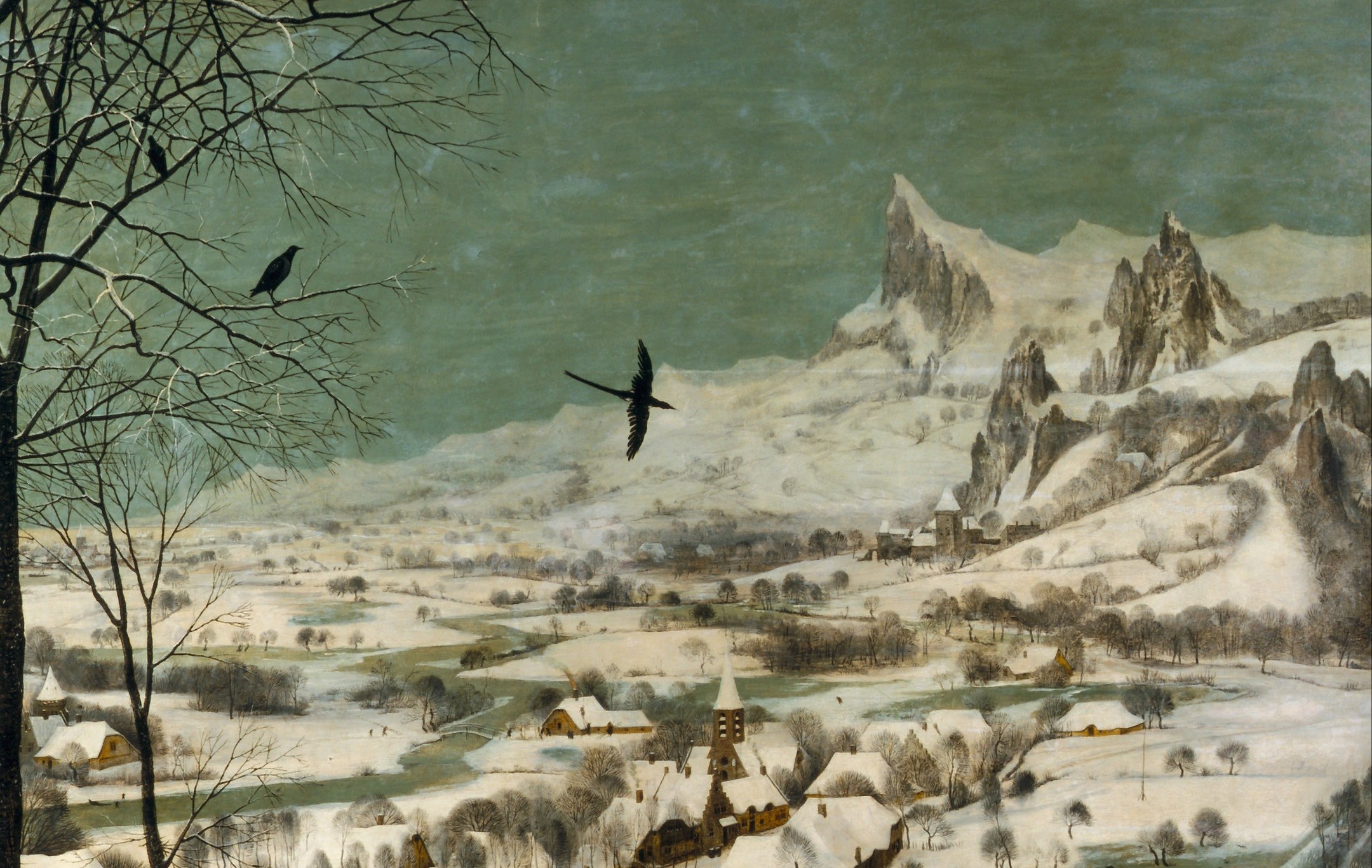
Bruegel was barely in his forties when he died, painting this panel in what would become the last decade of his short life. He did not paint the wealthy or the saintly. He painted ordinary people enduring, working, and playing through the seasons with a plainness that was, in the 1560s, a quiet revolution. The bird traps on the ice, the crows in the bare trees, the church tower anchoring the valley, all of it insists that this is not an allegory. This is a day that happened.
The thing that stays is the gap between the foreground and the background. The hunters do not look at the skaters, and the skaters do not look at the hunters. A whole community, a hundred feet apart, carrying entirely different weights and not touching. That emotional distance is the real Bruegel invention.
#arthistory #pieterbruegeltheelder #northernrenaissance
Details
Transcript
Three hunters return, shoulders low, heavy with cold. Their dogs match them bone for bone, gaunt and beaten. The whole long day's reward: a single fox. The year was 1565. The winter was brutal even by Flemish standards. Look past them now, where the valley opens into a world of play. While they trudge home defeated, the villagers skate and spin. Bruegel painted this for a rich merchant who wanted to own the seasons. He knew a village's joy never stops for one man's empty stomach.