Woman in the Garden by Claude Monet
Woman in the Garden, painted by Claude Monet in 1867, is now in the Hermitage Museum. This early work shows a structured, composed style distinct from his later, looser Impressionist paintings. Monet started this piece en plein air, a practice that would become central to his career.
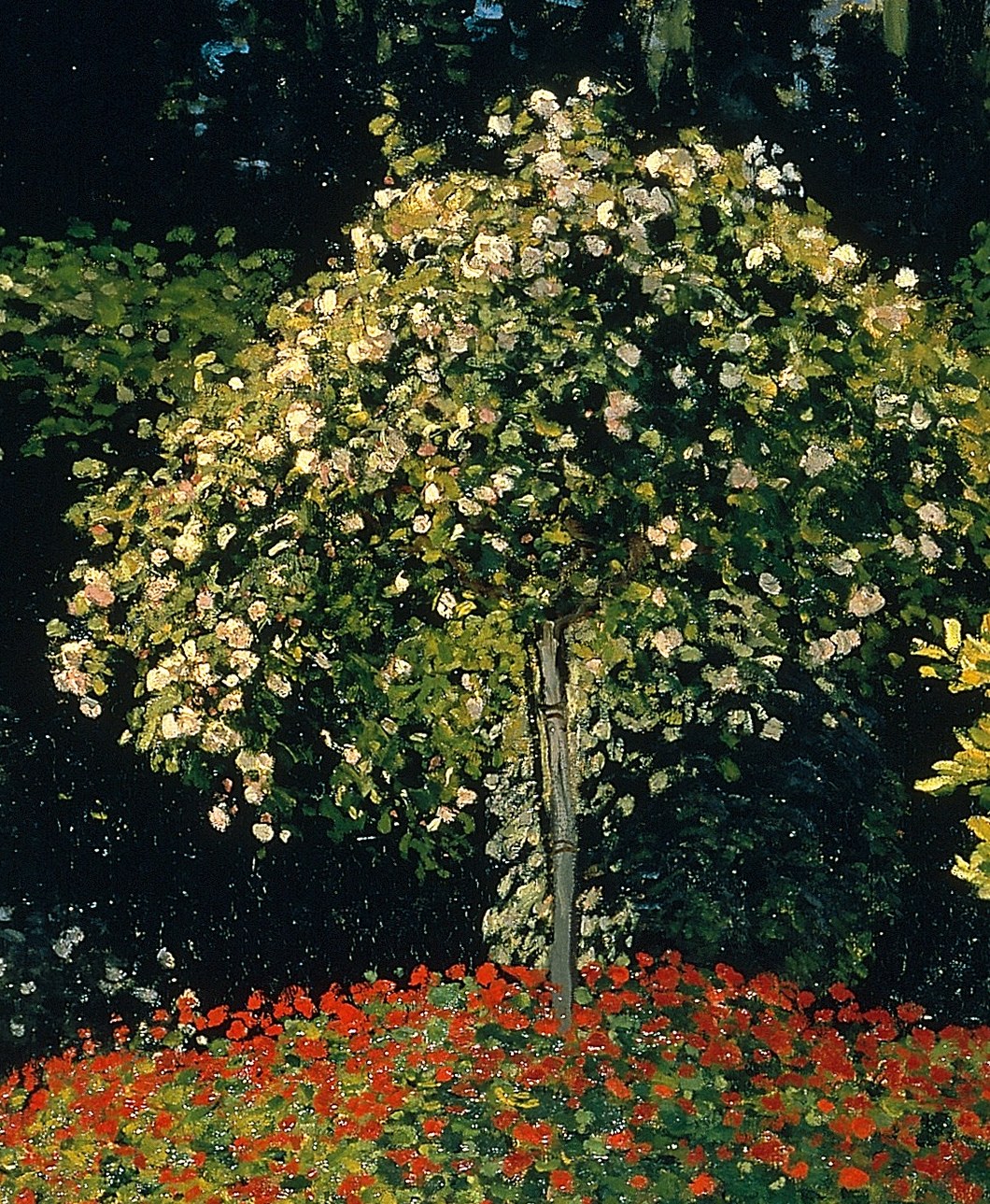
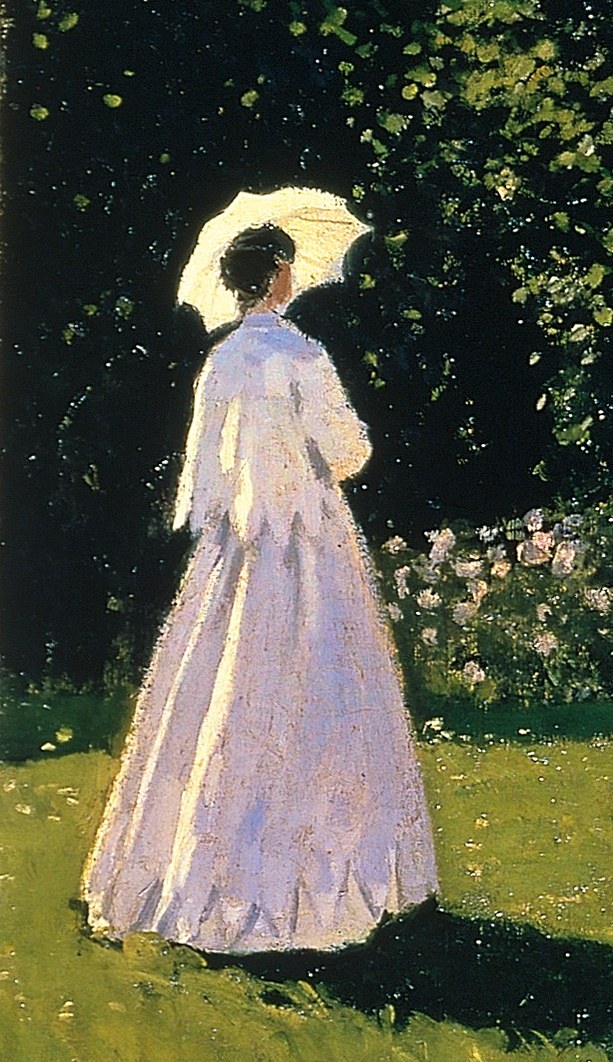
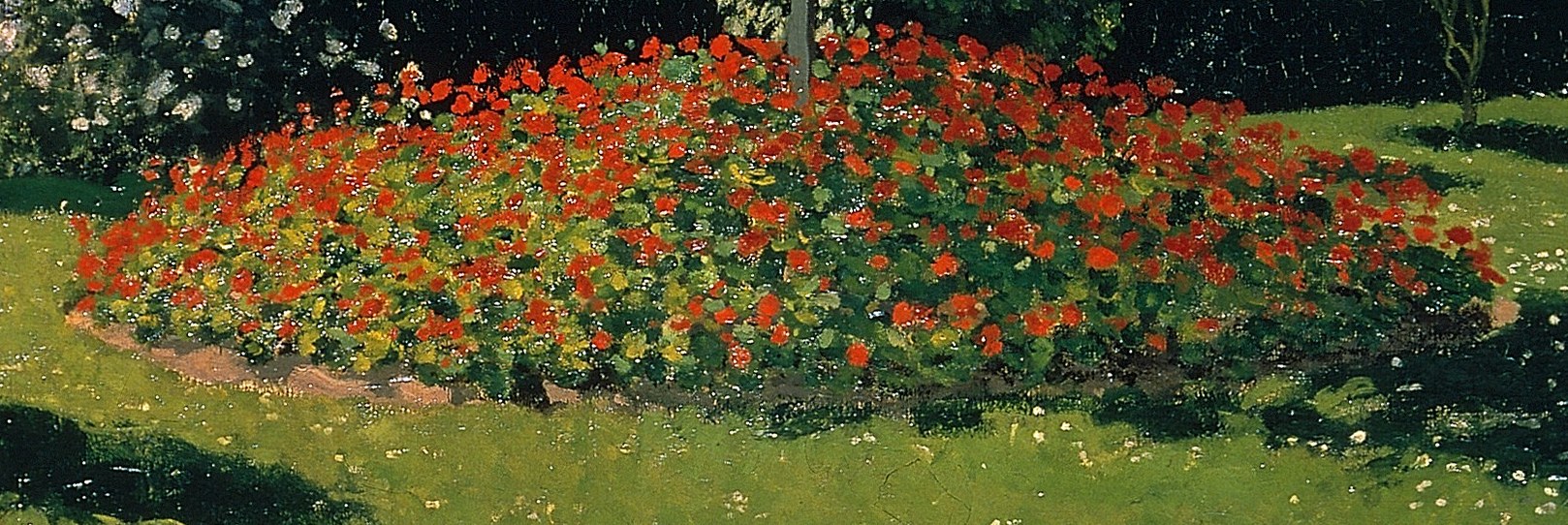
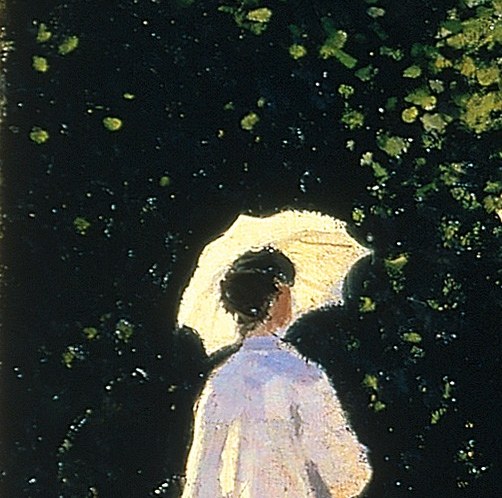
Notice how the central rose bush and the red flower bed create a strong visual anchor. Jeanne-Marguerite Lecadre, the wife of Monet's cousin, stands prominently in her white dress, which sharply contrasts with the garden's vibrant colors.
Interestingly, X-ray analysis has revealed that this canvas was painted over a previous, unknown work. This technique, combined with the detailed rendering, marks a different phase in Monet's artistic development before his iconic Impressionist style fully emerged.
Details
Transcript
This is not a typical Monet painting. He painted it outside in 1867. Look at the structured composition. She is Jeanne-Marguerite Lecadre. Her white dress pops against the red. X-rays show another painting underneath. The artist's name is Claude Monet.