Haystacks by Seurat, Georges
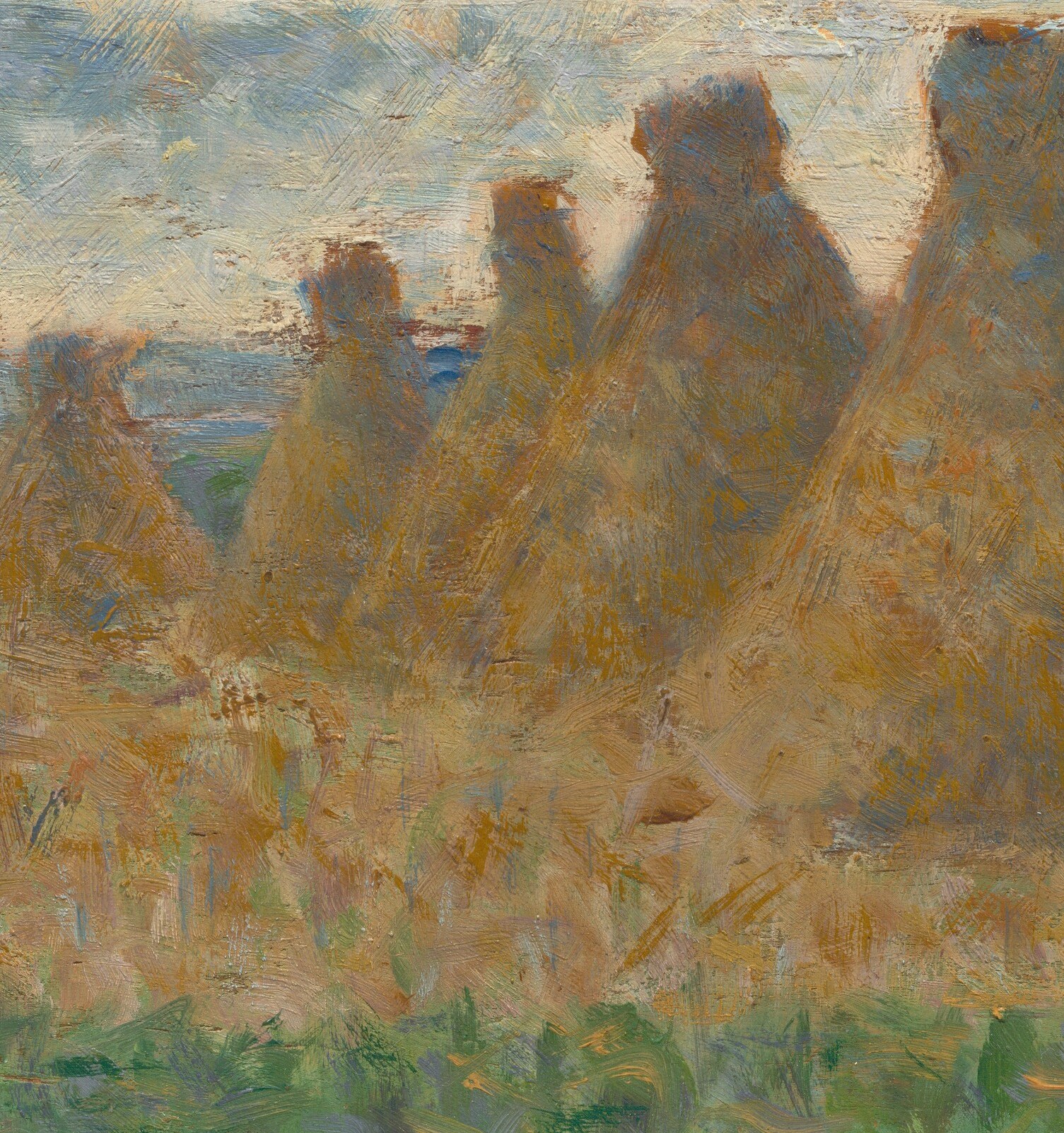
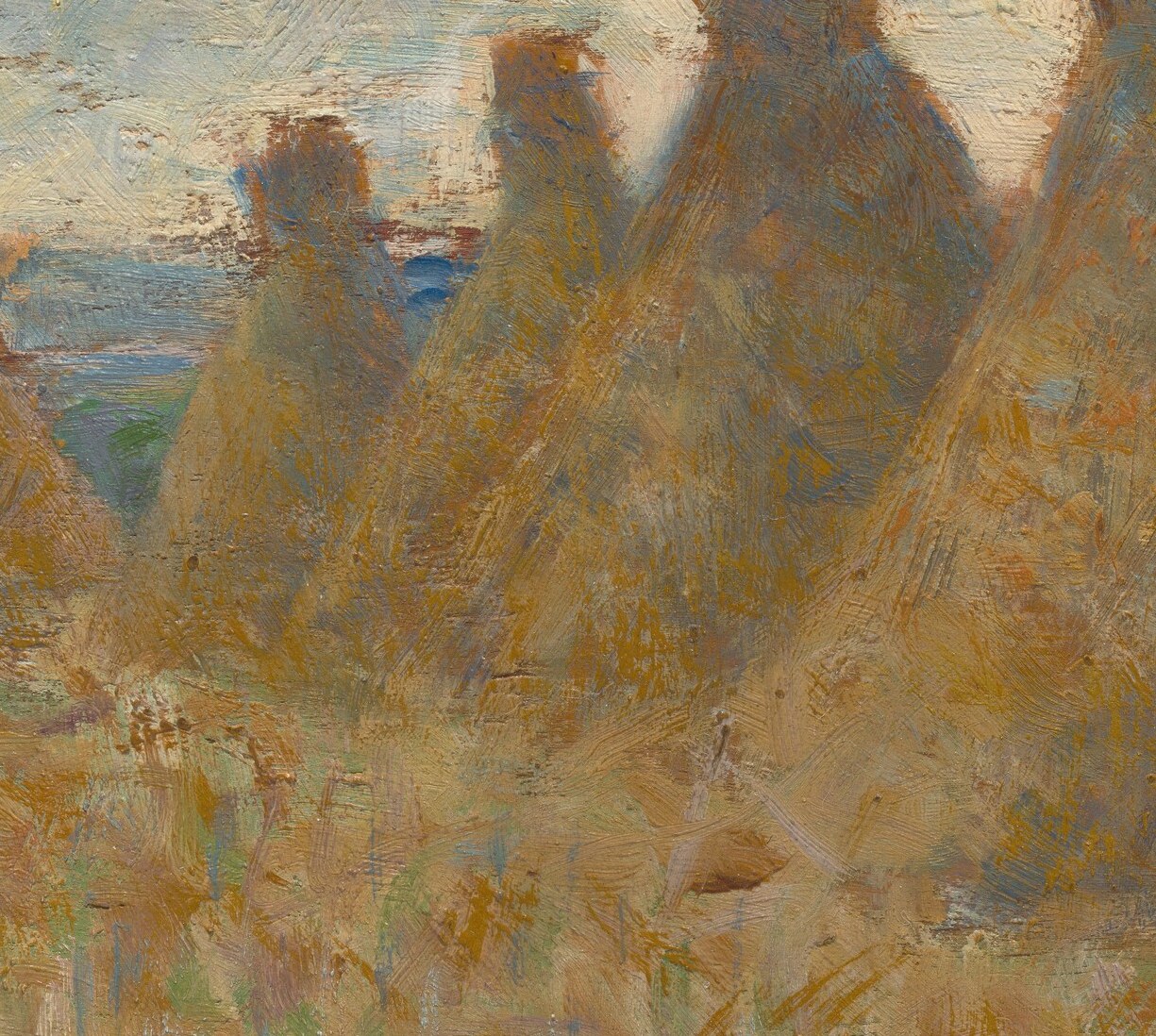
Georges Seurat’s *Haystacks*, painted around 1882, is a beautiful early work where the artist explored light and color before his signature pointillism. You can see his systematic brushwork building the texture of the hay.
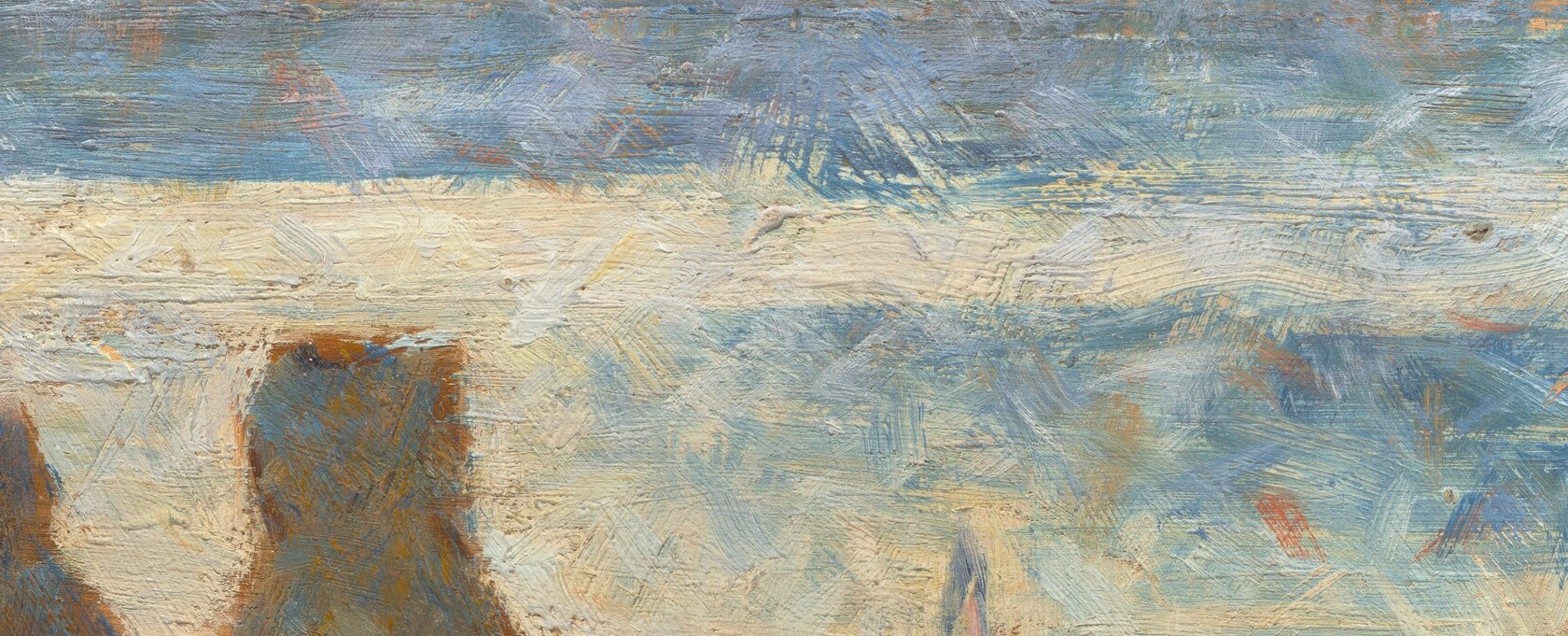
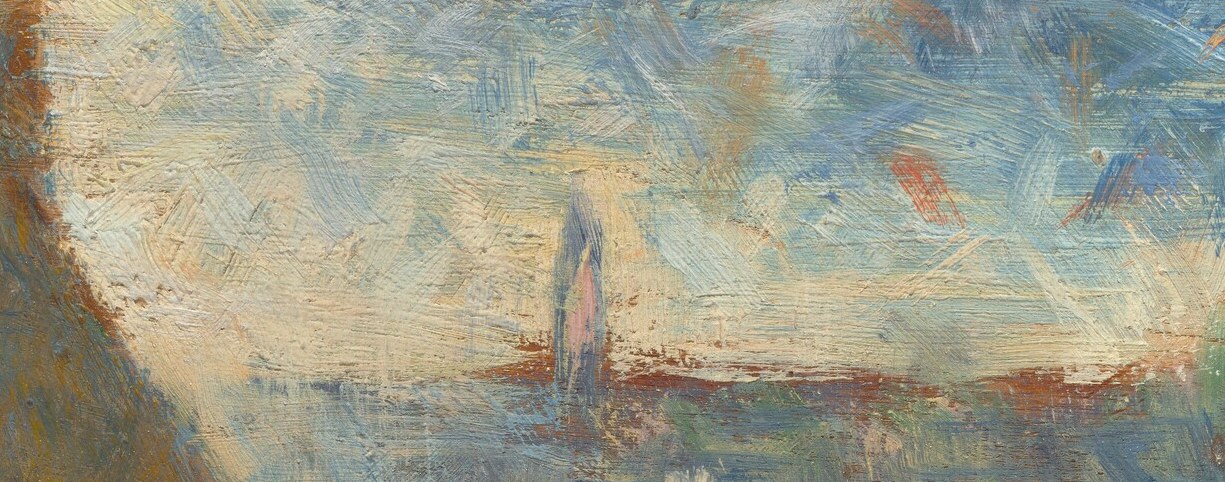
Most people scroll past this landscape, but a hidden detail on the far right horizon hints at a specific locale. Look closely at the faint silhouettes against the luminous sky; they suggest a coastal or river setting, perhaps near the Seine where Seurat often worked.
This oil on wood panel painting predates the fragmented dots that would define Seurat's later career. It shows his foundational interest in how color and light interact, establishing principles he would develop into Divisionism. It’s a quiet study that lays the groundwork for revolutionary techniques.
What other details do you notice that might place this scene?
Details

Transcript
This landscape looks quiet, almost empty. Georges Seurat painted it around 1882. It’s an early work, before his famous pointillism. He’s studying light, how it glows on the horizon. But look closely, far in the distance on the right. Tiny shapes hint at a different story here.