View of The Hague from the Delftse Vaart in the 17th Century by Cornelis Springer
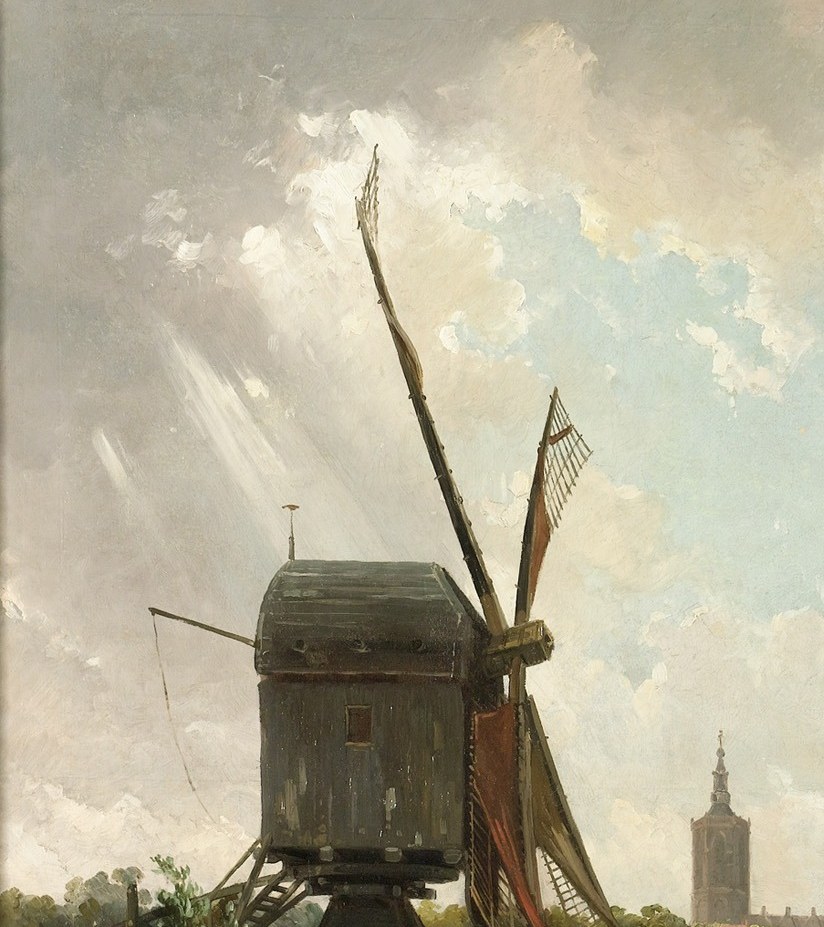
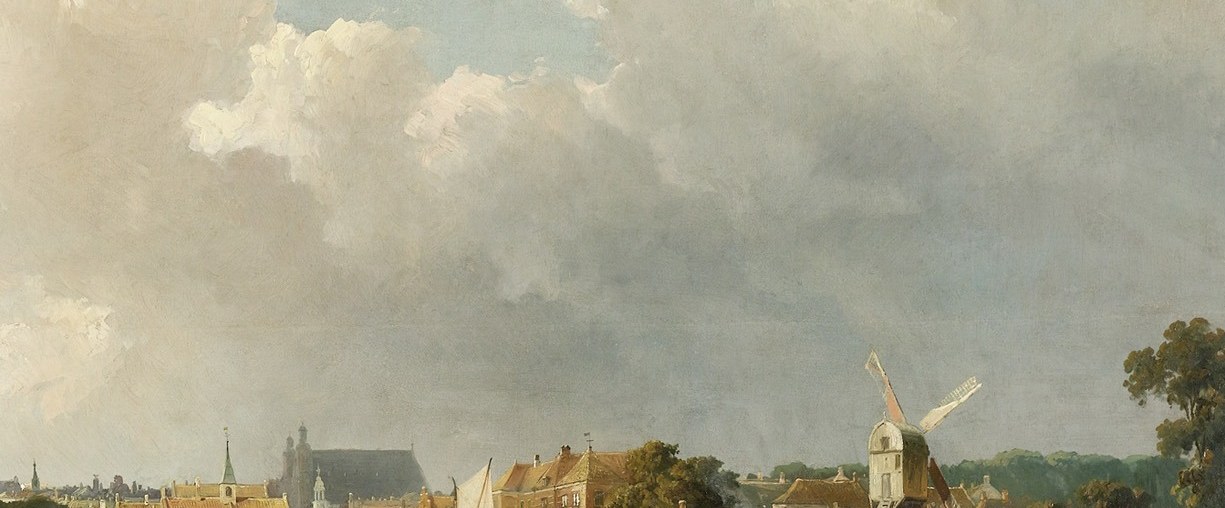
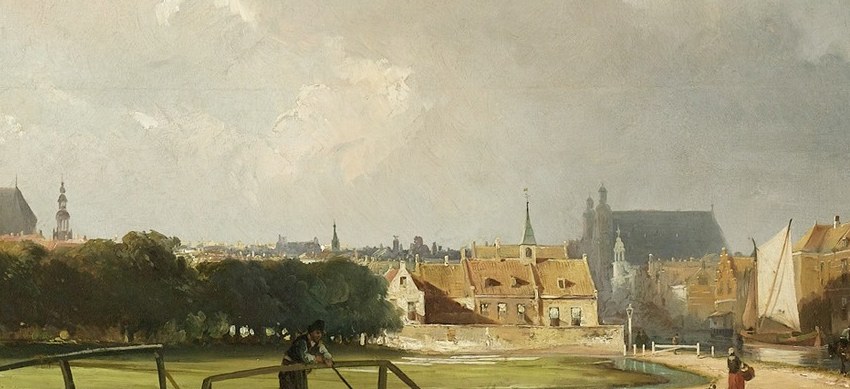
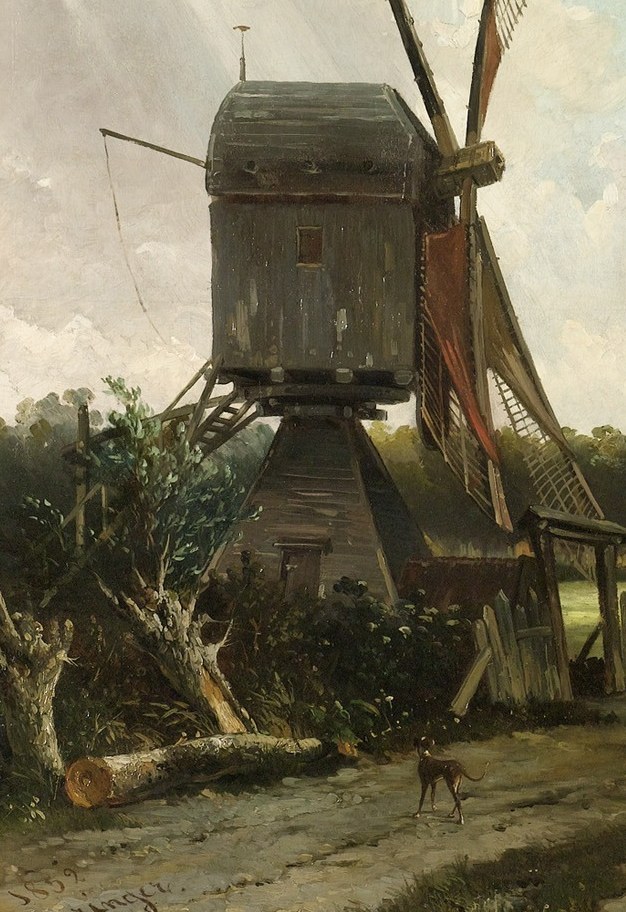
View of The Hague from the Delftse Vaart in the 17th Century was painted by Cornelis Springer in 1852, and its calm surface conceals a courtroom drama. Springer was an Amsterdam artist obsessed with the architecture and light of the Dutch Golden Age, but he painted it with 19th-century hands.
Look closely at the city silhouette on the far bank, especially the slender church spire. These are not generic buildings. Springer recorded specific structures in The Hague, many of which were demolished in the 19th century. The painting is a historical archive of a skyline that no longer exists.
The legal trouble began when a collector bought this work, believing it was a genuine 17th-century painting. When he discovered it was brand new, he sued Springer for fraud. The case hinged on proving that the artist had not intended to deceive. Springer's defense was his own meticulous technique: his joinery, his plank grain on the windmill, his modern precision. The court ruled in his favor, deciding the work was an homage, not a forgery.
What do you think separates an inspired historical tribute from a deliberate fake?
Details

Transcript
An idyllic 17th-century canal scene. The windmill, the passenger boat, the church spire. Painted in 1852 by Cornelis Springer. But it was not 1852. It was a forgery of the Golden Age. A collector sued Springer, claiming he was tricked into buying a fake antique. Look at the skyline. He documented buildings since demolished. Springer won in court. His precision proved it was not a fake, just new.