Brittany Landscape by Gauguin, Paul
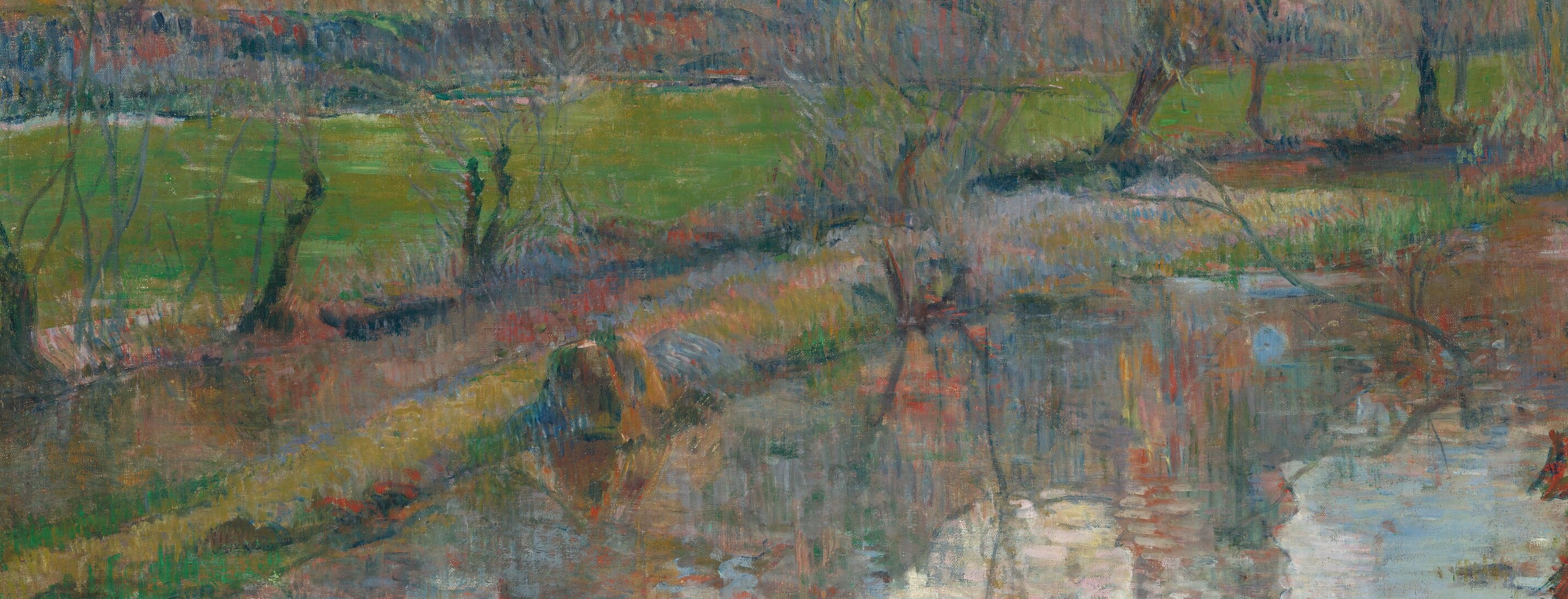
Paul Gauguin's "Brittany Landscape" (1888) shows the exact moment a former stockbroker quit Impressionism for good. Painted in Pont-Aven, this canvas is a manifesto in disguise: it throws out natural light and shadow in favor of unmodulated slabs of color. Gauguin is not describing the landscape. He is declaring it.
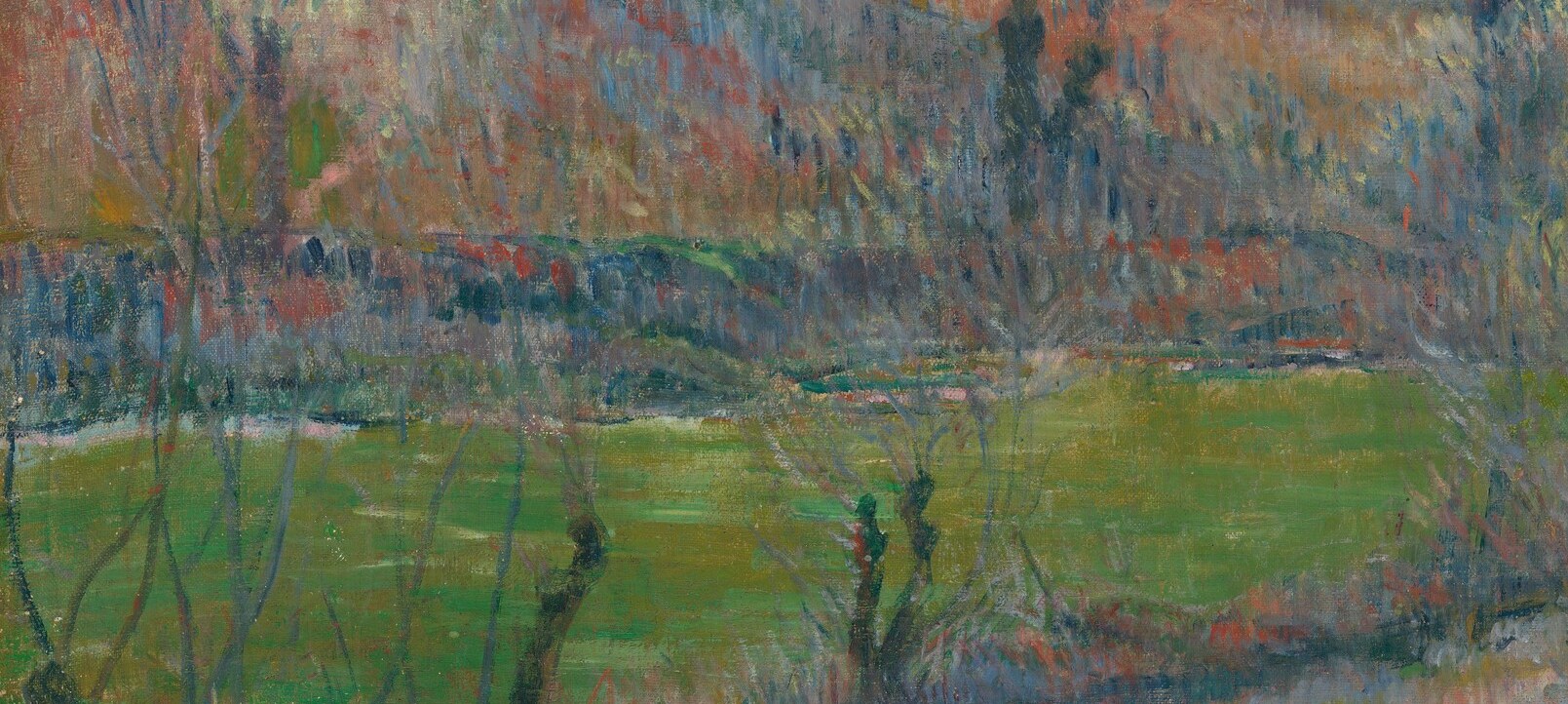
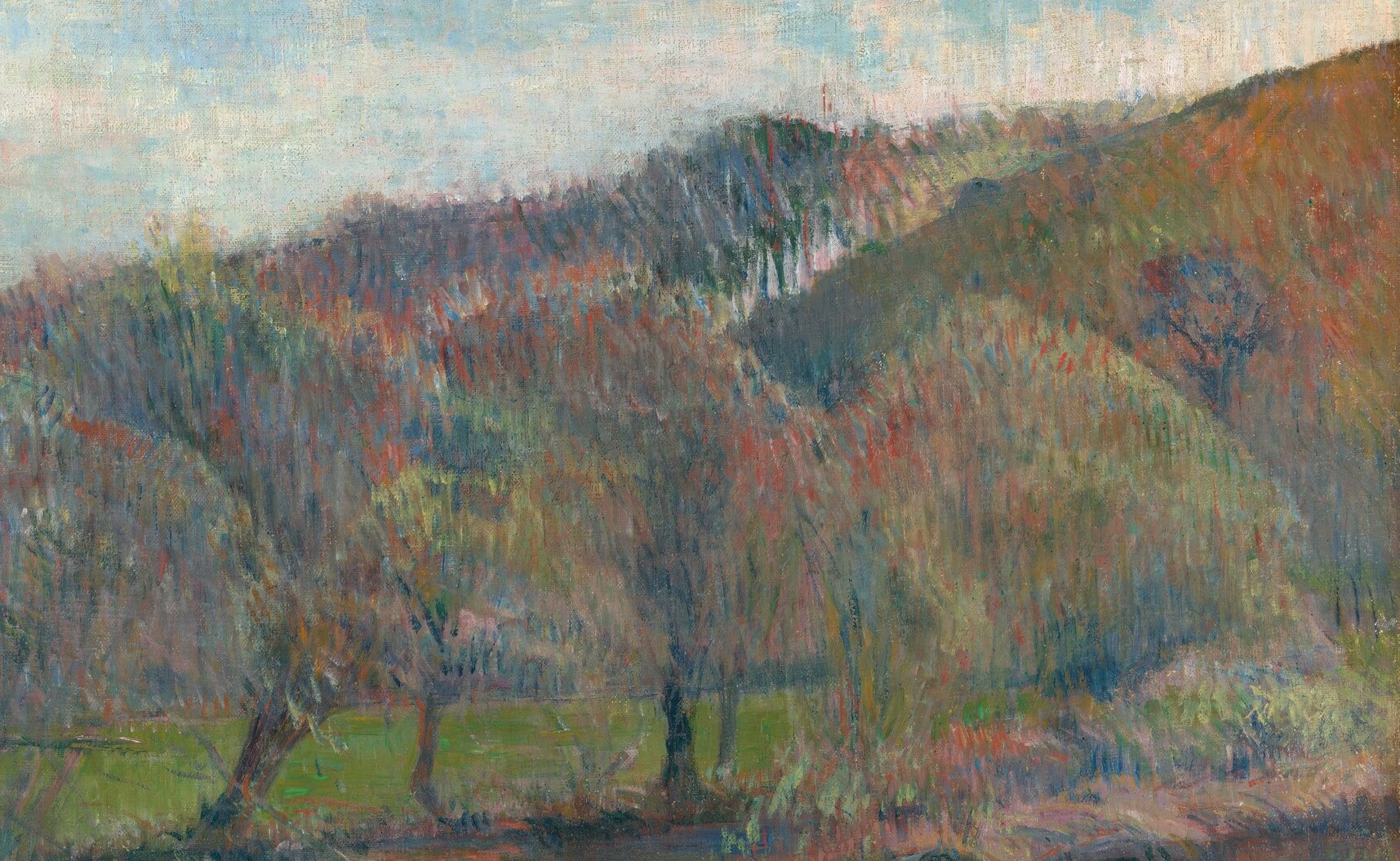
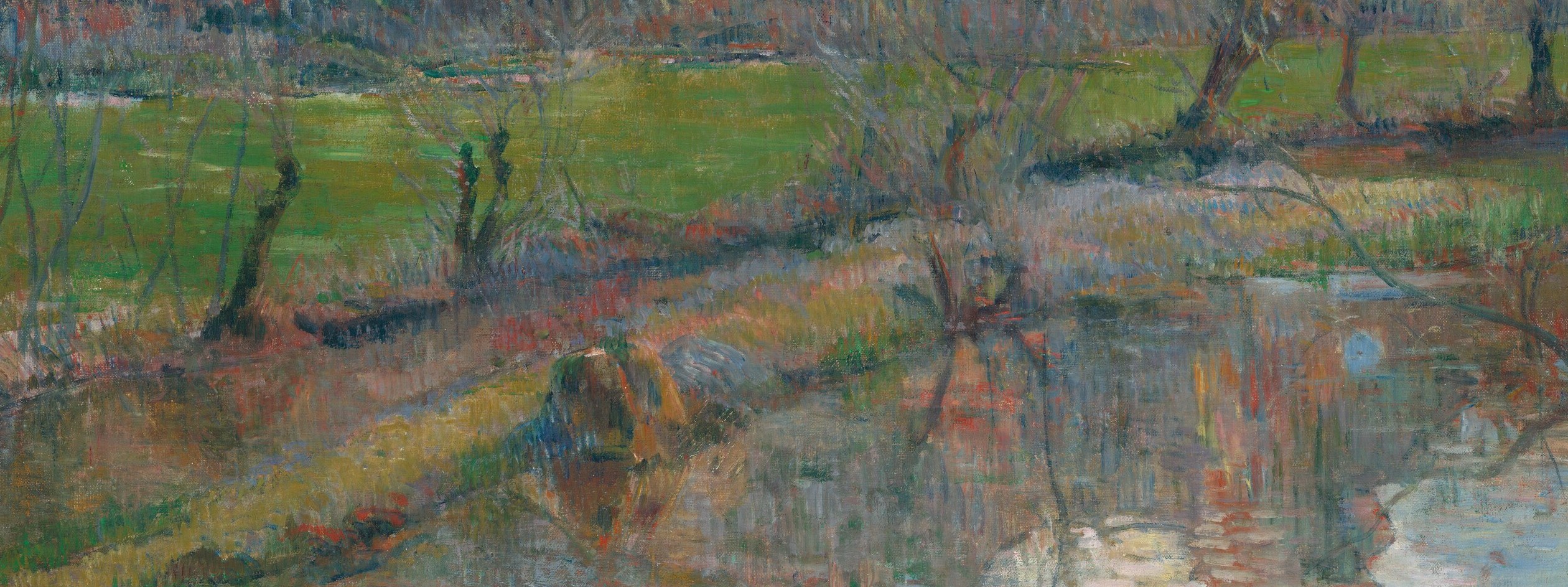
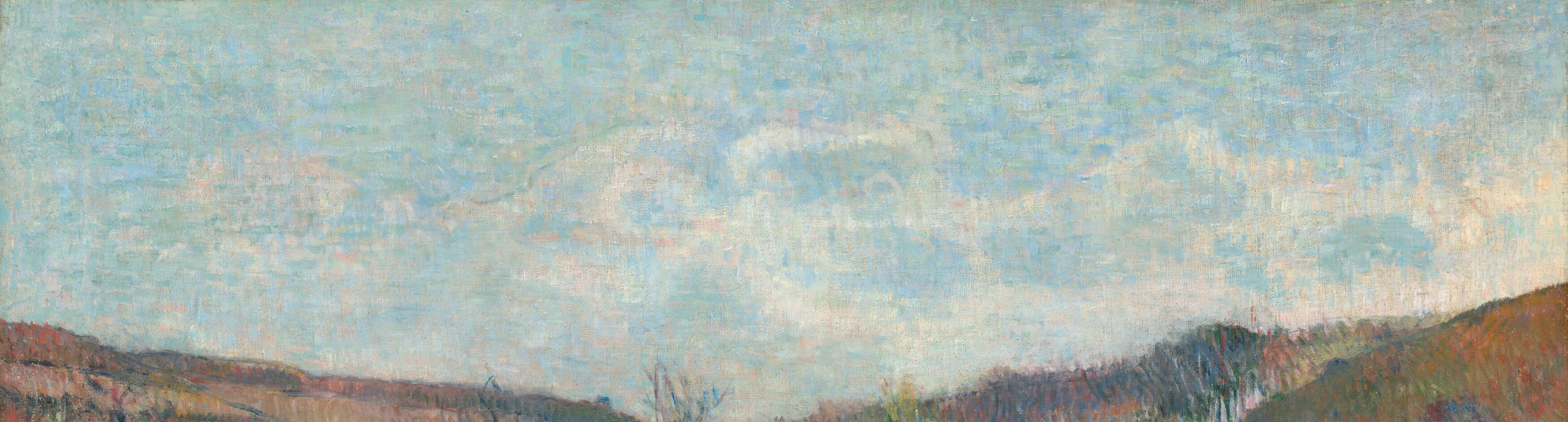
Move your eye from the green meadow at left to the orange hillside at right. Gauguin pairs a hot color with a cool one with no atmospheric blending. The trees on the ridge are repeated like a decorative frieze, not observed nature. And if you scan from the clouds down to the water, you will see the reflection is a near-exact mirror: the sky and the river collapse into a single patterned plane. That trick, borrowed from Japanese woodblock prints, kills Renaissance depth in one stroke.
Gauguin was 40 years old and newly destitute after the Paris stock market crash of 1882 drove him into full-time painting. He fled to rural Brittany searching for a pre-modern authenticity he felt Paris had erased. The fishermen, the granite crosses, the unspoiled valleys of Pont-Aven gave him the raw material for a new visual language he called Synthetism: strong outlines, flat color, symbolic rather than descriptive form.
This painting is modest in scale, but it carries the DNA of everything he would do next in Tahiti and beyond. What feels like a quiet country scene is really a quiet act of rebellion. What do you notice first here: the calm, or the strangeness of the color?
Details
Transcript
A quiet river valley in Brittany. 1888. Paul Gauguin arrived here looking for a world untouched by modern Paris. Look at how he paints the hills. No shadows. Just a slab of unbroken green. He called this Synthetism. Color as pure declaration, not description. An orange hillside sits beside a green river. On purpose. Gauguin was a stockbroker until a market crash wiped him out. He lost everything, and painting became the only thing left.