Osage Indians by Catlin, George
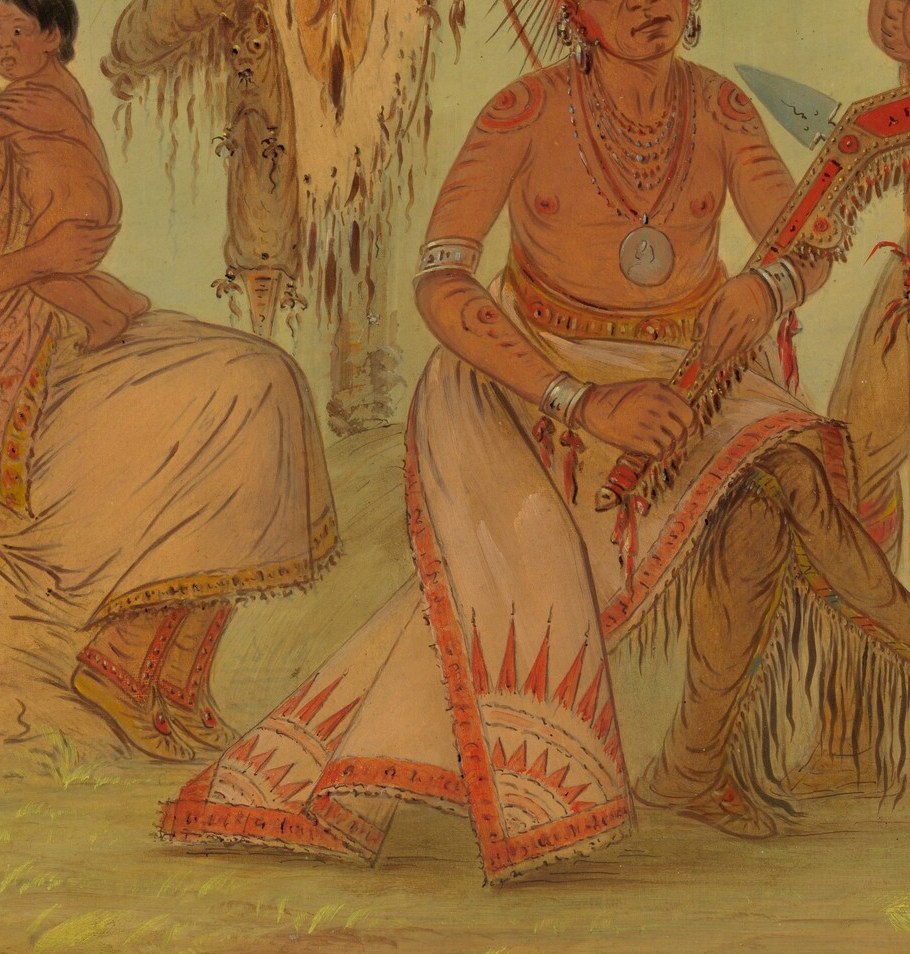
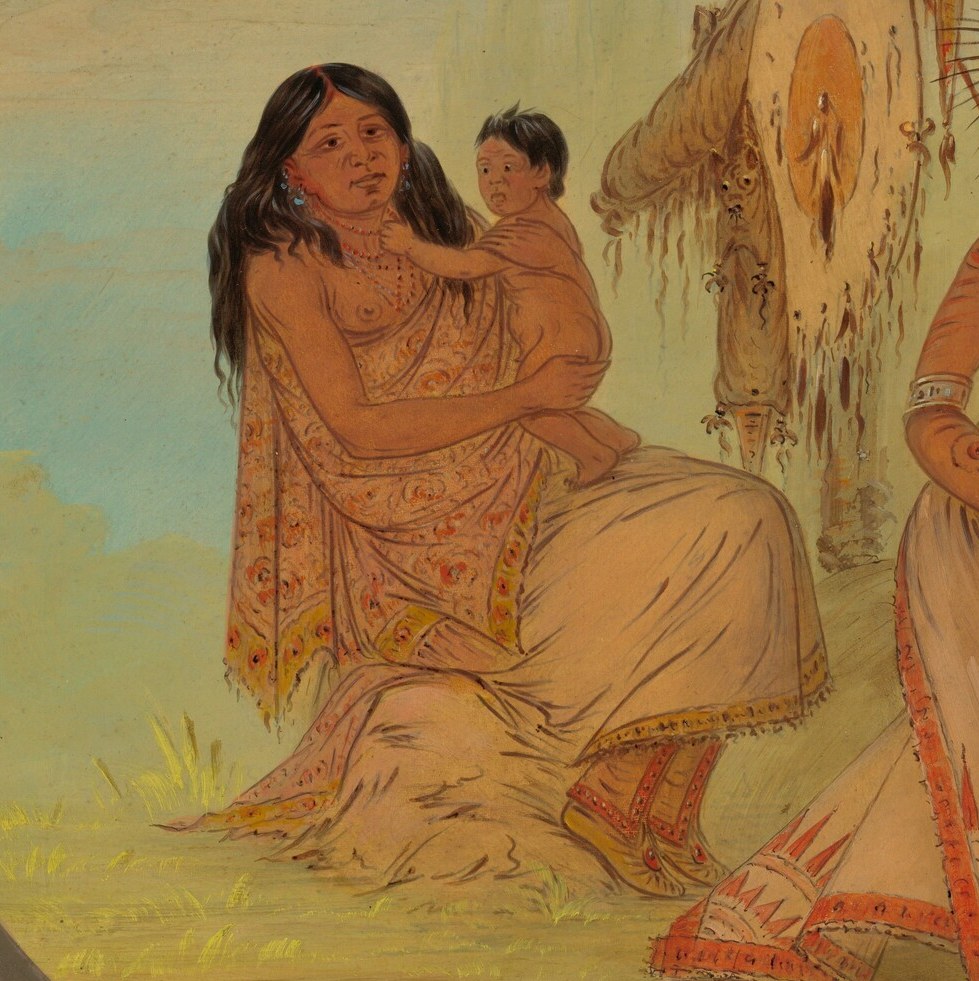
George Catlin's "Osage Indians," painted between 1861 and 1869, captures a poignant family scene at a crucial moment in American history. Housed in a museum collection, this oil on card offers a window into the lives of Native American peoples during the 19th century.
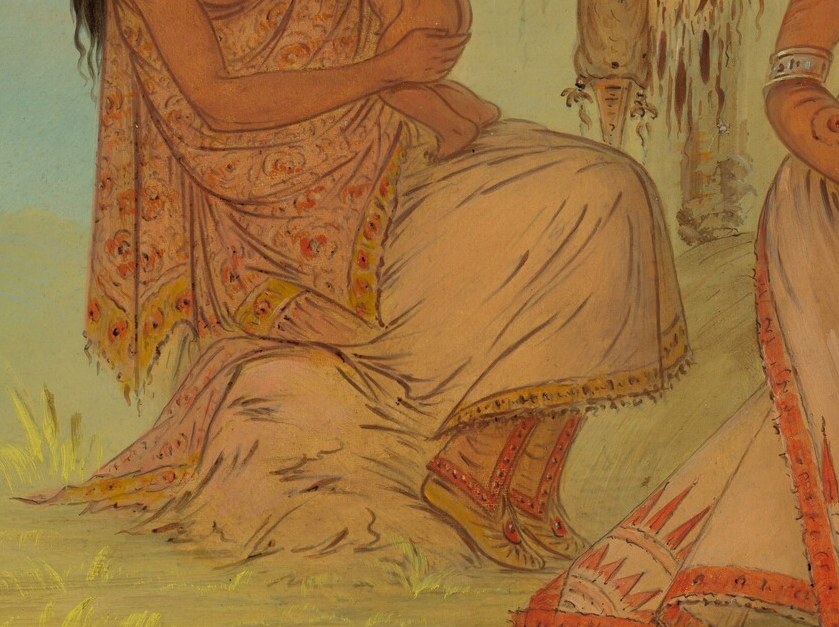
Look closely at the figures: the seated man's feathered headdress and beaded leg ornament signify his status and cultural richness. The woman gently cradles her child, a universal image of maternal care, while other figures stand watch, embodying their roles within the community.
Catlin, a lawyer turned artist, extensively documented Plains Indian life through his travels in the 1830s. His work aimed to preserve a visual record of Indigenous cultures amidst rapid westward expansion, making his ethnographic portraits invaluable historical documents.
What stories do you see in the details of their attire and expressions?
Details
Transcript
This painter rode across the American West, capturing what he saw. He sought to document Indigenous life through their faces. This seated man wears a vibrant feathered headdress. His leg ornament shows intricate beadwork, a cultural artistry. The woman holds her child, a tender, vulnerable moment. This painting from 1865 records their family and identity.