The Rest on the Flight into Egypt by Nicolas Poussin
This is Nicolas Poussin's The Rest on the Flight into Egypt, painted around 1627 and now in The Metropolitan Museum of Art. The scene comes not from the Gospels but from apocryphal texts: during the Holy Family's escape, a palm tree bent down to offer dates to the weary travelers, and angels attended to their needs.
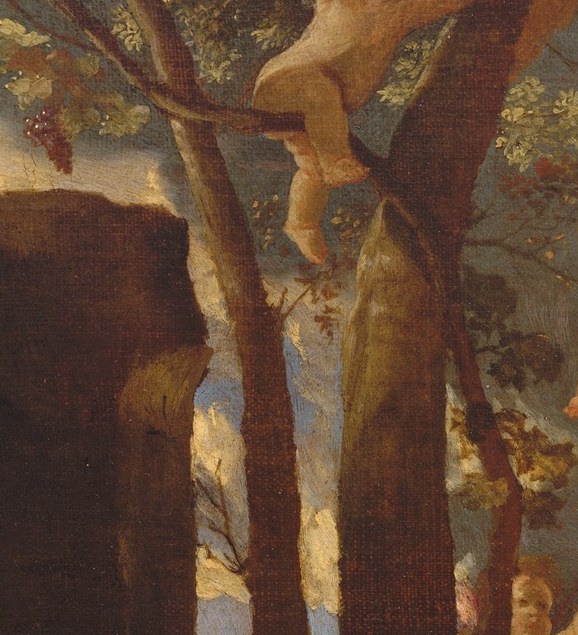
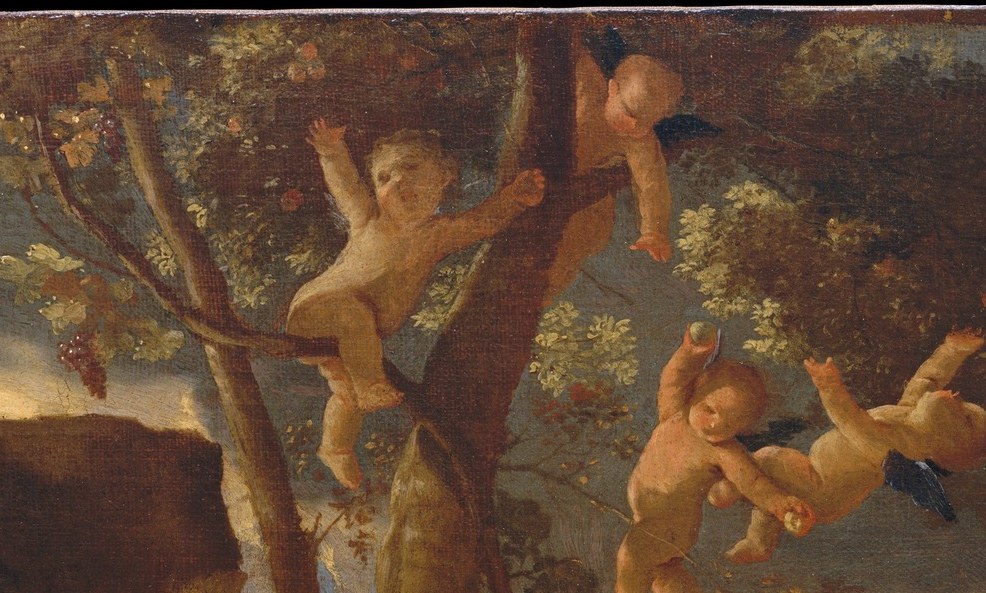
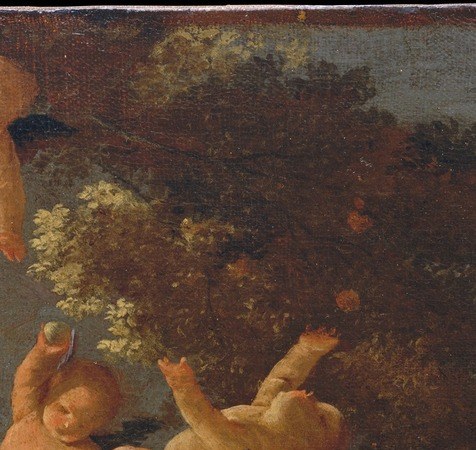
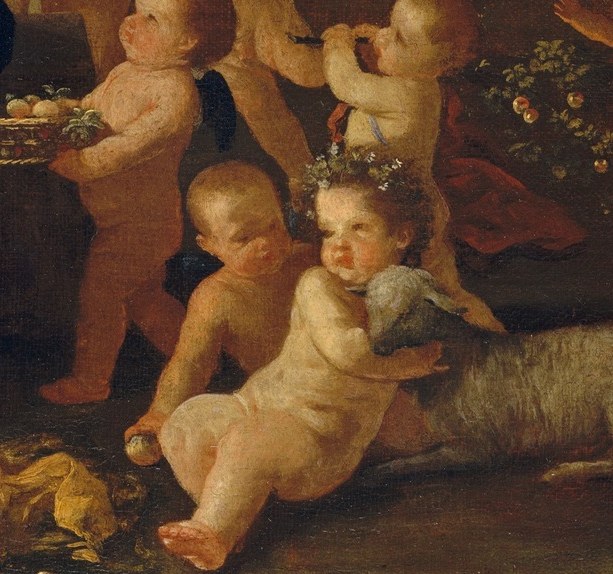
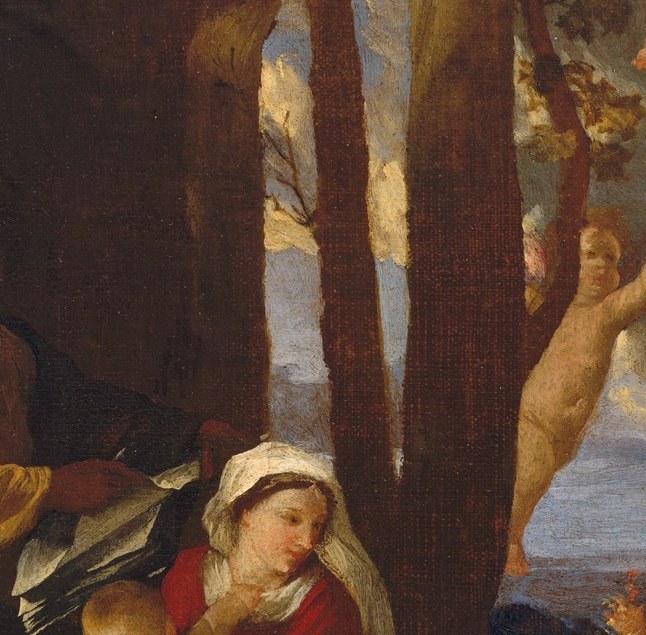
Most viewers naturally settle on the tender central trio: Mary holding the infant Christ, Joseph with an open book. But Poussin rewards the slow look. At upper right, a single putto reaches toward fruit, its pose borrowed from the antique sculpture Poussin studied obsessively in Rome. And in the lower right corner, tucked where casual scrollers rarely pause, a lamb reclines in the grass.
That lamb is not mere pastoral decoration. For a painter as deliberate as Poussin, every element carries weight. The lamb is Agnus Dei, the Lamb of God, a Christological symbol planted quietly at the margin. The infant Jesus rests in Mary's arms at center; his sacrificial identity already waits at the edge of the frame.
Poussin spent most of his career in Rome, building a reputation for clarity and intellectual rigor. Here, he balances the baroque energy of floating putti with a compositional calm that feels almost sculptural. The lamb in the corner is characteristic: the most important idea in the painting, offered without fanfare.
Details
Transcript
A family pauses during a desperate escape. Mary holds the child close. Joseph reads. Apocryphal stories say angels fed them in the desert. Poussin painted these weightless figures floating in the trees. Now look to the opposite corner, at the very edge. A lamb rests beside them. Poussin never put anything by accident. It is Agnus Dei, the lamb of God, already present at the journey's start.