Man with a Celestial Globe by Nicolaes Eliaszoon Pickenoy
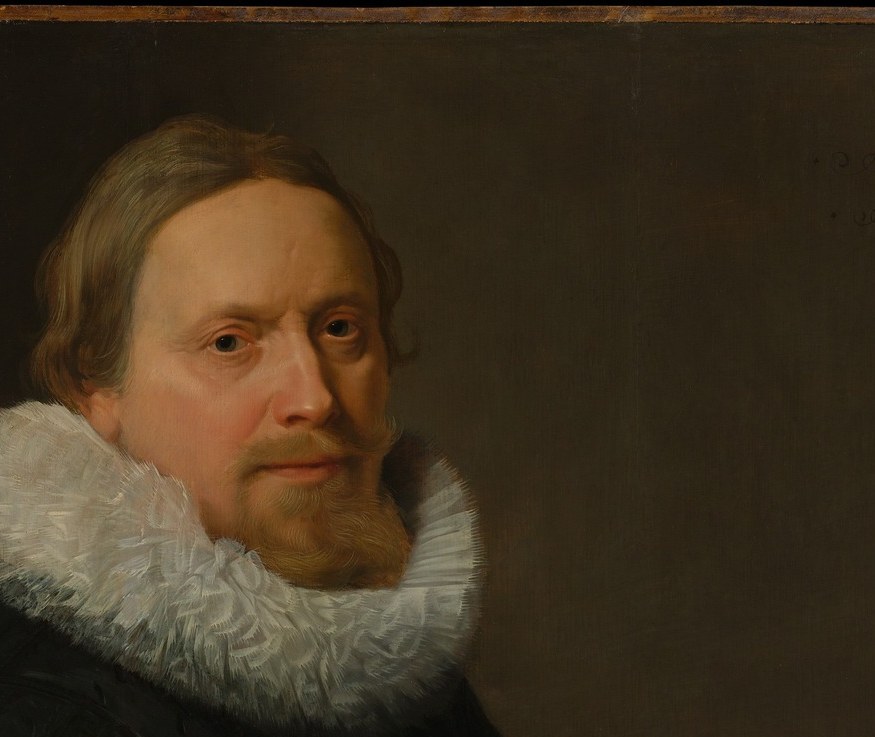
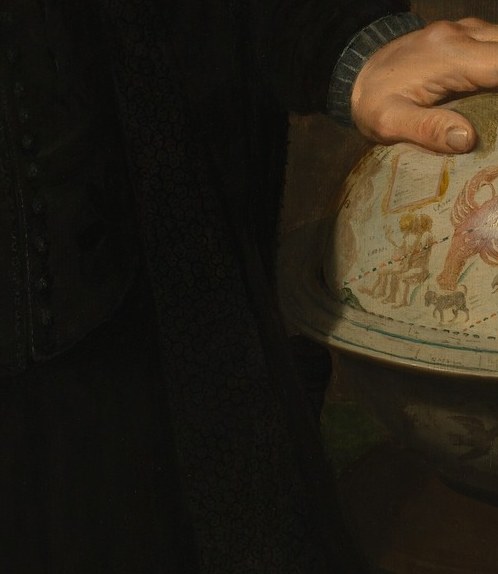
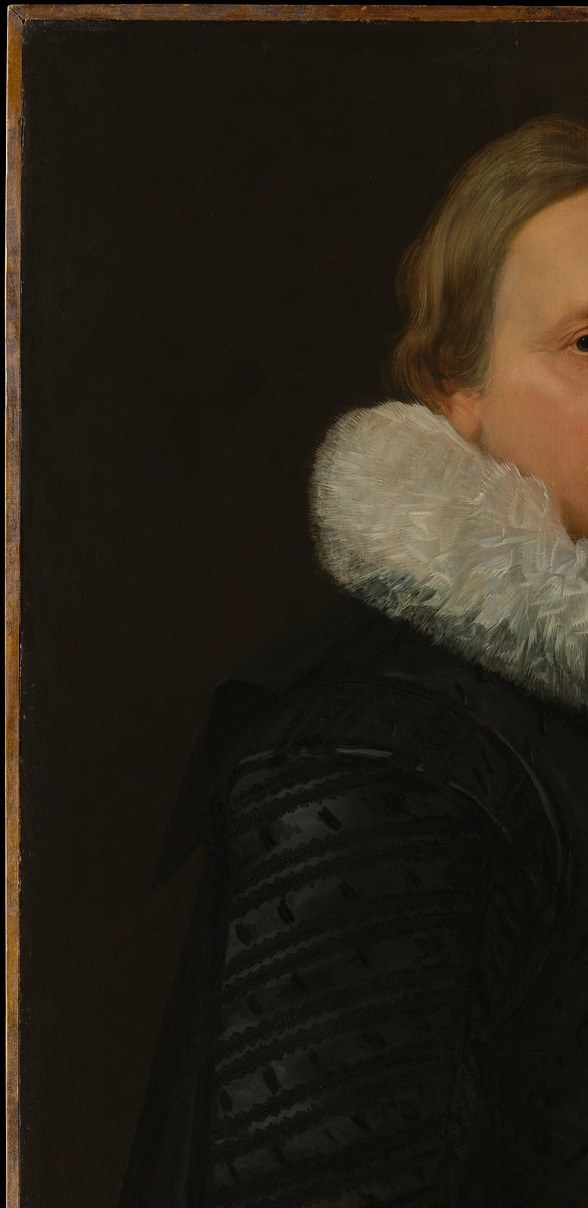
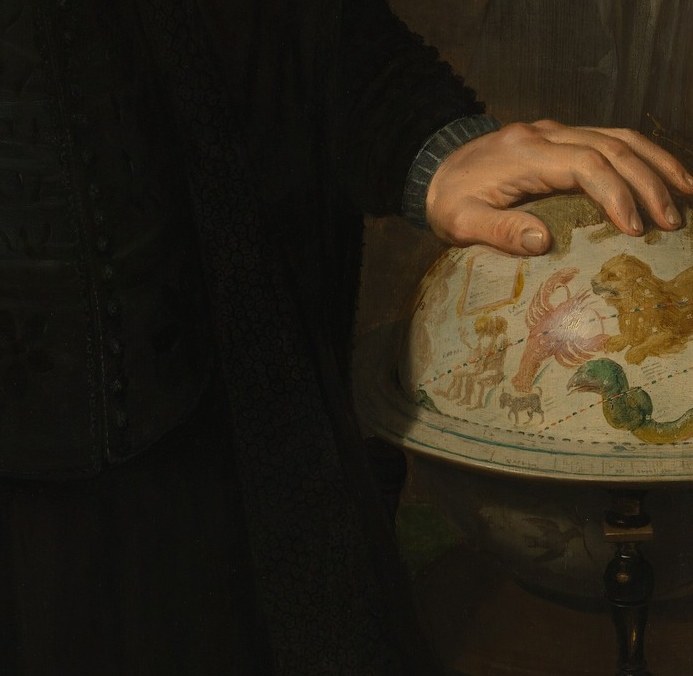
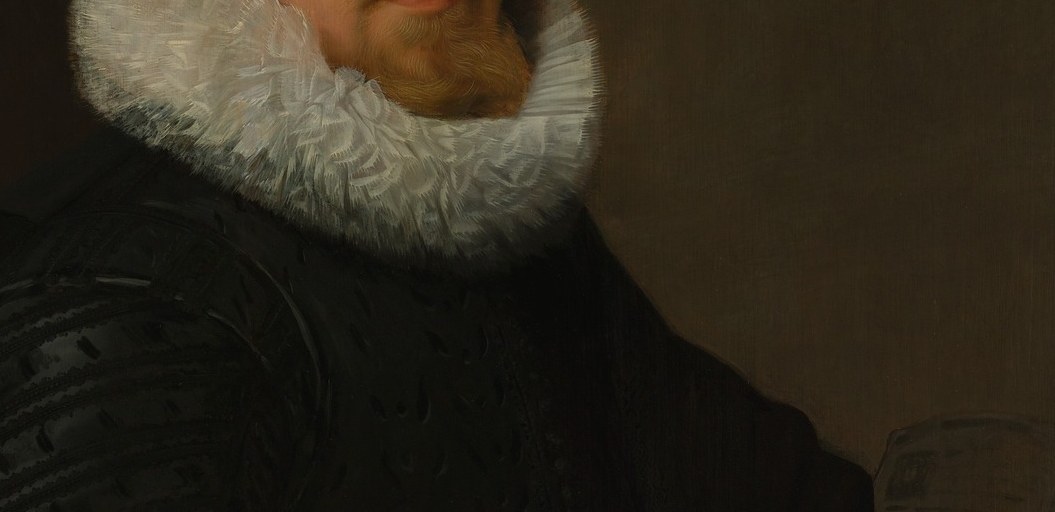
This is Nicolaes Eliaszoon Pickenoy's 'Man with a Celestial Globe' (1624), now in the collection of The Metropolitan Museum of Art. To look at it, you see exactly what 17th-century Amsterdam wanted you to see: a man of learning, dressed in sober black wool and a costly lace ruff, his hand resting lightly on a celestial globe mapped with constellations. He is an astronomer, a navigator, a merchant whose wealth depends on reading the sky.
Look at the contrast between his two hands. His right hand touches the globe, an active gesture, a claim to knowledge. His left hand hangs idle at his side. It is a small asymmetry Pickenoy used to make a formal, commissioned portrait feel momentarily alive. Notice too the globe itself: it is not a generic prop. The zodiac sign Scorpio is visible on the sphere, along with other star figures that a viewer in 1624 might have recognized.
The painting's modern story is stranger. It was stolen by the Nazis from a collection in France. After the war, a Swiss doctor bought it innocently at a small Amsterdam auction, never suspecting it was looted art. For sixty-five years it hung in his family's home in Switzerland, its true history forgotten. In 2011, a young intern at an auction house noticed the painting during a routine valuation. He ran it through a database of stolen artworks on his phone. It was the missing Pickenoy. The Met had quietly listed it as a Nazi-looted loss, and now it was found.
There is a quiet pleasure in knowing that a portrait of a man who mapped the heavens spent decades hidden in plain sight, waiting for someone who knew how to look.
Details
Transcript
1944. A Swiss doctor enters an Amsterdam auction house. He buys a portrait of a learned man for a modest sum. The quiet face of a 17th-century astronomer. His hand rests on the globe like he owns the stars. But the doctor had bought a stolen Rembrandt. Unknowingly. And for the next 65 years, it hung in his Swiss home. In 2011, a museum intern spotted it during his lunch break. He recognized the brushwork. From a stolen-art database on his phone.