Seated Lady Smoking a Hookah by http://www.wikidata.org/.well-known/genid/1c2486b50ccd06e829a78681b212ee70
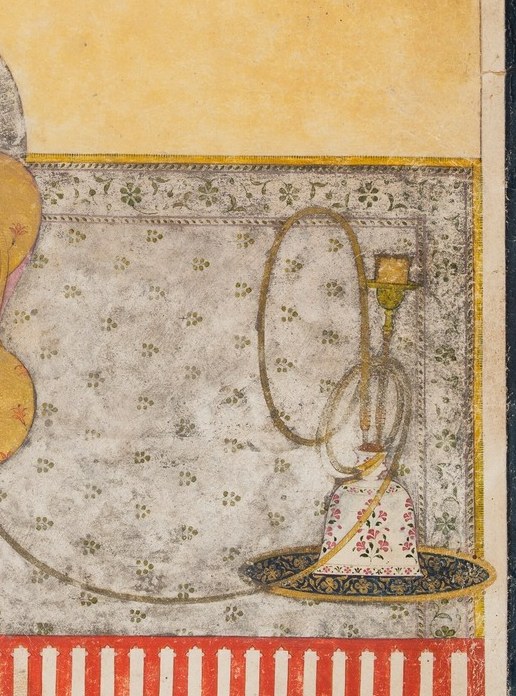
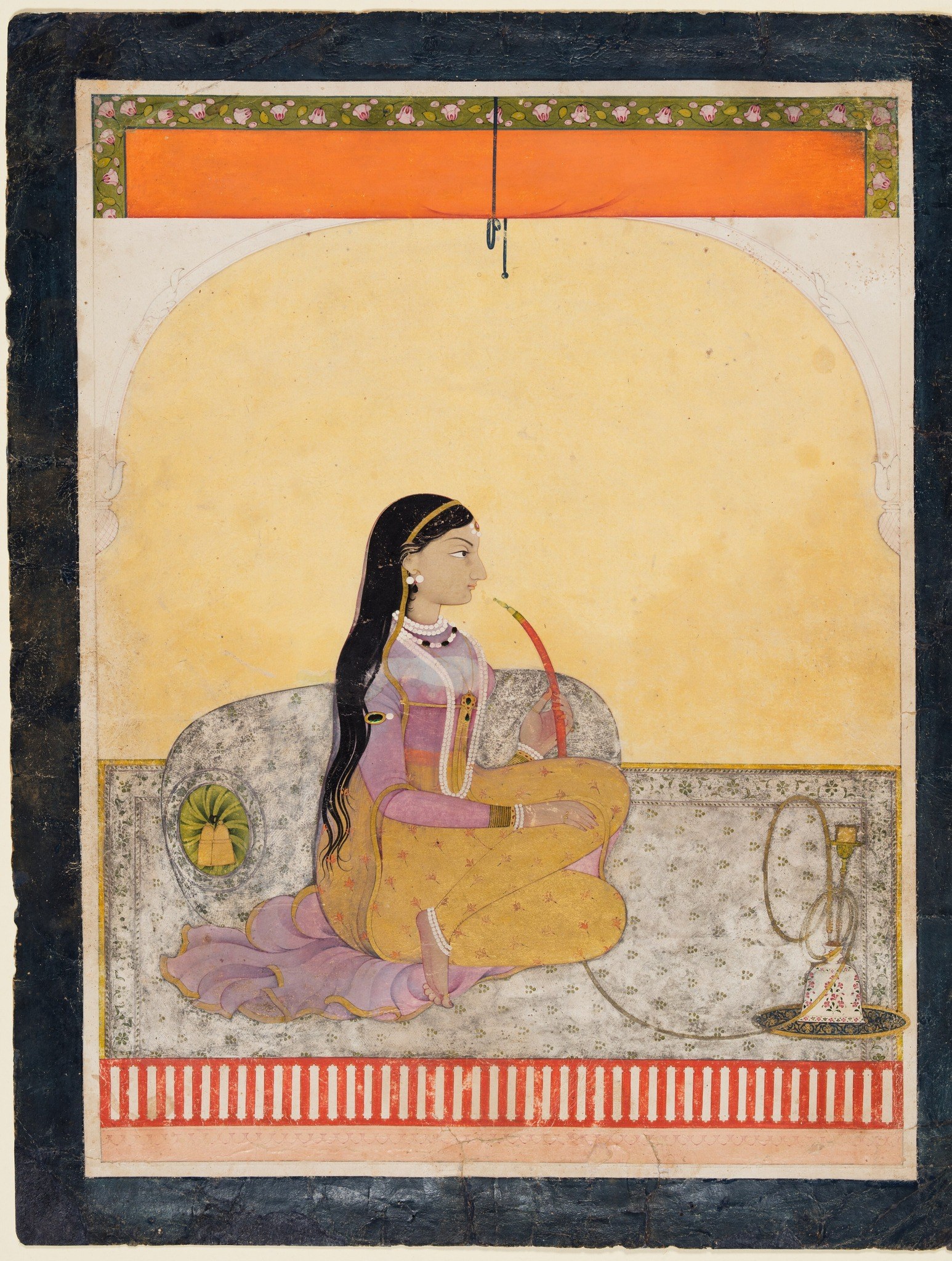
A woman smokes alone in a quiet room. This is "Seated Lady Smoking a Hookah," painted around 1780 by an artist of the Mughal school. The painting is currently held in the Cleveland Museum of Art.
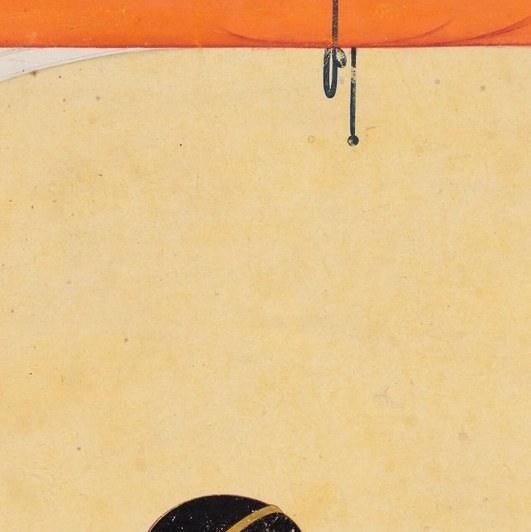
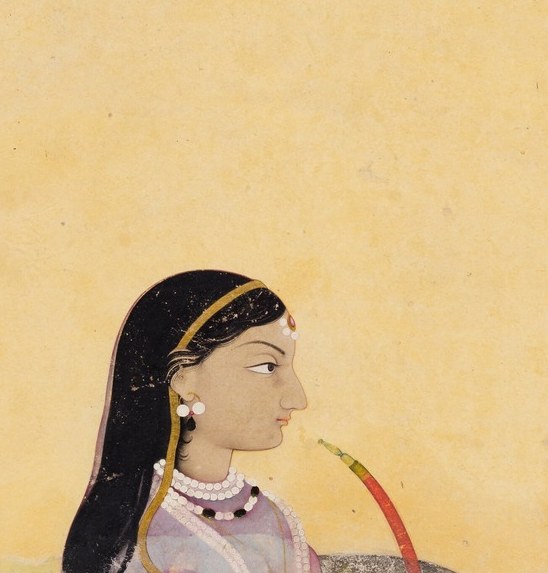
The hookah gives the work its name, but the image defers to the woman at its center. Her long loose hair, the maang tikka on her forehead, and the pooling purple fabric beneath her all signal a wealthy woman at leisure inside her own home. The yellow arch behind her does not need to open onto anything, it simply holds the warmth.
What makes the painting remarkable is its date. By 1780, the Mughal court in Delhi had been shattered. Emperor Shah Alam II had been blinded by the invading Rohilla Afghans. The imperial atelier had dissolved. Yet here, in a provincial center or a noble household, a painter still worked in the old manner and placed this woman into a private album. The painting survived not as a court commission, but as a personal object.
Each time I look at it, I notice the small potted plant in the corner, a stock symbol of paradise in Indo-Persian painting, tucked into a room where one woman enjoys a moment that history insisted could no longer exist.
Details
Transcript
She sits alone, lost in a private calm. The hookah is what gives the painting its name. But it sits quietly at the edge, she is the real subject. Her jewelry is specific: a maang tikka, strands of pearls. These mark her as a wealthy woman, not a court performer. The dark border is a clue, it was cut from a bound album. And the date written inside is 1780. By then, the Emperor had been blinded. Court painting was officially dead.