Children's Games by Pieter Brueghel the Elder
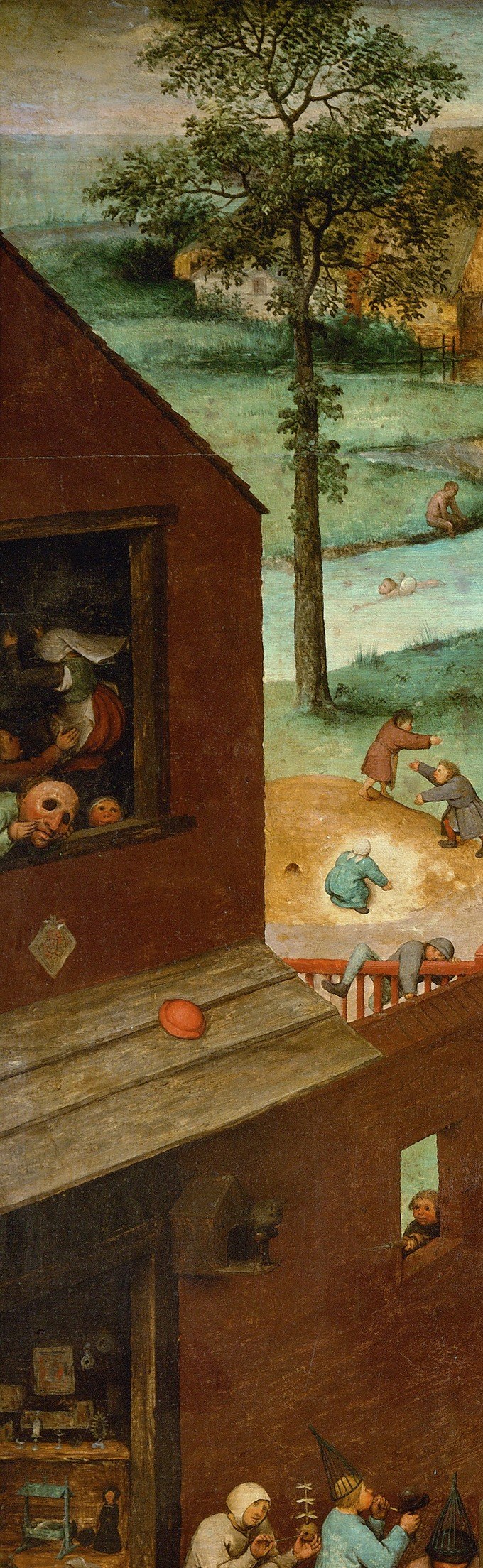
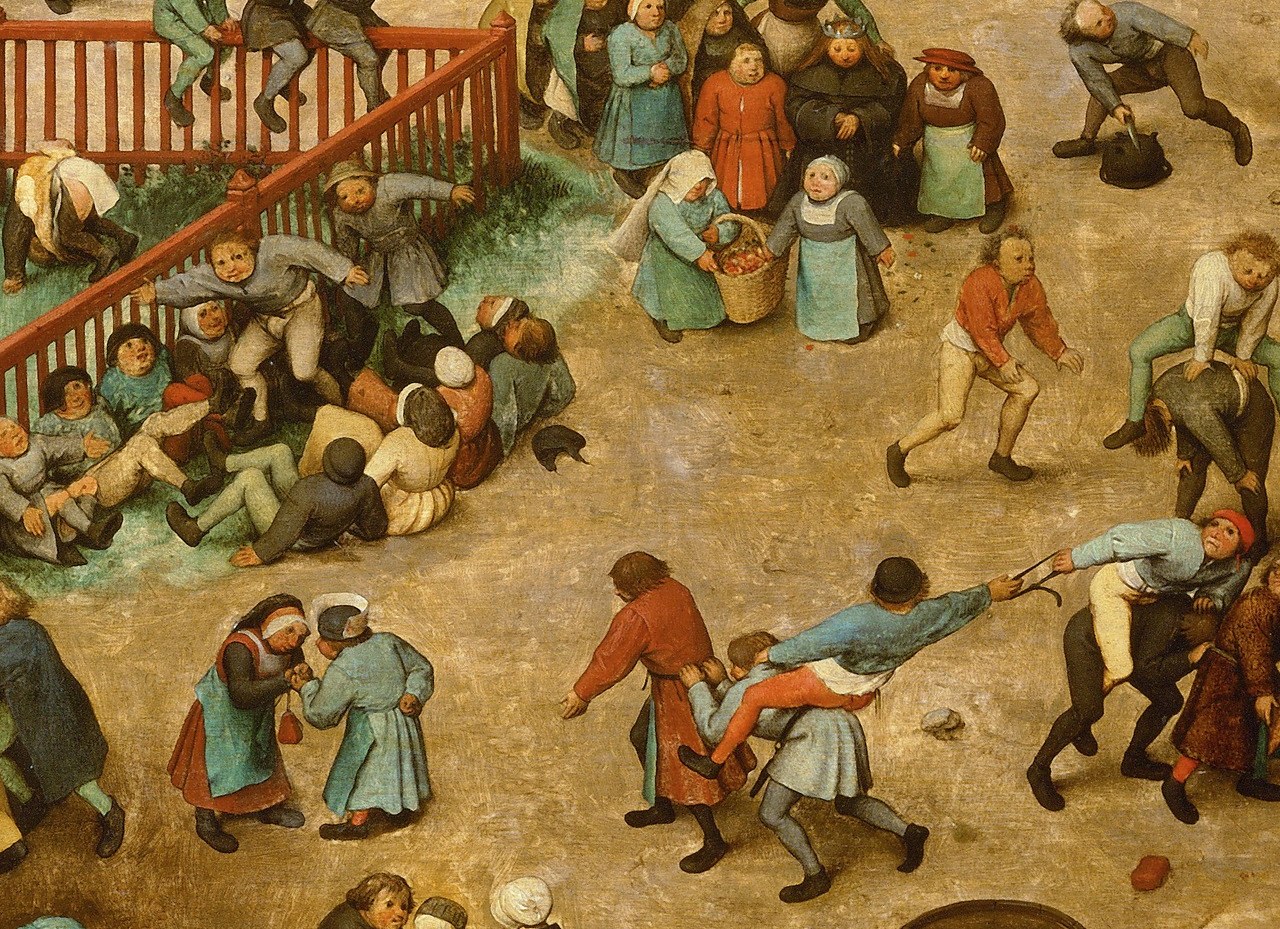
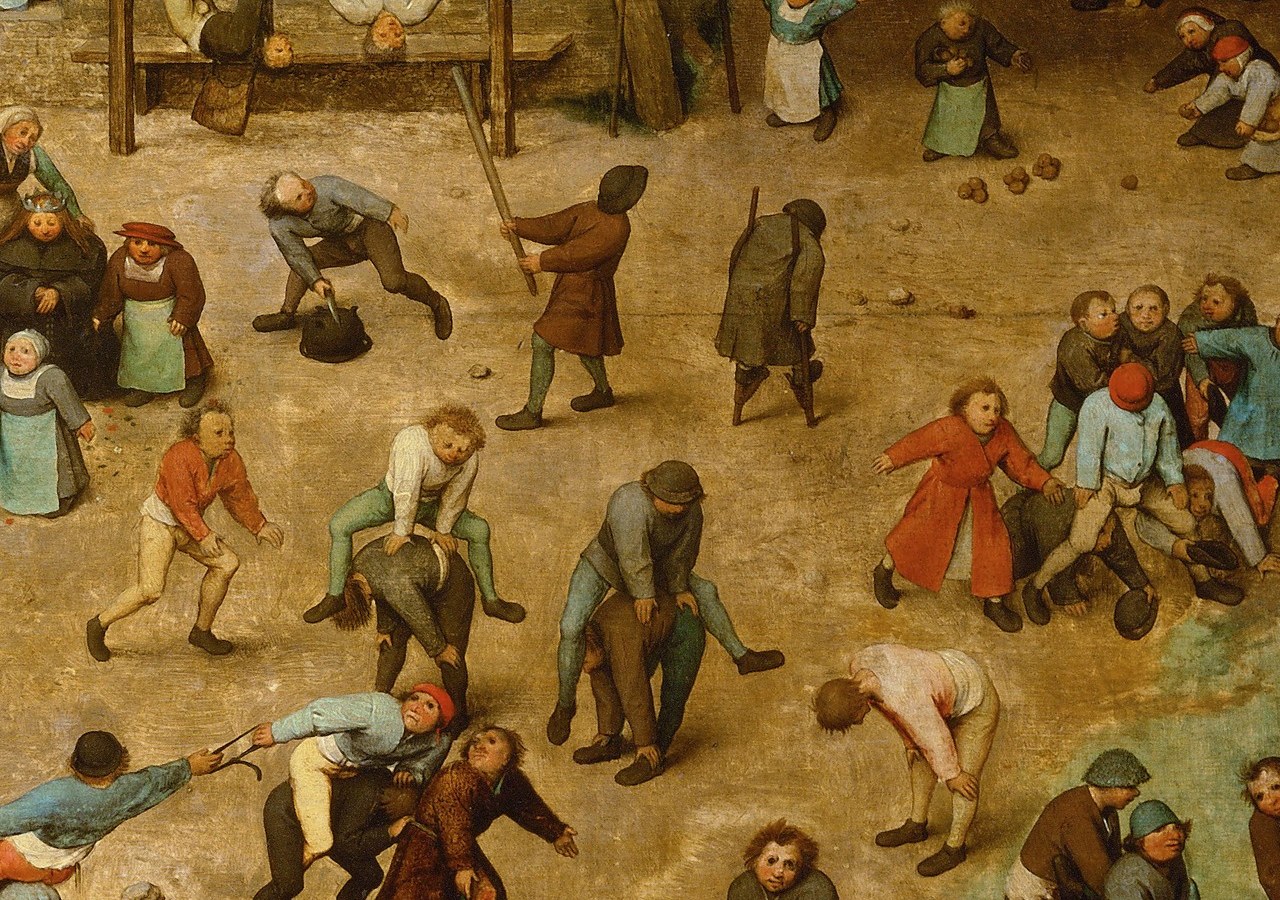
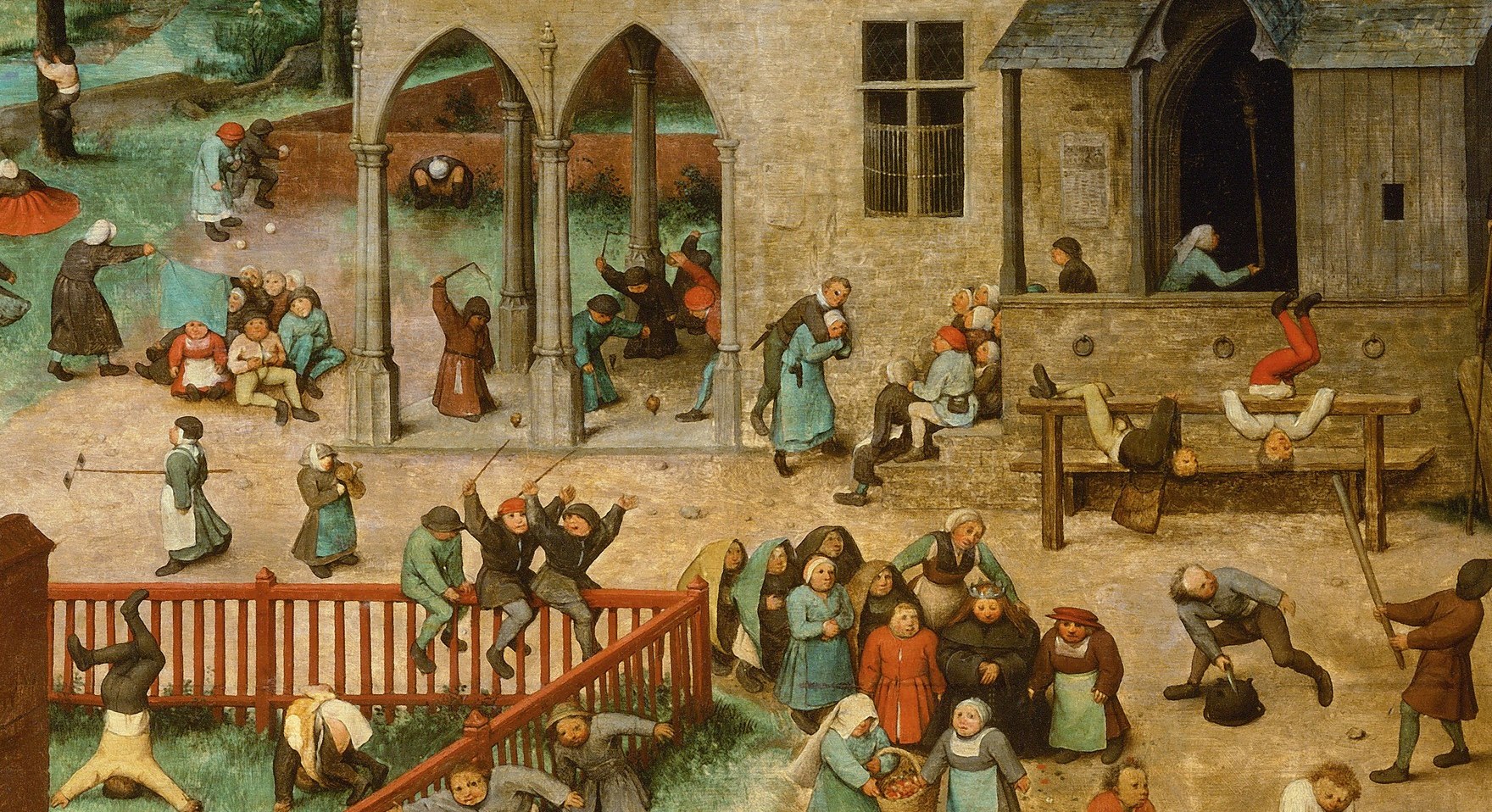
This is Pieter Bruegel the Elder's 1560 masterpiece, Children's Games, housed in the Kunsthistorisches Museum in Vienna. The painting is a sprawling visual encyclopedia of play, depicting over 200 children engaged in more than 90 identifiable games. But beneath the chaotic energy is a sharp Renaissance satire: Bruegel isn't just showing us children at play, he's holding up a mirror to the folly of adult civic life.
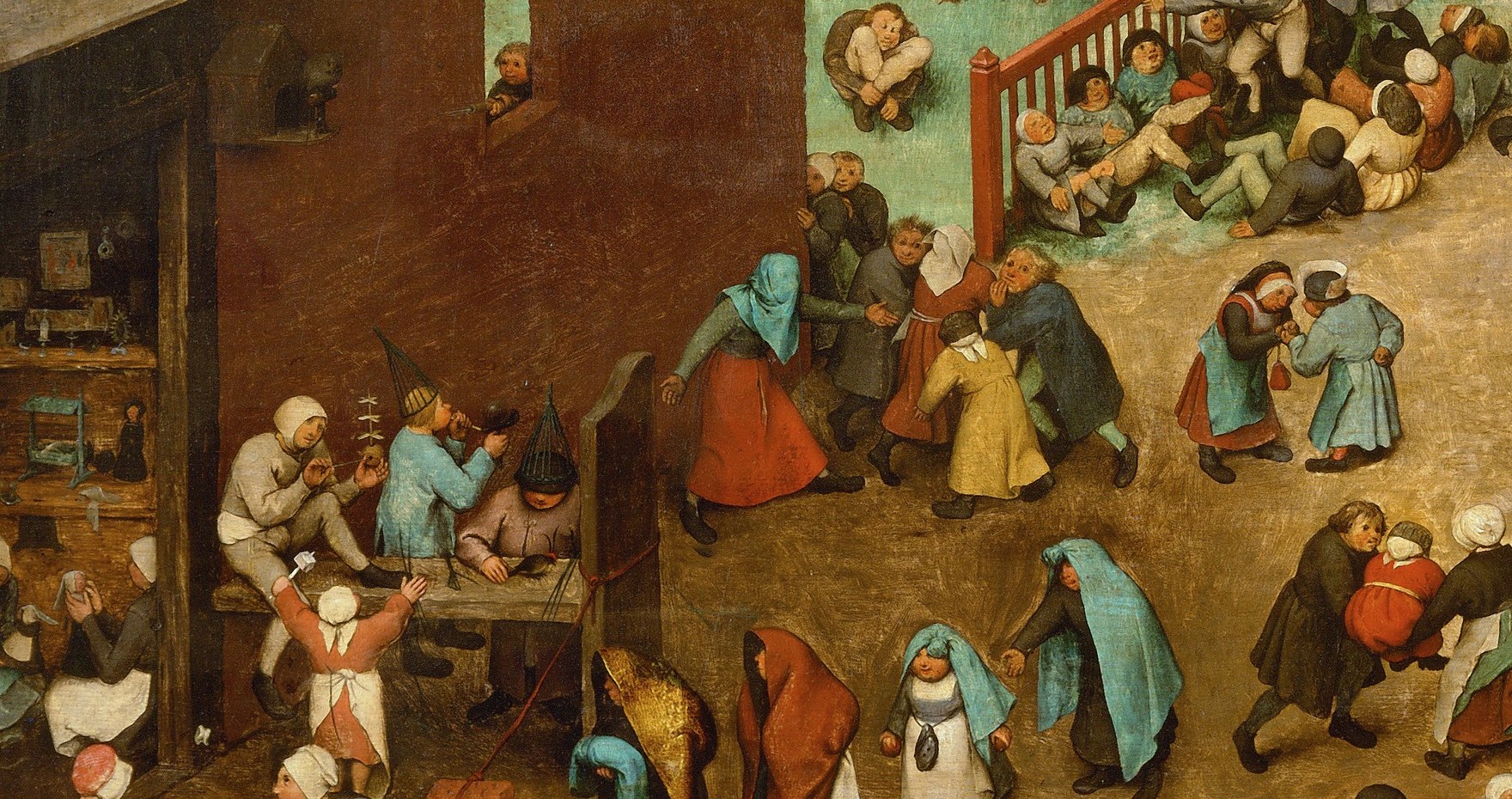
Your eye gets no place to rest. The composition deliberately overwhelms, pushing you to scan the square like a puzzle. Look for the knucklebones players crouched near the lower right margin, the lone acrobat breaking the visual rhythm with a headstand, or the children watching from a window on the left edge. In the center, a ring of children plays blind man's buff, a game Bruegel used elsewhere as an emblem of unseeing human stumbling.
Bruegel was at a turning point in the 1550s, becoming one of the first major artists to make genre scenes his primary subject when religious painting was still the norm. He painted no portraits. Instead, he trained his eye on peasant life, creating large-scale panoramas that worked as both a record of daily custom and a moralizing commentary. This work contains no single focal point, a radical formal choice for its time.
The street recedes to a hazy vanishing point where a civic building waits at the horizon. The adult institutional world is present but distant. Meanwhile, children colonize every inch of the foreground, turning barrels, hoops, and fence rails into their own sovereign territory. Over four centuries later, how many of these games do we still play?
Details
Transcript
A whole town, taken over by children. Over two hundred of them, and not one adult in charge. Scholars have identified more than ninety different games. They turn barrels into rides, hoops into races, fences into horses. But Bruegel was not making a nostalgic picture of play. This blind man's buff is the key. He used it as a symbol of human folly. Adult rituals like parades and elections, mimicked by children in costume. The adult world sits at the horizon, remote and irrelevant. Childhood is a sovereign country.