Tavern Scene by http://www.wikidata.org/.well-known/genid/d833da1580077a2aeb5bca3f40b9b08c
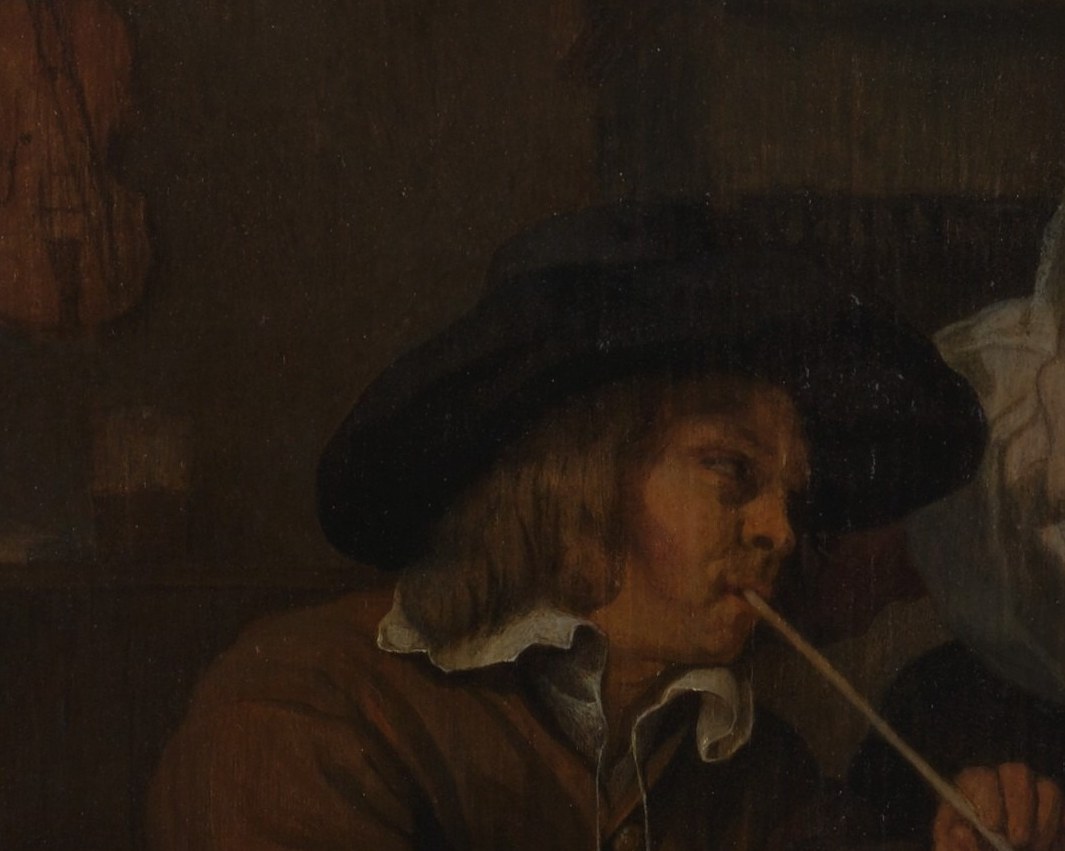
This is Tavern Scene, painted around 1700 by an unknown Dutch artist. Its subject is ordinary: a man with a pipe and bowl, a woman with a jug, a dim tavern interior. But the painting's real story is told in white, the woman's linen headscarf.
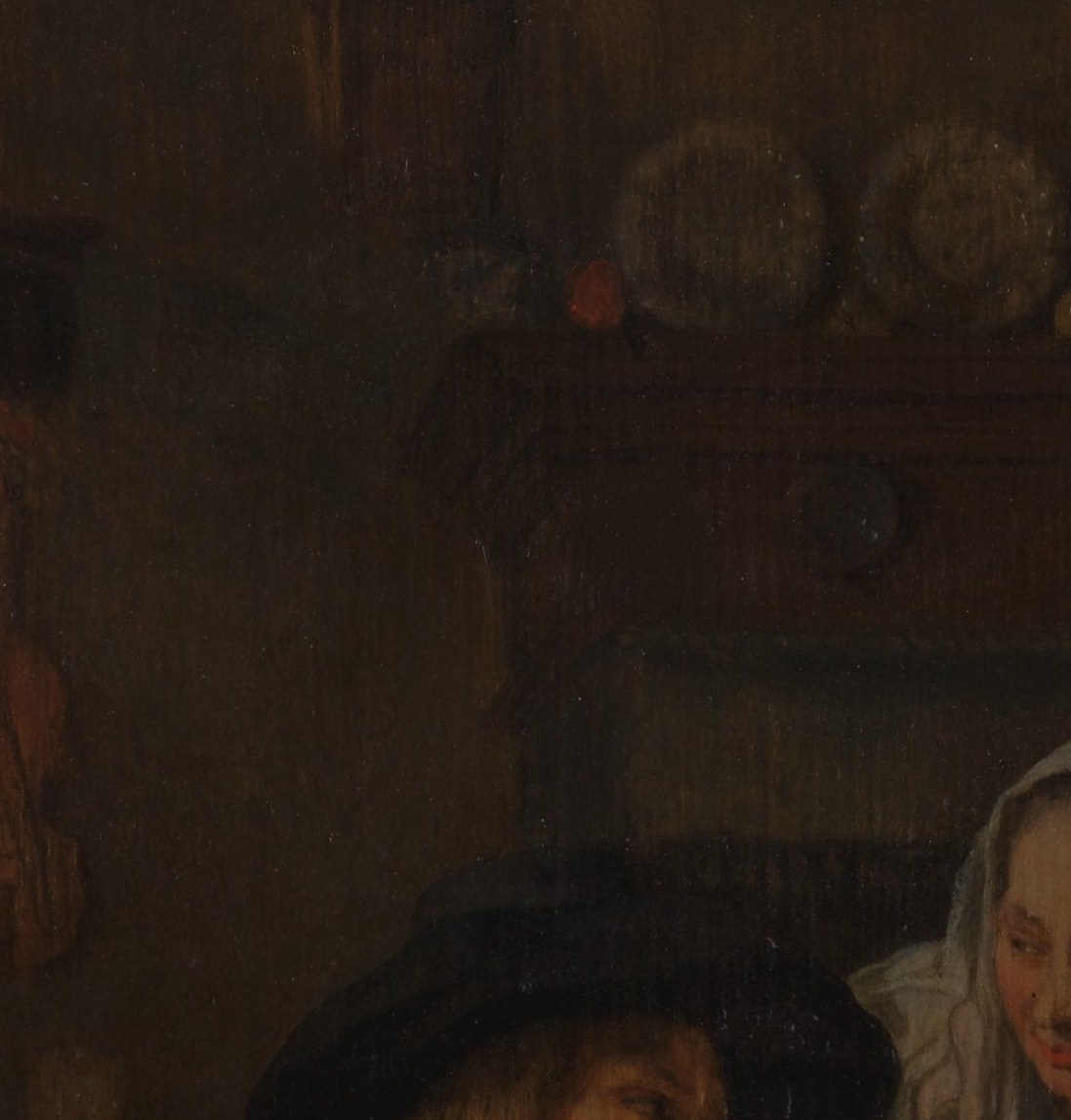
Look at where the light seems to come from. The room is almost black, painted in loose, shadowy brushwork. No window glows. Instead, the woman's headscarf reads as the scene's brightest mass. The painter used it to pull her face out of the dark and, in turn, to model the man's upturned features. He understood that white, placed correctly, does the work of a lamp.
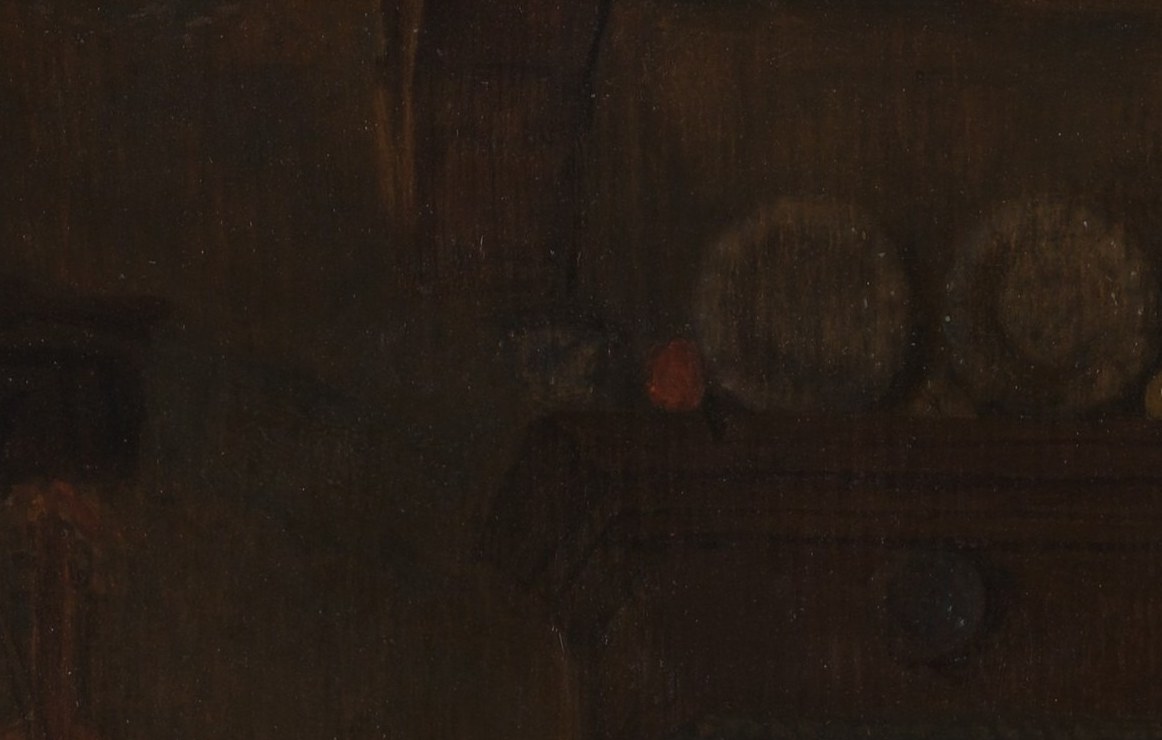
The man's red breeches do something similar at the bottom of the canvas, a warm, vivid anchor, while the upper background dissolves into near-abstraction. A shadowy form in the upper left might be a third figure or a hanging object; the artist leaves it unresolved, a dark shape that makes the lit faces feel closer and more fragile.
We don't know who held the brush. The painting is one of thousands of Dutch genre scenes produced for ordinary homes and taverns, signed by no one, surviving by chance. But the decisions are legible: a woman in a white headscarf becomes the center of gravity for an entire composition. She doesn't just pour the jug. She holds the light.
Details
Transcript
He kept his hat on indoors. That tells you the place. A pipe in one hand, a bowl in the other. Tavern idleness. But look at her. Her headscarf isn't just white linen. It's the brightest thing in the room. The painter used her to light the man's face. His red breeches and her dark dress anchor the lower frame. The artist's name is lost. We don't know who painted this. But he knew exactly what he was doing with white paint.