The Harrowing of Hell by http://www.wikidata.org/.well-known/genid/74e64d0fea5092026814534e52899bff
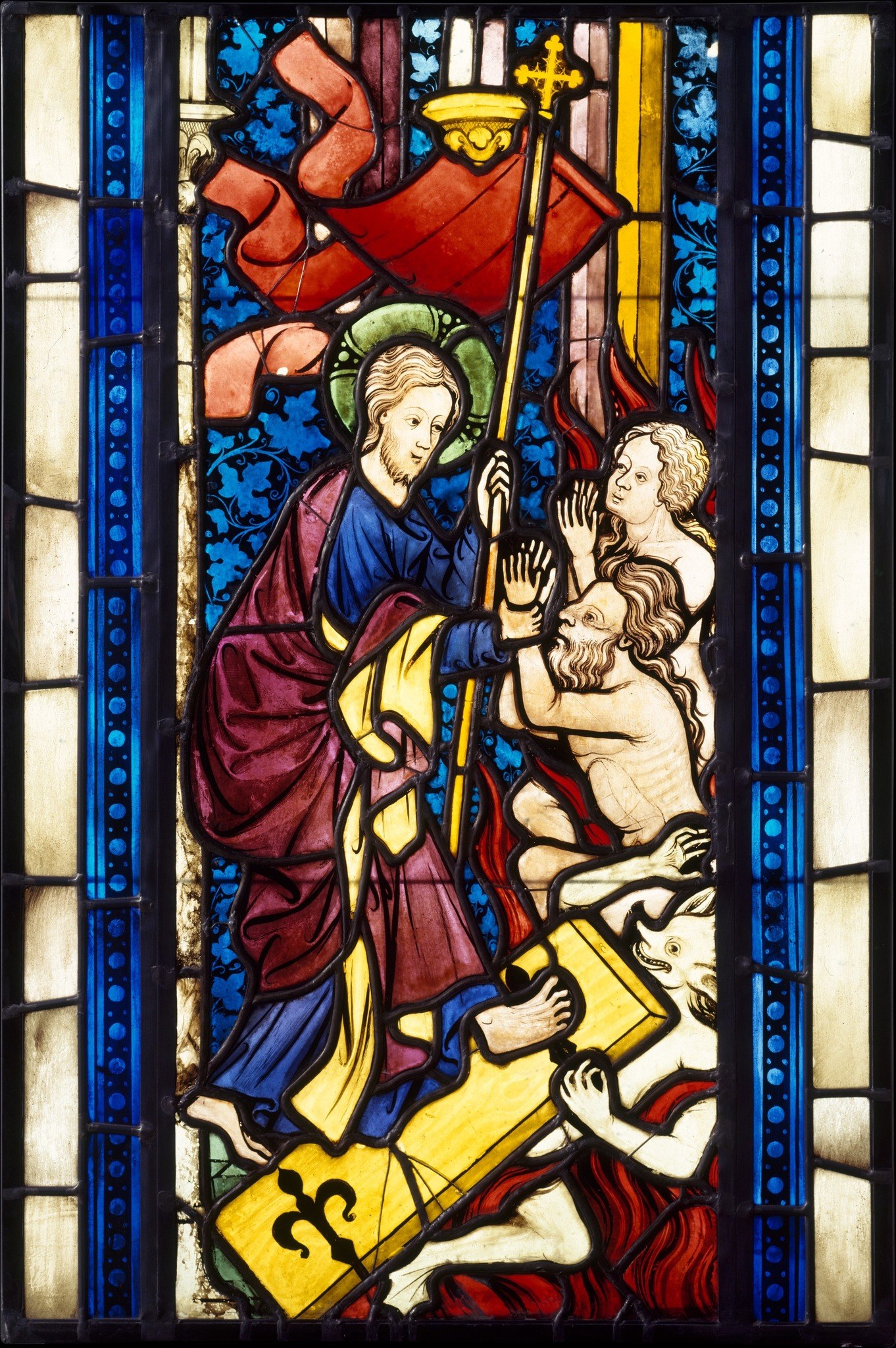
This is The Harrowing of Hell, a stained-glass panel made around 1390 by an unknown master, now held in a private collection. It shows the moment Christ descends into the underworld to free the souls of the righteous who died before his resurrection.
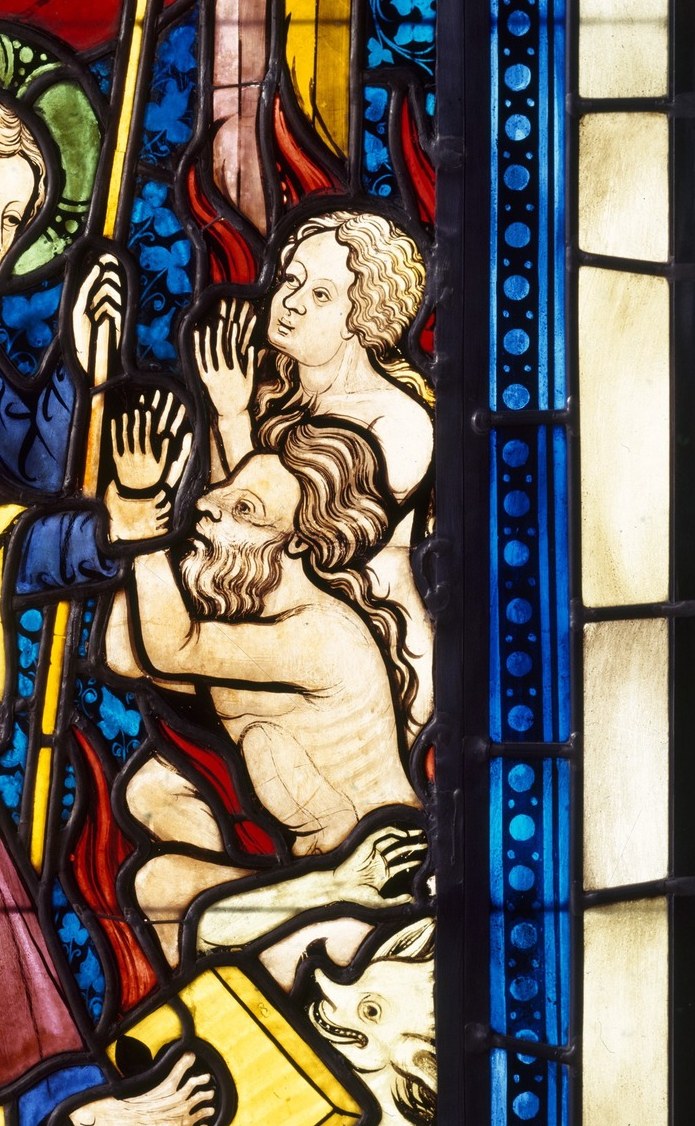
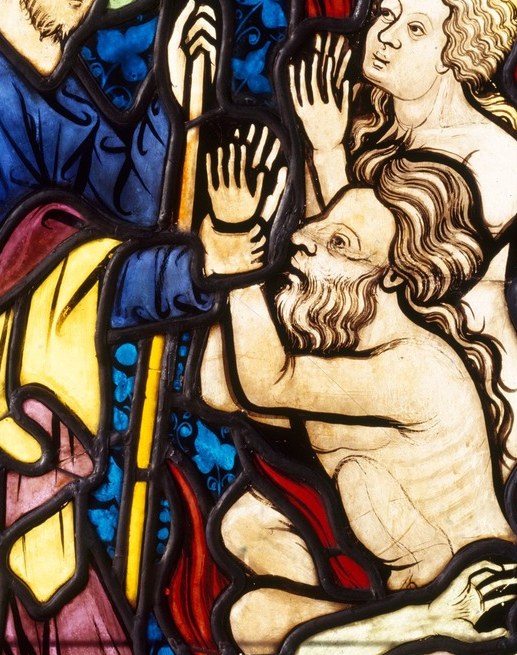
Look first at Adam, the bearded figure lunging upward with outstretched arms. His body is bare, stripped of earthly status, and his reaching hands carry the whole emotional weight of the scene. Behind him, Eve kneels in a posture of penance and submission. Above them both, Christ stands calm and authoritative in a deep cobalt-purple robe, his cross-topped staff piercing the red hellscape behind him.
The window rewards a closer look. Those jagged red polygons are Hell's fiery interior, their sharp geometry a visual opposite to the calm blue foliage pattern that sits behind Christ. And the lead lines you see running through the glass are not just structural: the glazier used them to outline the halo, the staff, and the figures' contours, making the metalwork part of the drawing itself.
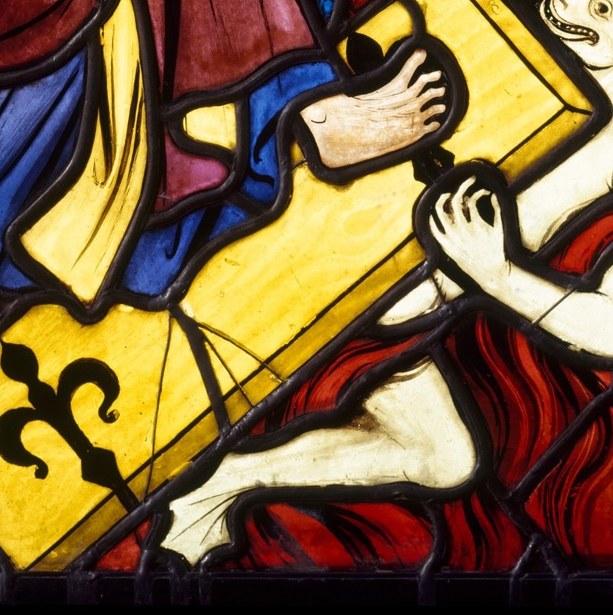
Then there is the detail most people walk straight past. At the very bottom edge sits a yellow heraldic shield bearing a fleur-de-lis. Heraldic devices like this almost always identified the patron or donor who commissioned the work. A small, overlooked clue that anchors this theological scene in real money, real politics, and a real person who wanted their family arms set into the glass for as long as the window stood.
Details

Transcript
Christ storms Hell to free the righteous. Adam lunges forward, body stripped of earthly status. His hands are the emotional fulcrum of the window. These red jagged forms are Hell's fiery interior. Now look to the lowest zone, at the bottom edge. A yellow shield with a fleur-de-lis. A heraldic signature. It identifies the noble patron who commissioned this glass.