Threshing in the Abruzzi. Cività d'Antino by Peder Severin Krøyer
Peder Severin Krøyer's "Threshing in the Abruzzi. Cività d'Antino," painted in 1896, captures a vivid snapshot of rural labor in southern Italy. This oil painting, now held at the Statens Museum for Kunst, showcases the intense physical effort and communal spirit of harvest time.
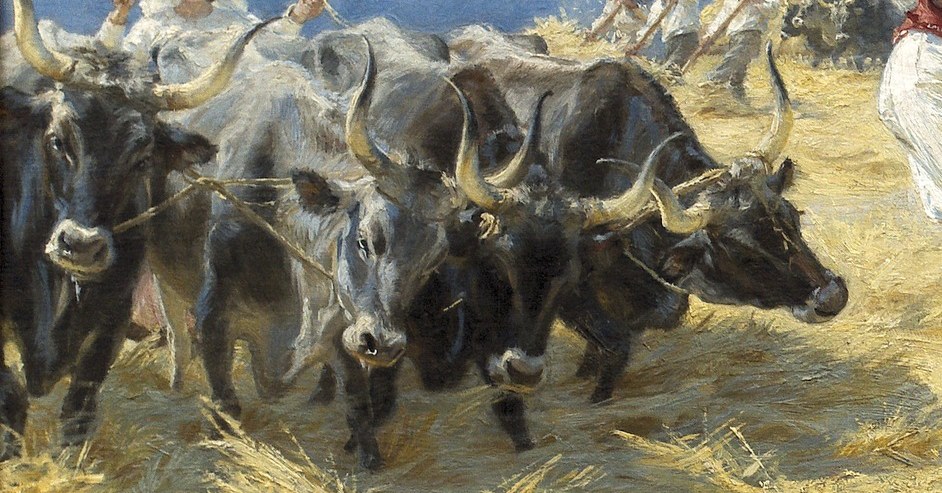
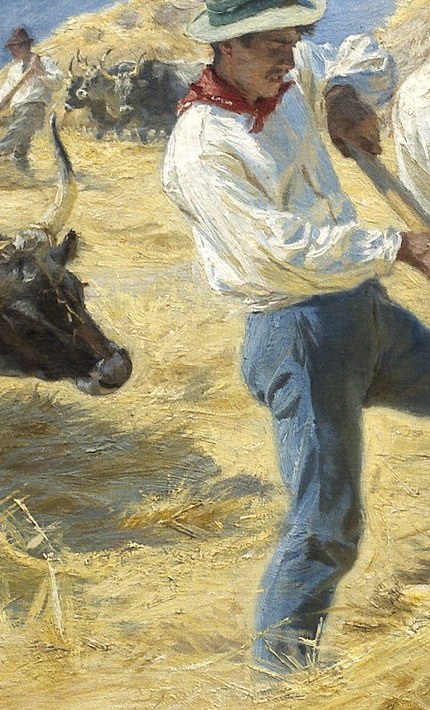
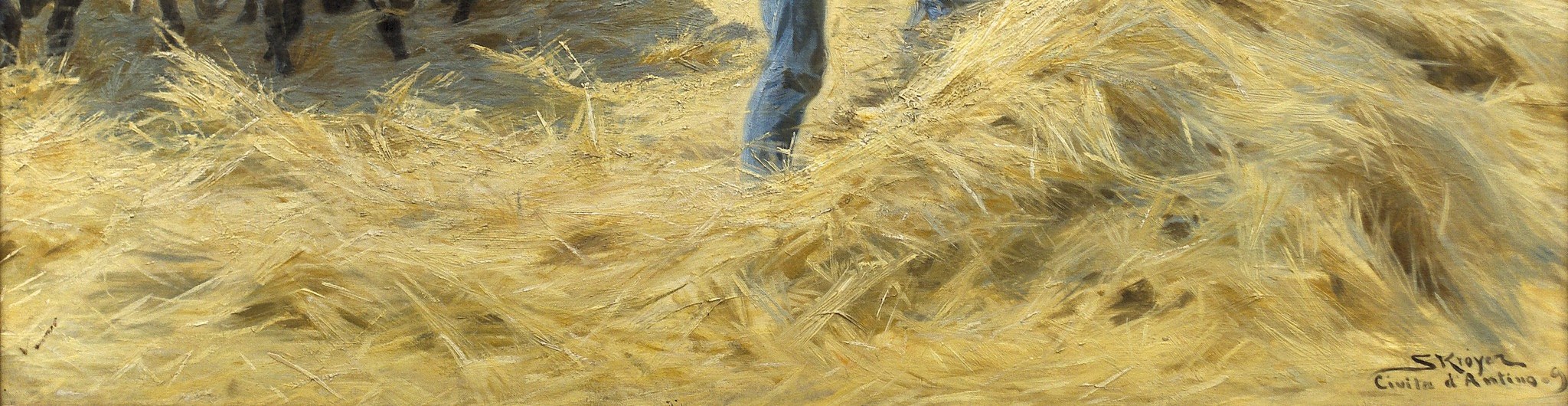
Look closely at the powerful oxen, straining under the wooden yoke, driven by a man in a red scarf whose focused expression tells of his concentration. The foreground's thick, textured straw, rendered with pronounced impasto, emphasizes the dust and heat of the field.
Krøyer, a Danish artist, traveled extensively in Italy, fascinated by the contrast between these sun-drenched scenes and his native Denmark. He masterfully used a bright, luminous palette and varied brushwork to balance realism with a painterly vigor, bringing the dignity of manual work to life.
This painting offers a glimpse into a world powered by animal and human strength, a timeless scene of collective effort. What details make you feel the rhythm of this ancient work?
Details
Transcript
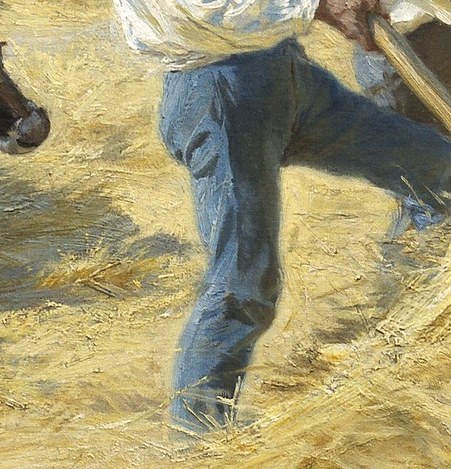
This painter spent years abroad, fascinated by rural life. In southern Italy, he found scenes of intense labor. Two oxen strain under the yoke, pulling a threshing board. This man, with his red scarf, drives the animals forward. He captures the sweat and dust, the rhythm of the harvest. The painter used thick, textured brushstrokes for raw immediacy. A quiet tribute to the dignity of hard work.