James Monroe by Stuart, Gilbert
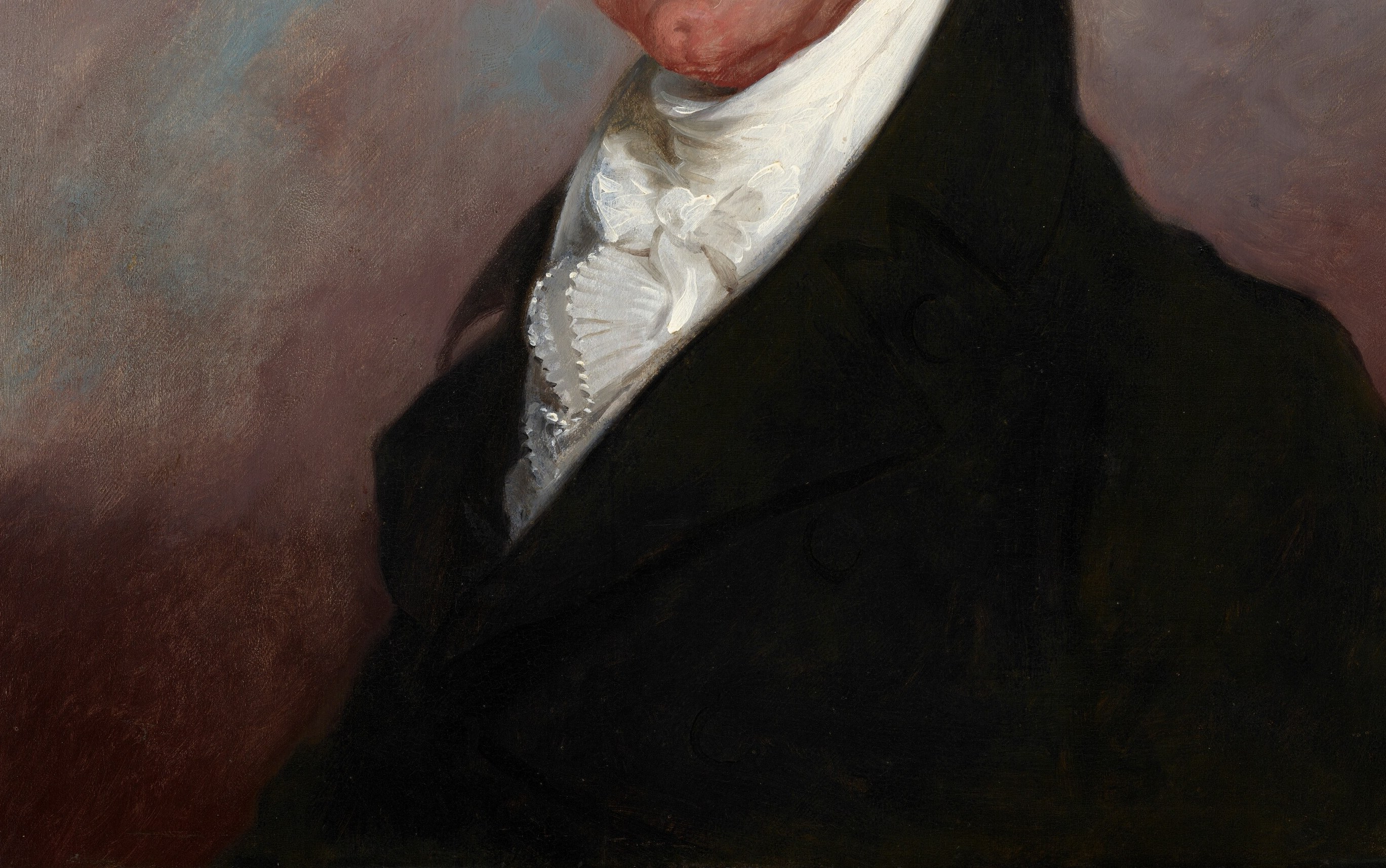
This is James Monroe, painted by Gilbert Stuart around 1817. Stuart was the unrivaled portraitist of early American power, he painted the first five presidents. But the brilliance of this particular panel on wood is not in the sitter's status. It is in the bone-deep restraint of the paint itself.
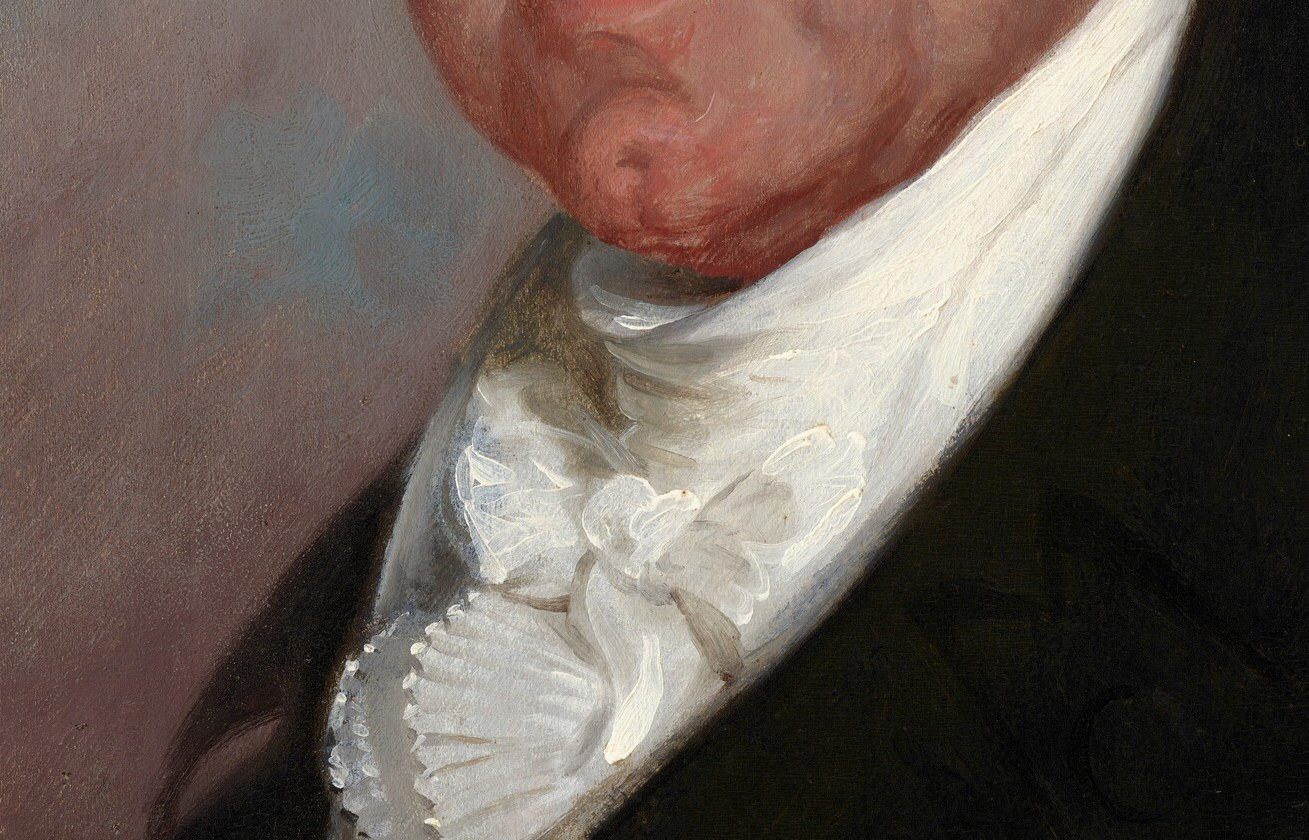
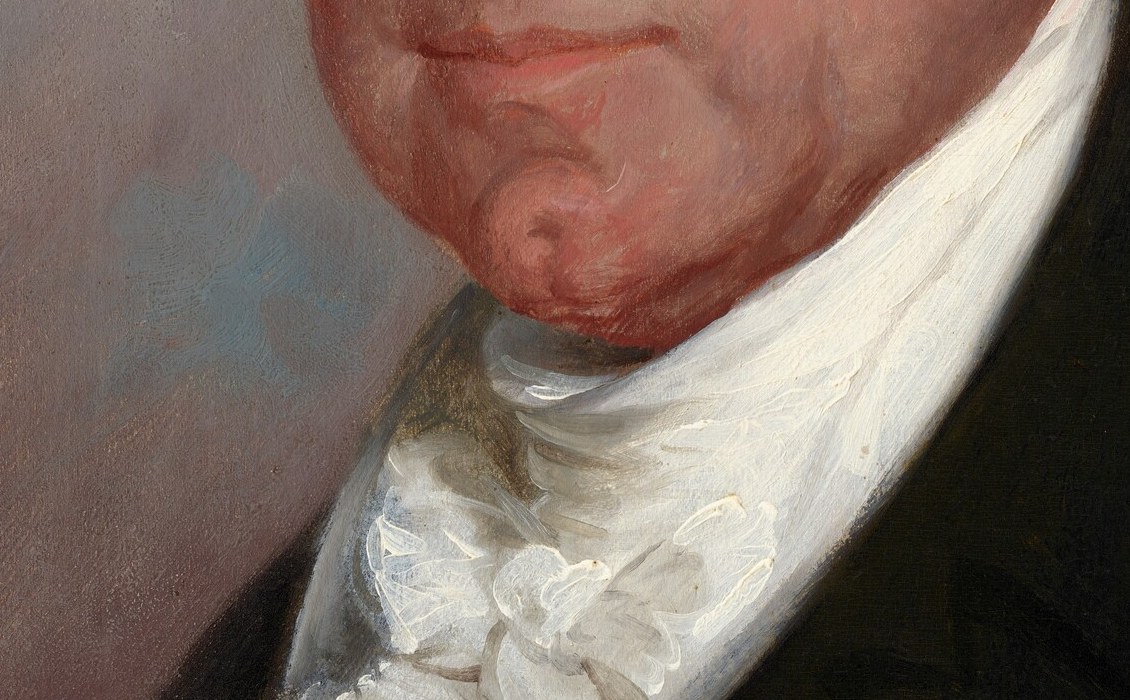
Look at how little Stuart actually gives you. The coat is a near-total void of black wool, rendered with almost no detail. Above it, the white cravat explodes with crisp, sharp folds, the highest contrast in the entire painting. That single collision of light and dark acts like a funnel, shoving your eye directly upward into Monroe's face. The collar reinforces the trap: a stiff white edge framing the jaw, sealing off any visual escape.
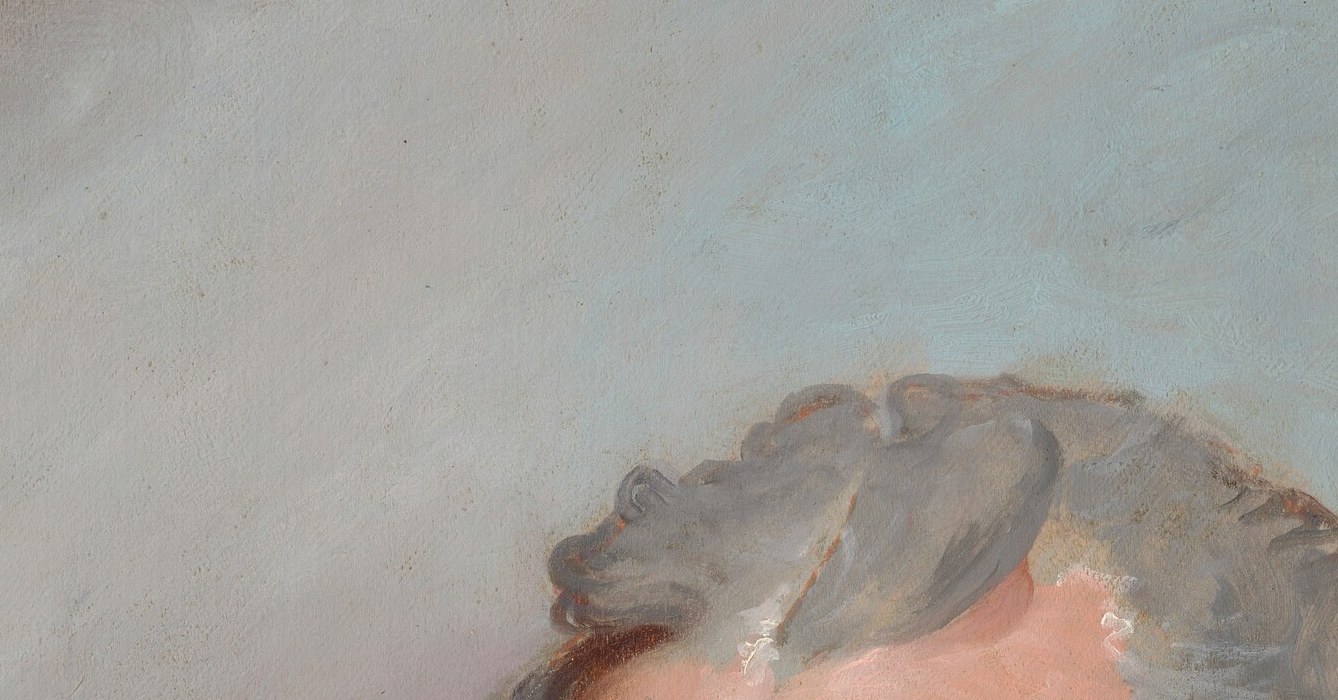
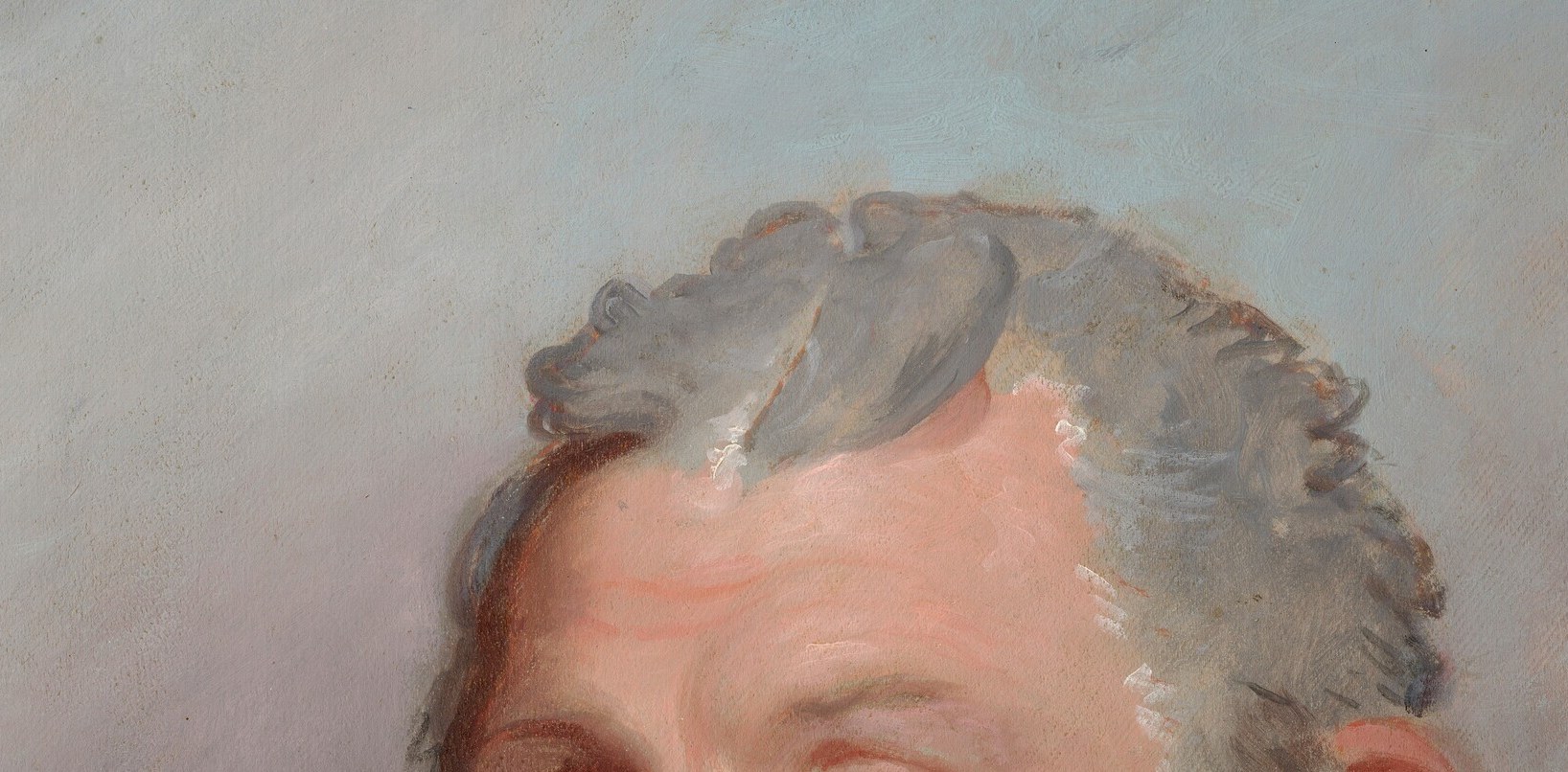
Now look at the background sky. It is not empty. Stuart built it in two temperatures, warm amber clouds on the shadow side of the face and a cooler grey-blue passage on the lit side. This produces a subtle complementary vibration behind the head that makes the skin tones feel luminous without brightening a single highlight on the face itself. The forehead is softly modeled, not brilliant, and the eyes read as calm because the color around them is doing the work.
Stuart painted Monroe at roughly age fifty-nine, and the receding hairline and strong, specific jaw tell you that this is a document of a particular man, not an idealized type. He understood something that gets lost when people chase drama: if you control the darks and let two colors hum against each other, a face will glow on its own.
Details
Transcript
A black coat, a white cravat, and a face. Three simple elements. That was the entire toolkit. Gilbert Stuart never needed dramatic stage lighting. He used the coat as a void. Total darkness to anchor the frame. Then one crisp shock of white linen to catch every photon. The collar frames the face. The eye has nowhere else to go. Behind him, the sky itself is doing quiet work. Warm amber on one side, cool grey on the other. The face floats between them.