Mezzetin by Jean Antoine Watteau
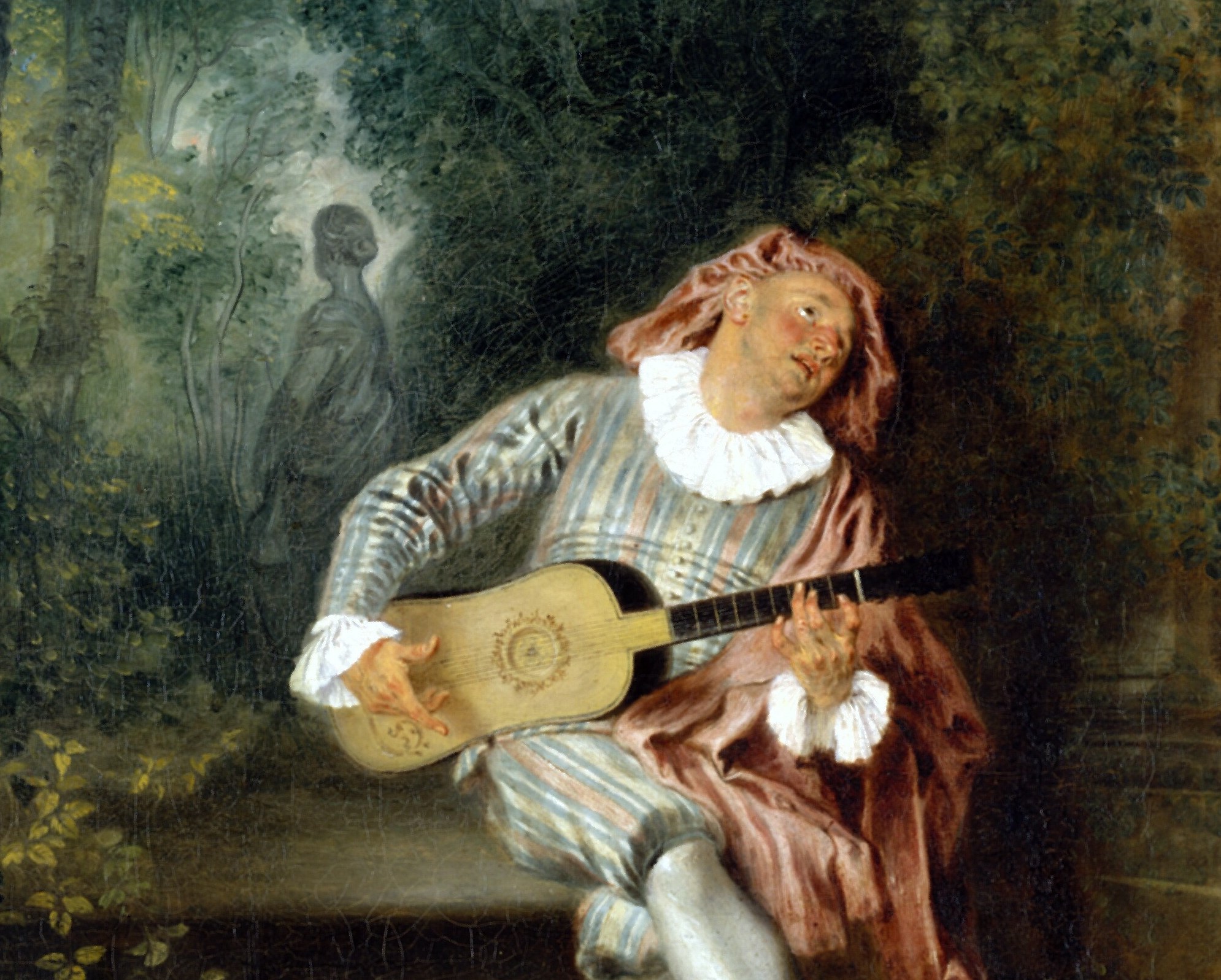
Jean-Antoine Watteau painted 'Mezzetin' around 1717-20, and it hangs today at the Metropolitan Museum of Art. The painting shows a single figure from the commedia dell'arte, but it is among the most quietly affecting works of the Rococo. Mezzetin sings, head thrown back, eyes half-closed, in an empty garden. The person he sings for is not there.
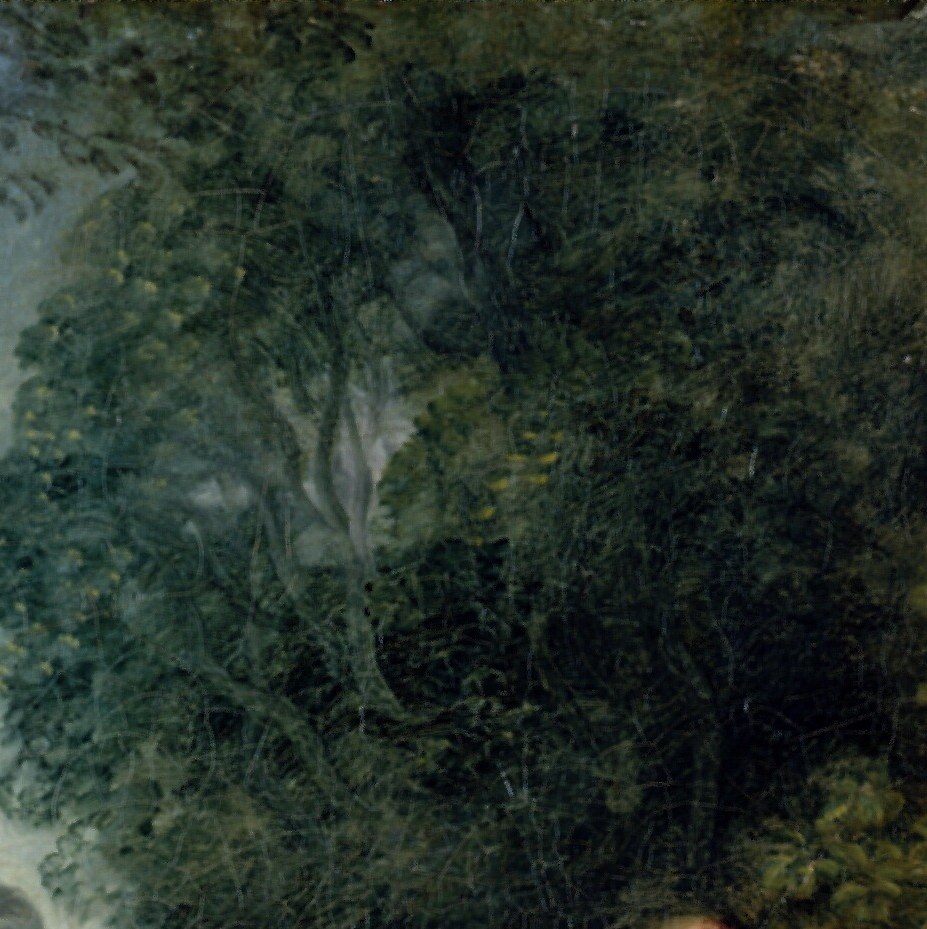
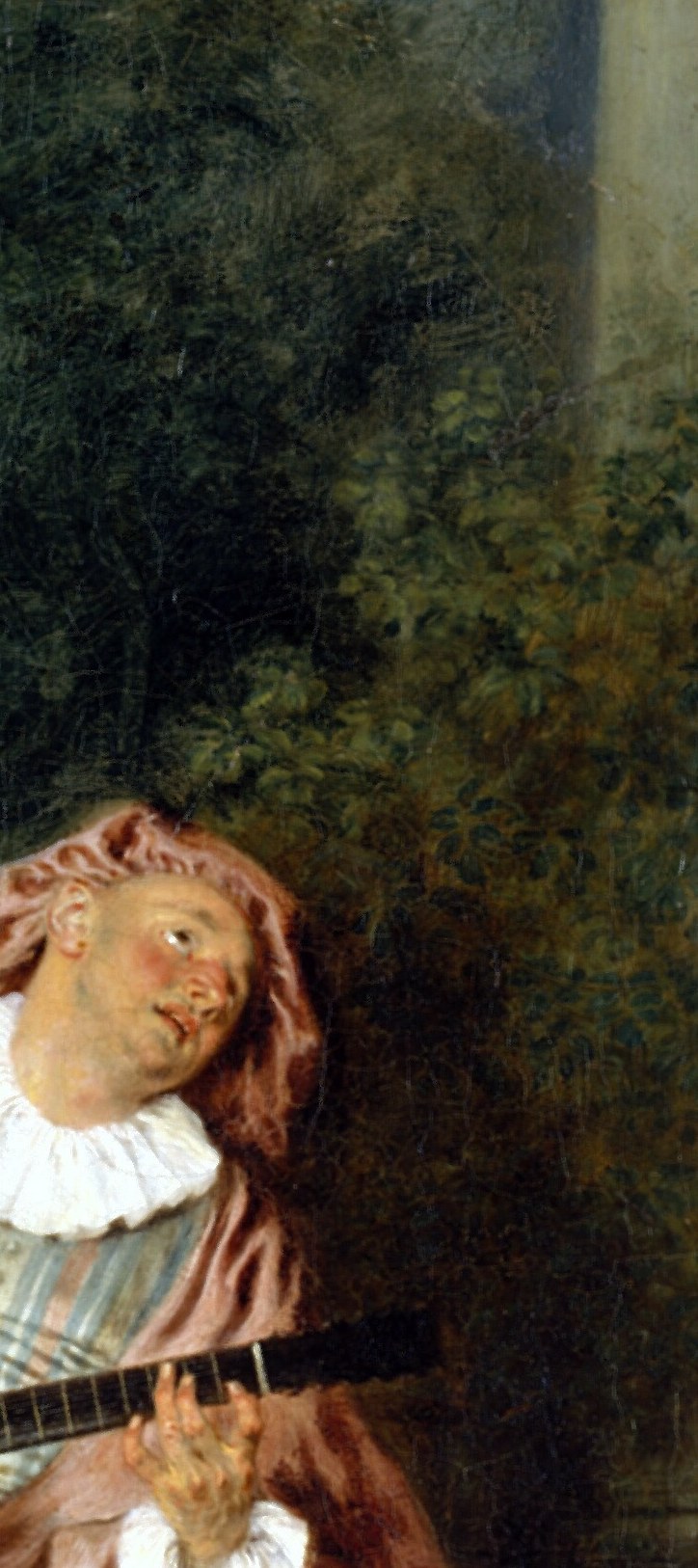
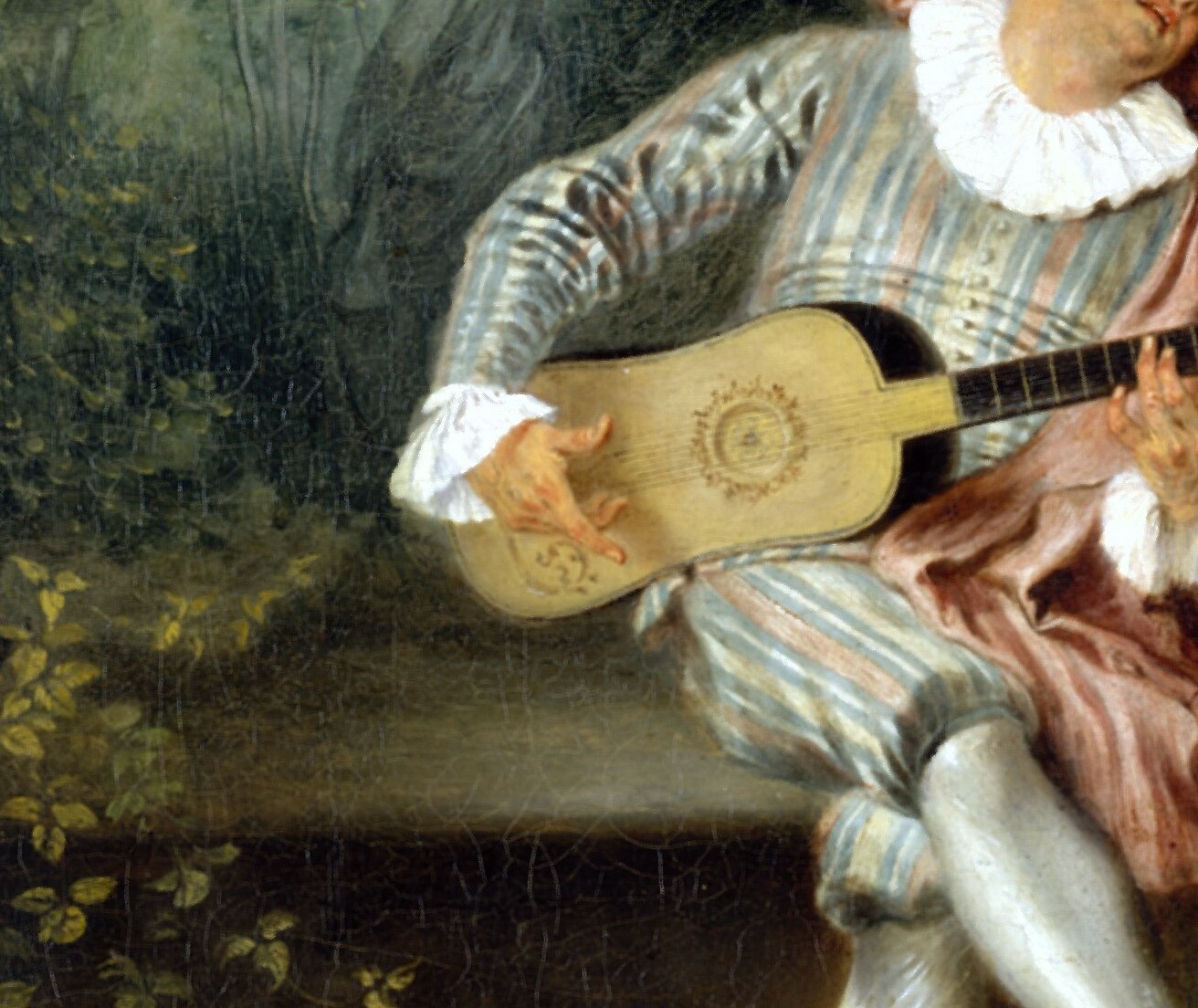
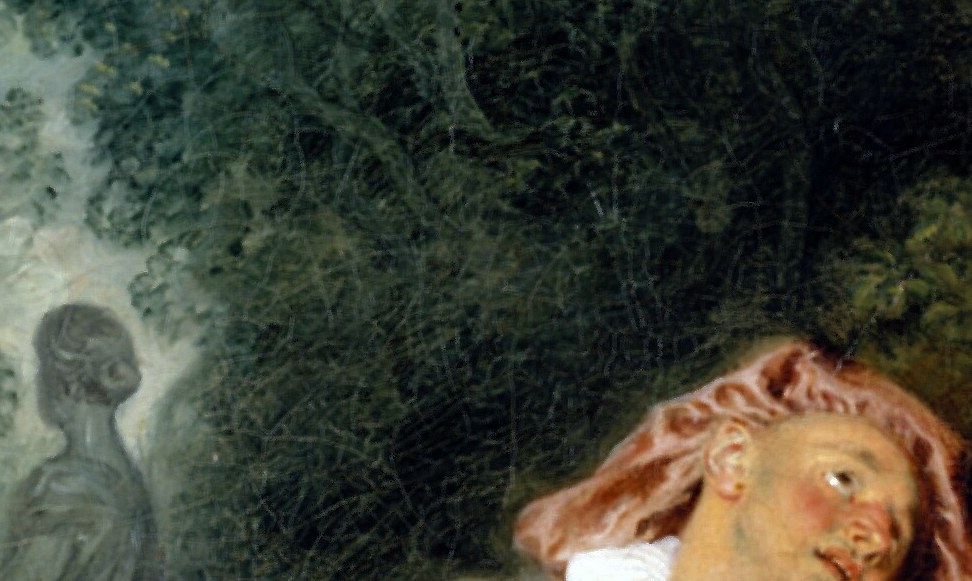
Look at his face. The actor Angelo Costantini introduced this character in 1683 and performed him without a mask, a deliberate choice that let the audience read every emotion. Watteau seized on that vulnerability: the upturned face, the open throat, the cocked wrist freezing the guitar mid-pluck. Then look into the trees on the upper right. A pale female figure dissolves into the foliage, a statue of Venus, her back turned. The guitar neck points across the canvas directly toward her, linking the singer and the silence on the other end of his song.
The painting was owned by Jean de Jullienne, Watteau's close friend and patron, who kept it even while selling other works. That fact has led some scholars to wonder whether Jullienne himself was the model for Mezzetin. After his death it passed to Catherine the Great's Hermitage, then through the Soviet sales to Calouste Gulbenkian, and finally to the Met in 1934. The museum also holds Watteau's preparatory drawing of the man's head, the same face, thrown back, searching an empty sky.
He is singing, but no one answers. That may be the whole point.
Details
Transcript
He sings for someone who isn't there. His name is Mezzetin. He belongs to the commedia dell'arte. Unlike most comic roles, Mezzetin performed without a mask. So every longing shows in his face. Watteau painted that. Now look past him, into the trees on the right. A ghostly figure. A Venus, turned away. He sings for someone unattainable. The statue is the only woman here.