明/清 佚名 傳蕭照 中興瑞應第七圖 卷|Pavilion with Figures by After Xiao Zhao
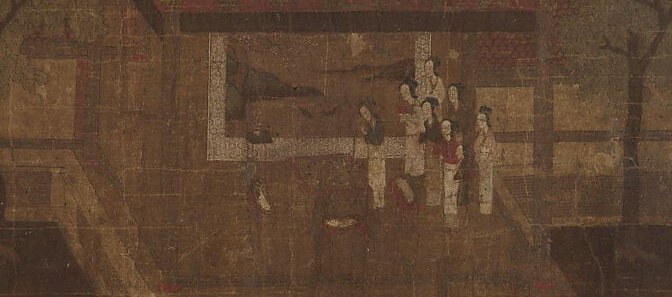
This captivating handscroll, "Pavilion with Figures," is the seventh picture in a lost series called "Auspicious Signs of the Restoration." It dates to around 1092 and is attributed to After Xiao Zhao, though the actual Ming or Qing period artist remains anonymous. You can see it at the Metropolitan Museum of Art.
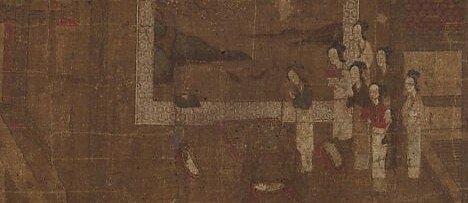
Look closely at the women within the pavilion, engaged in board games and conversation. Their leisurely activities and refined expressions are depicted with exceptionally fine brush lines, highlighting a period of restored order and prosperity following the Song imperial court's resurgence of power.
While the scroll's creator is unknown, its attribution to Xiao Zhao, a Southern Song dynasty court painter, suggests it's a reinterpretation of an earlier composition. This practice of transmitting established works across generations was common in Chinese painting, allowing important historical narratives to endure.
What details in the painting best convey the sense of peace and prosperity?
Details
Transcript
This painting is the seventh in a lost series. It records auspicious signs of an imperial restoration. These women enjoy leisure and intellectual games. Their activities symbolize a period of restored order and prosperity. Look closely at the incredibly fine brushwork on their faces. This meticulous detail characterizes the scene's refined aesthetic.