Hagar and the Angel by Francesco Maffei
Francesco Maffei's "Hagar and the Angel," painted in 1657, captures a profound biblical moment of despair and divine intervention. This oil painting, held at The Metropolitan Museum of Art, illustrates Hagar's banishment into the wilderness and the angel's comforting appearance.
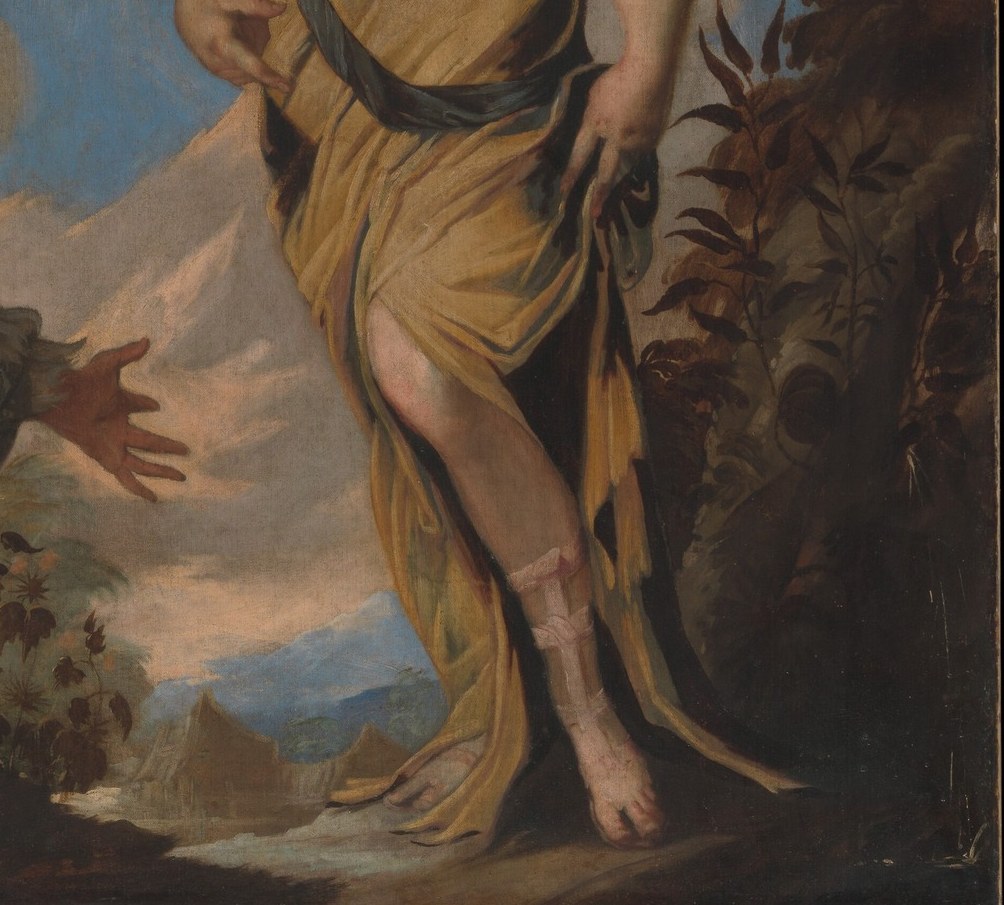
Look closely at Hagar's face; her expression conveys a complex mix of fear, awe, and desperate hope as she reaches out. The angel's gentle touch on her robe, an unexpected detail, highlights the intimacy and significance of this divine encounter.
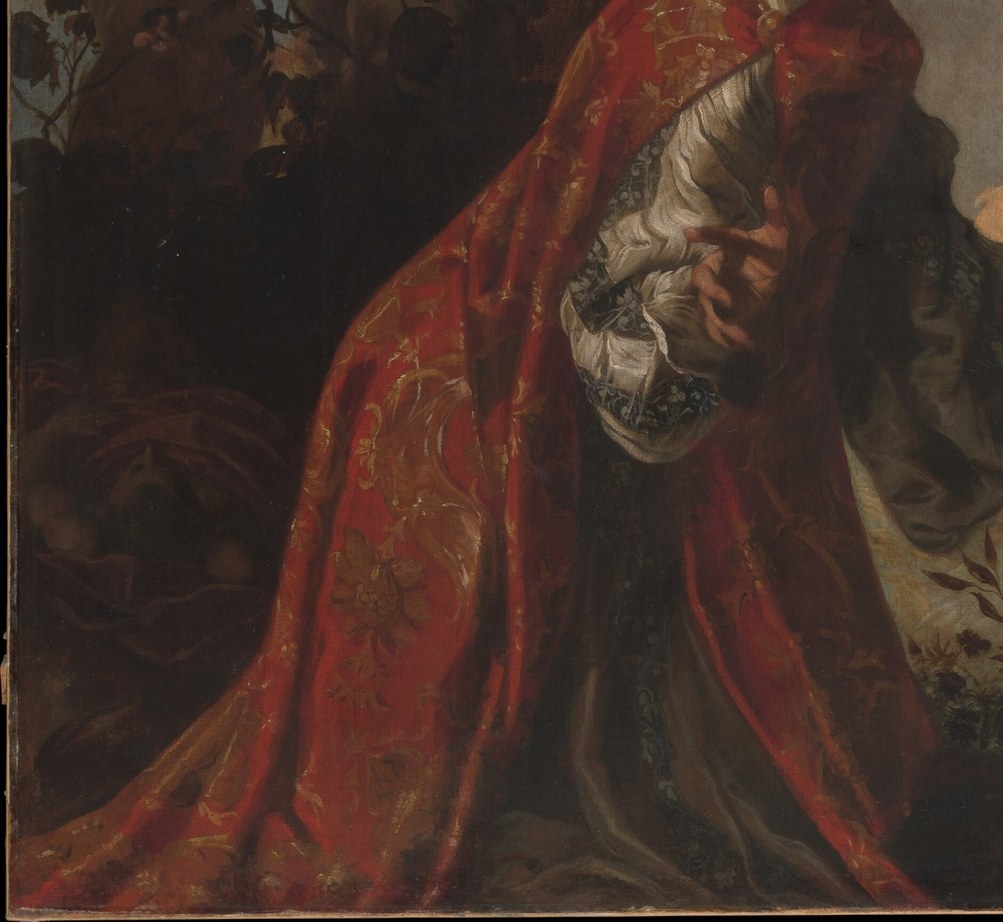
Maffei uses dramatic light and shadow (chiaroscuro) to heighten the emotional intensity of the scene. The rich, voluminous folds of Hagar's red robe and the intricate details like her headband showcase the artist's skillful technique in rendering texture and depth.
This painting invites us to reflect on themes of vulnerability, faith, and the unexpected moments of grace that can arise in times of profound solitude.
Details
Transcript
Hagar, lost in the wilderness, looks to the heavens. She was Abraham's handmaiden, banished by his wife. An angel appears, offering comfort and prophecy. This unexpected touch signifies divine intervention. Her face shows despair, relief, and desperate hope. Maffei captured this moment in oil paint, 1657.