Still Life with Game by Chardin, Jean Siméon
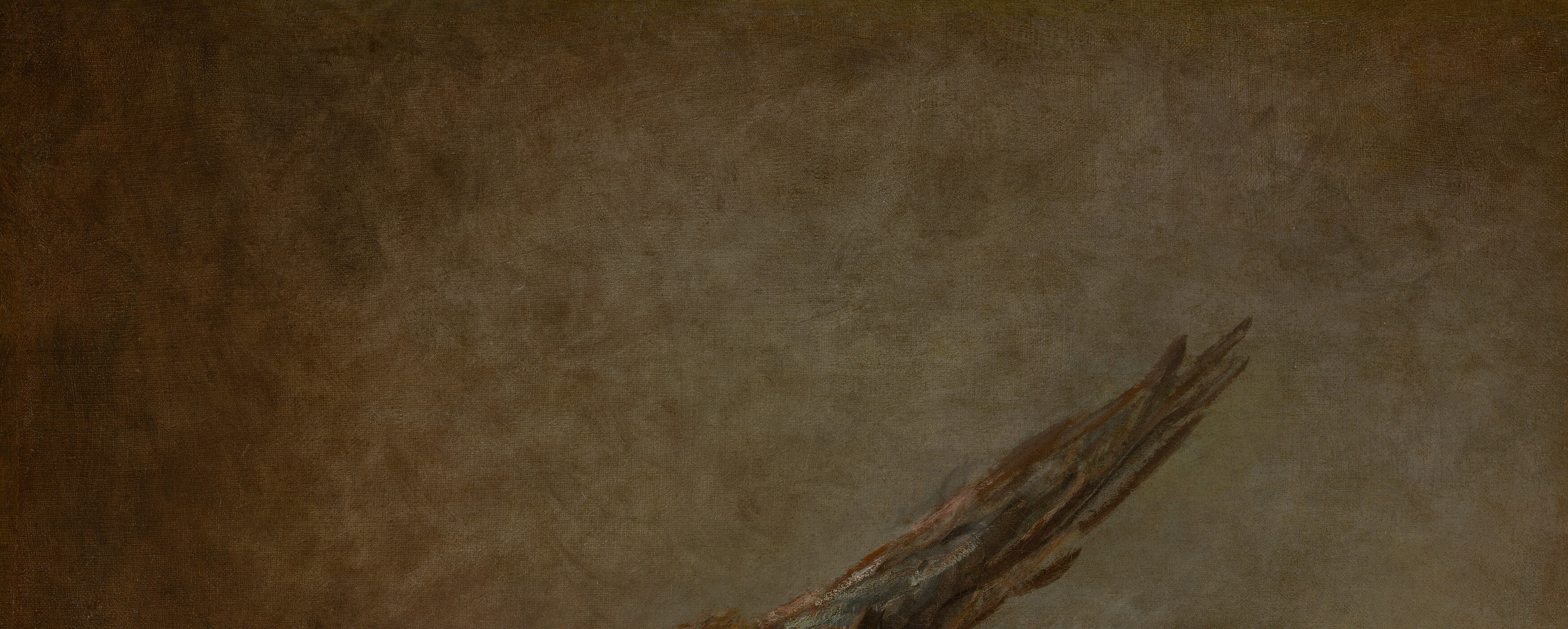
Jean Siméon Chardin, a celebrated painter of still lifes, often chose not to sign his work, making the discovery of his inscription in 'Still Life with Game' a rare treat. Painted around 1754, this oil on canvas, held in a private collection, exemplifies his meticulous attention to detail and texture.
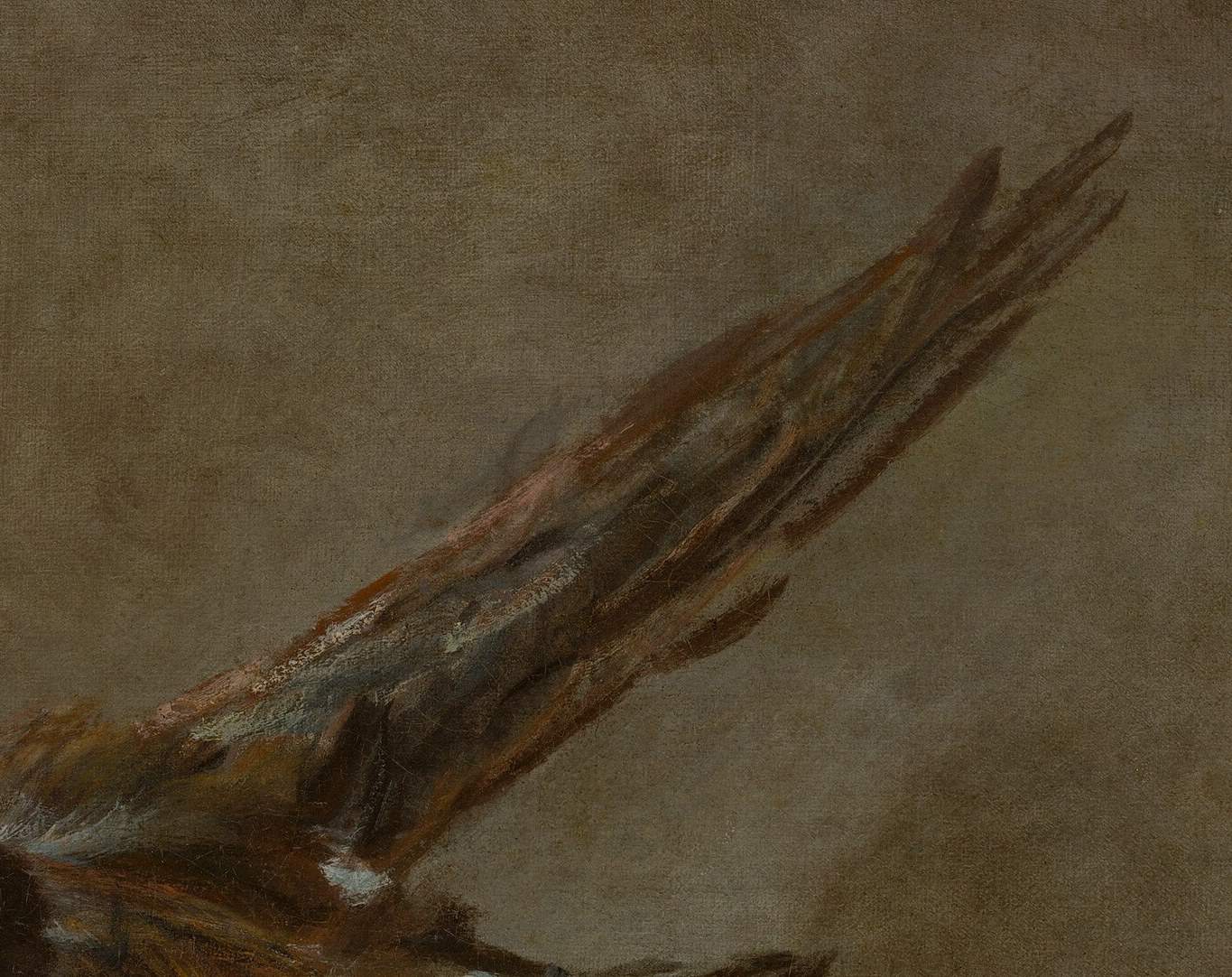
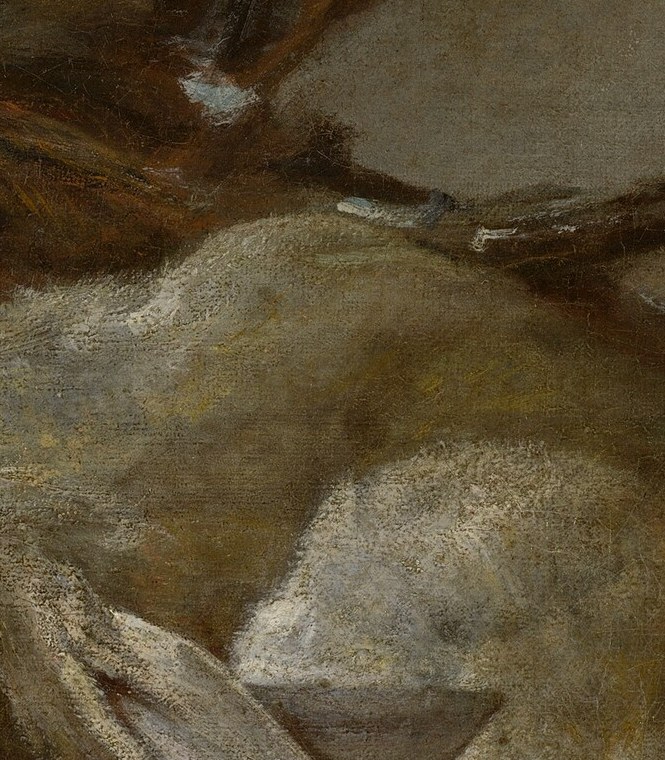
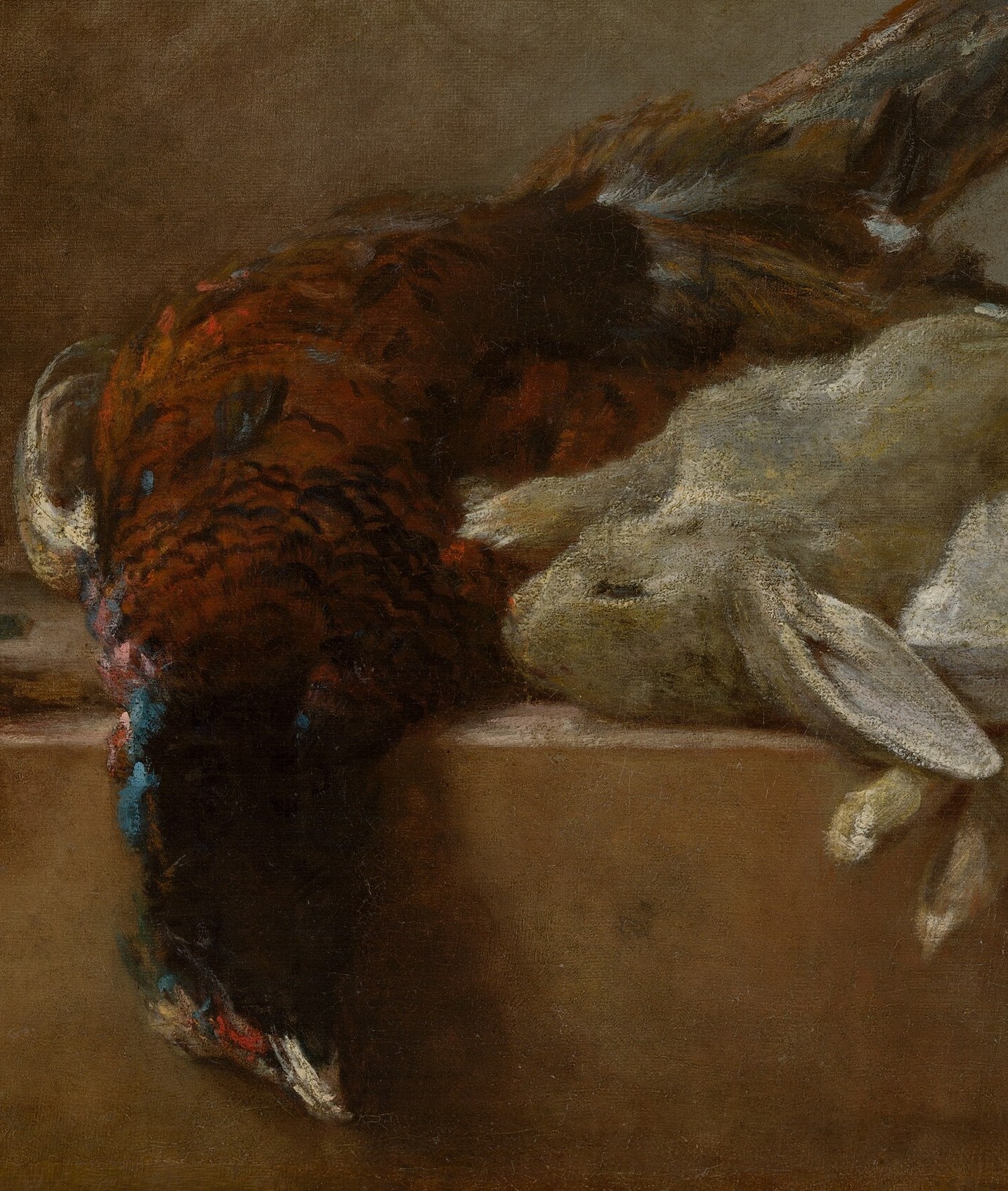
In 'Still Life with Game,' observe the ruffled feathers of the pheasant and the soft fur of the rabbit. Chardin's brushwork brings these textures to life, contrasting them with the vibrant orange, adding a sense of both the transient and abundant nature of life.
Chardin's career thrived during the Rococo period, yet his unidealized depictions often anticipated the realism of later movements. The subtle placement of his signature speaks to his confidence in his work's recognizable style, even without a prominent mark.
This painting invites us to appreciate the quiet beauty of everyday objects, rendered with extraordinary skill. What other hidden details do you think artists might embed in their work?
Details
Transcript
Chardin painted still lifes, not grand historical scenes. He was a master of texture, like these pheasant feathers. And the delicate fur of this dead rabbit. His work was popular, but he rarely signed them. But look closely, here in the shadows. There, a faint inscription: 'Chardin'.