Untitled by Kano Motonobu
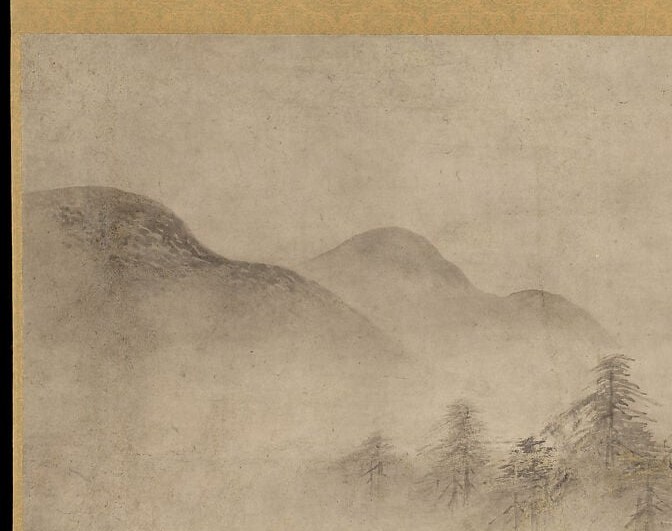
Kano Motonobu painted this hanging scroll in 1536, and he left more than half of it completely blank. That emptiness is the real subject.
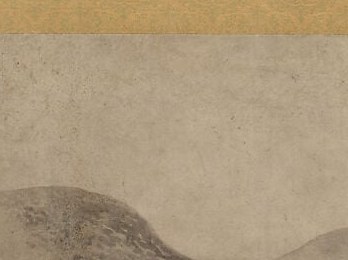
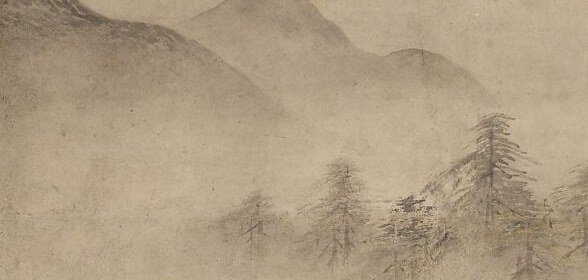
Look at the dark peak on the left, then at the ghost-pale hill on the far right. The only thing separating them is ink dilution. Motonobu used hosumi, a controlled wet-ink technique, to build depth without a single outline or vanishing point. Where the mountain dissolves into white paper, the paint itself is being pulled outward while still wet, creating a soft halo that reads as moisture and distance.
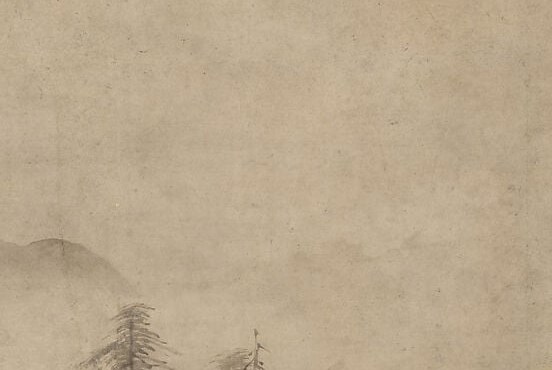
The horizontal band of empty paper between the mountains and pines is ma: negative space held as deliberately as any painted form. This scroll was designed for intimate viewing, unrolled slowly in a small room, so the mist revealed itself frame by frame. The pines on the central promontory are the only hard-edged forms in the composition, and their ragged silhouette against the void is the sharpest line in the entire painting.
Everything else is suggestion. And that's the trick: Motonobu didn't paint the mist. He painted the mountain, and the mist took care of itself.
Details
Transcript
A mountain and a few pines. Simple. But look closer at the dark peak. No outline. Just dense ink pulling away into mist. Now find the hill on the far right. The ink is so thin, the paper shows through. That difference in tone is the only thing telling you it's miles away. And the mist between them? That's just empty paper. Motonobu painted atmosphere by leaving it blank.