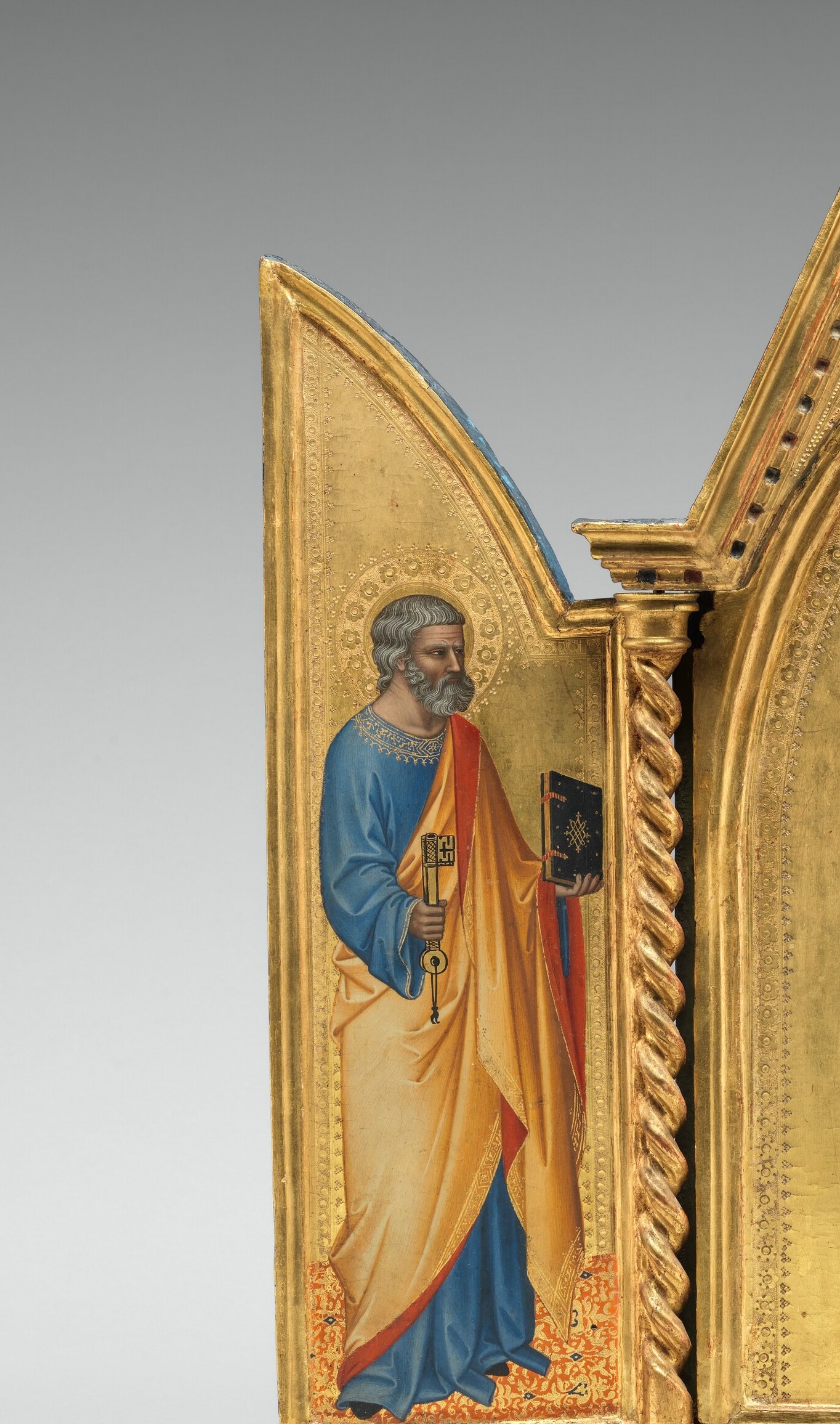
Saint Peter [left panel] by Nardo di Cione
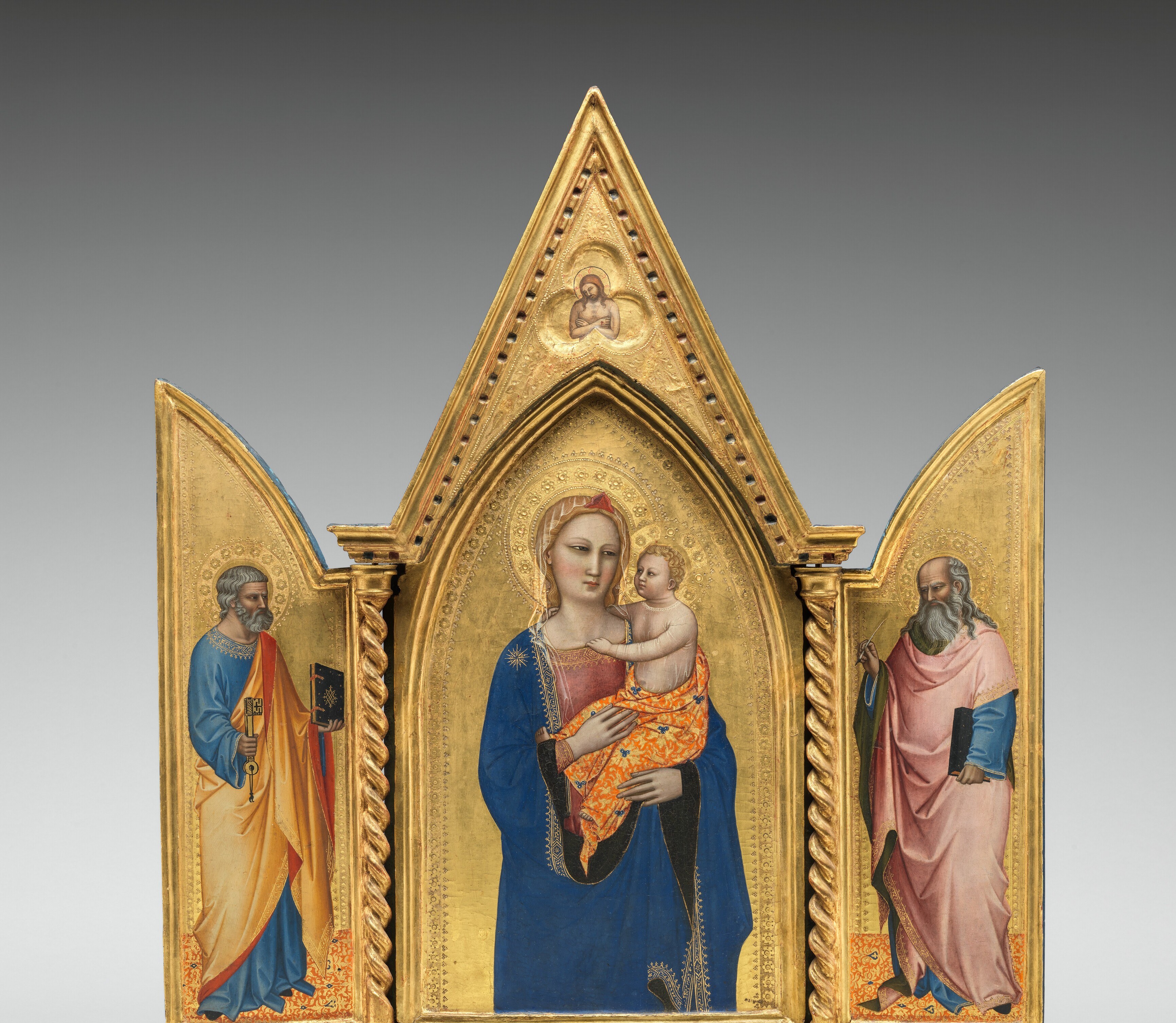
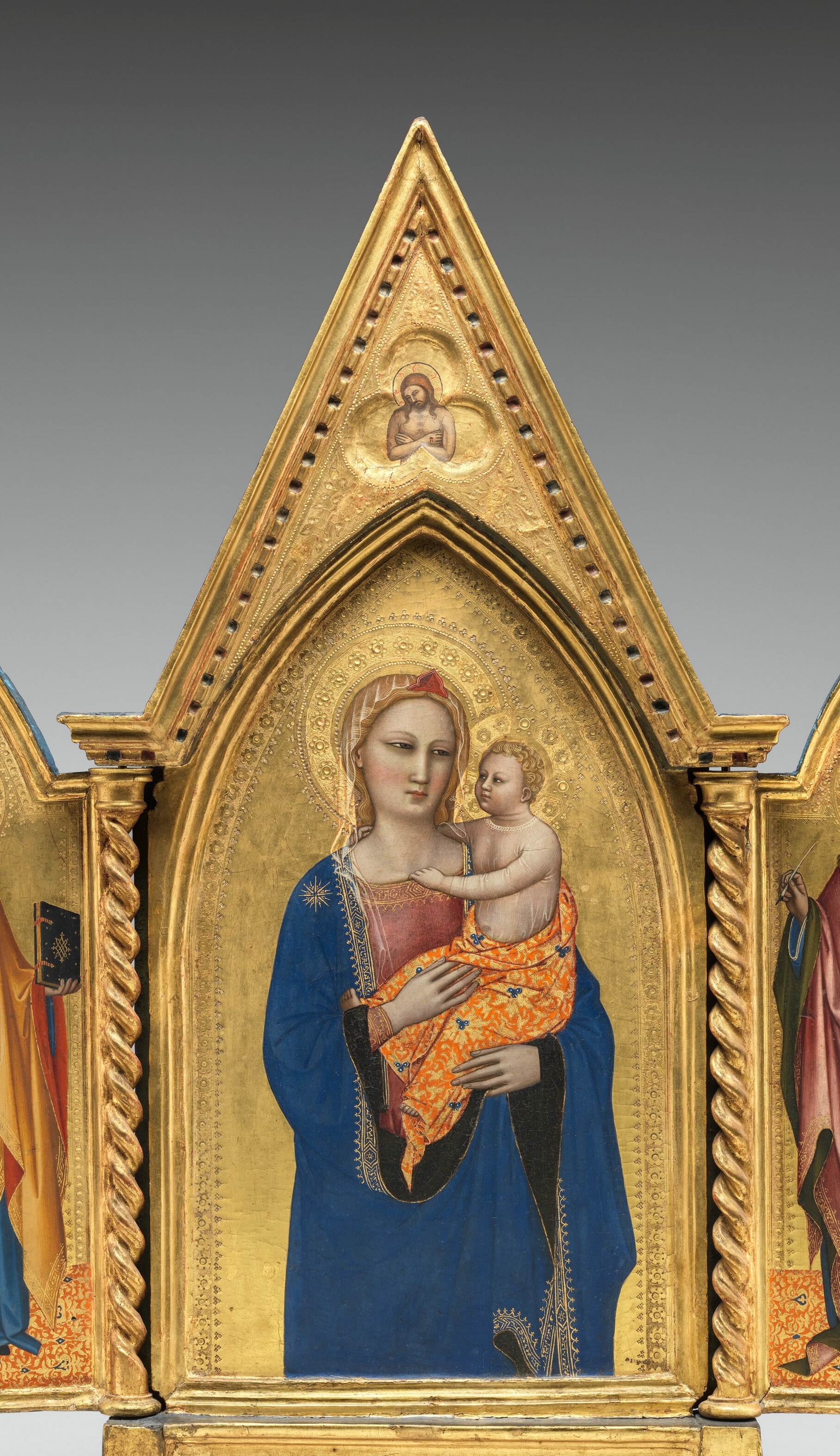
This striking panel, 'Saint Peter' by Nardo di Cione, circa 1360, at the [Museum Name], showcases a pre-Renaissance artistic technique that literally shines. Far from being a simple painted background, the luminous gold is real gold leaf, meticulously applied to the wooden panel.
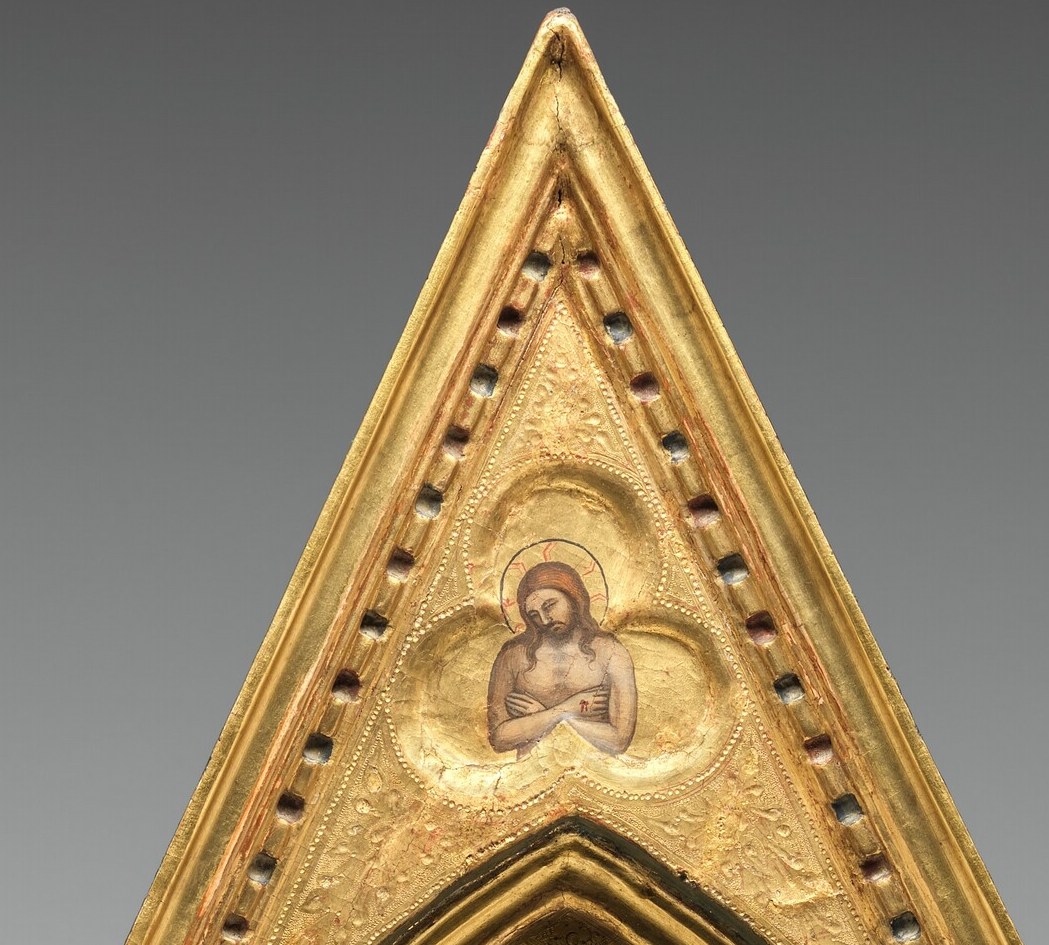
Notice the halo behind Saint Peter's head. It isn't just a flat gilded surface; the artist used tools to press intricate patterns into the gold. This 'tooled' gold leaf creates a shimmering effect, with each small impression catching and reflecting light, making the divine figures truly glow.
This labor-intensive method was common in 14th-century tempera painting, lending a material richness and spiritual radiance to devotional works. It's a testament to the artisans' skill, creating an effect of light and depth that later oil painters would attempt to mimic with pigment alone.
Next time you see an early gold-ground painting, look closely for these dazzling details. Can you imagine the light playing across it in a dimly lit chapel?
Details

Transcript
Before canvases, paintings were wood panels covered in gold. This isn't paint. It's real gold leaf, painstakingly applied. And this halo is not just flat gold. The artist pressed patterns into the gold before painting. Each tiny punch catches the light, making it gleam. A luminous trick no brush could ever fully replicate.