Mandan Ceremony - The Water Sinks Down by Catlin, George
George Catlin's "Mandan Ceremony - The Water Sinks Down," painted between 1861 and 1869, captures a moment of deep cultural significance. Housed at the National Gallery of Art, this oil on card mounted on paperboard work offers a rare glimpse into Mandan ceremonial life of the 1830s.
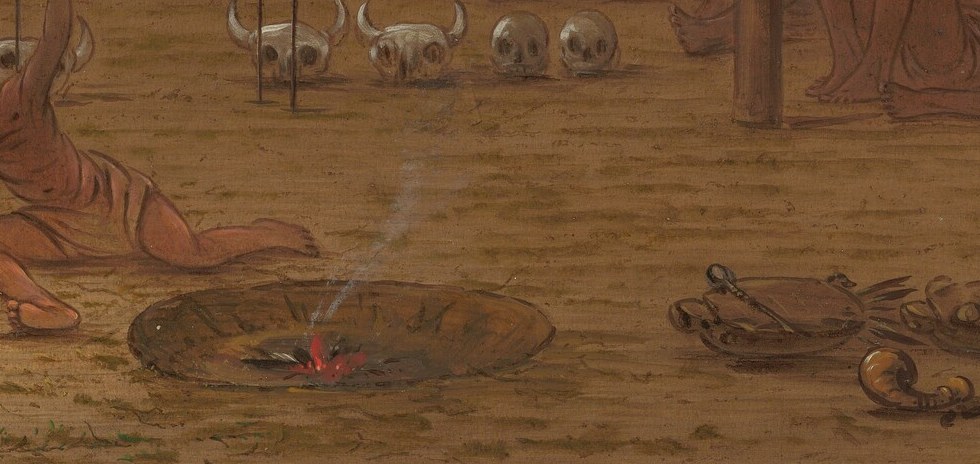
Look closely at the central fire pit, the scattered animal skulls, and the offerings of food. These elements are not mere decoration; they are symbolic keys to understanding a religious rite centered on water and the earth's sustenance. The painting's title itself, "The Water Sinks Down," reinforces this profound connection.
Catlin, a self-taught artist and lawyer, traveled the American frontier extensively, documenting Native American life. His work, often direct and unrefined, served as a vital visual record of practices he feared were disappearing due to Euro-American expansion. This piece is part of his broader effort to preserve the visual heritage of Indigenous peoples.
What stories do you think these symbols might have told to those who participated in this ceremony?
Details
Transcript
This painting documents a Mandan ceremony from the 1830s. The artist, George Catlin, captured it during his frontier travels. At the center, a fire pit, crucial for warmth and ritual. Around it, scattered animal skulls hint at sacrifice or reverence. These offerings of food connect the ceremony to earth's bounty. The title, 'The Water Sinks Down,' links these symbols. All point to a religious rite connected to water and sustenance.