Miss Juliana Willoughby by Romney, George
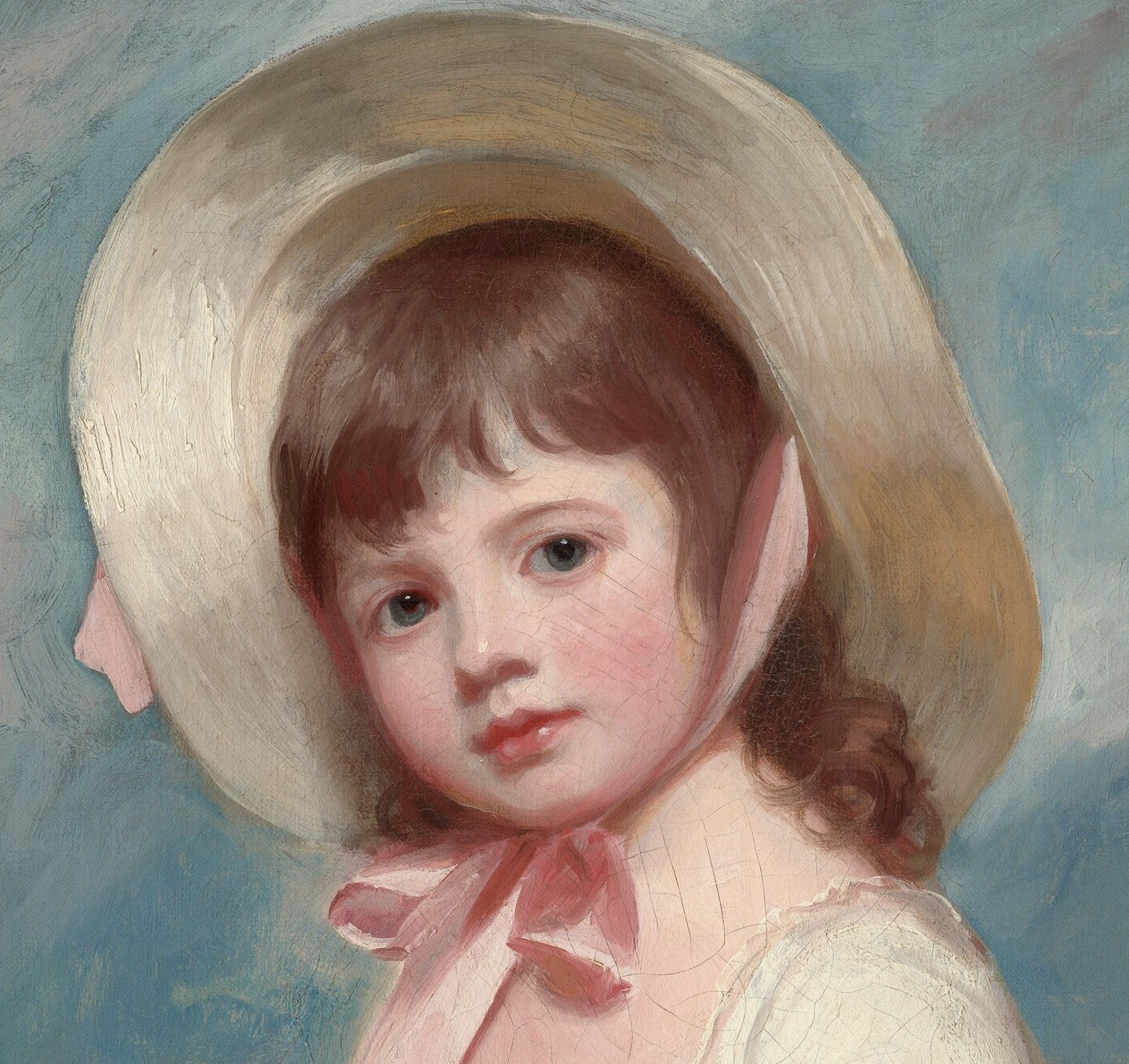
George Romney's "Miss Juliana Willoughby," painted in 1782 and housed in a museum, captures a timeless innocence through the eyes of a young girl. This oil on canvas portrait is a notable example of British portraiture from the late 18th century.
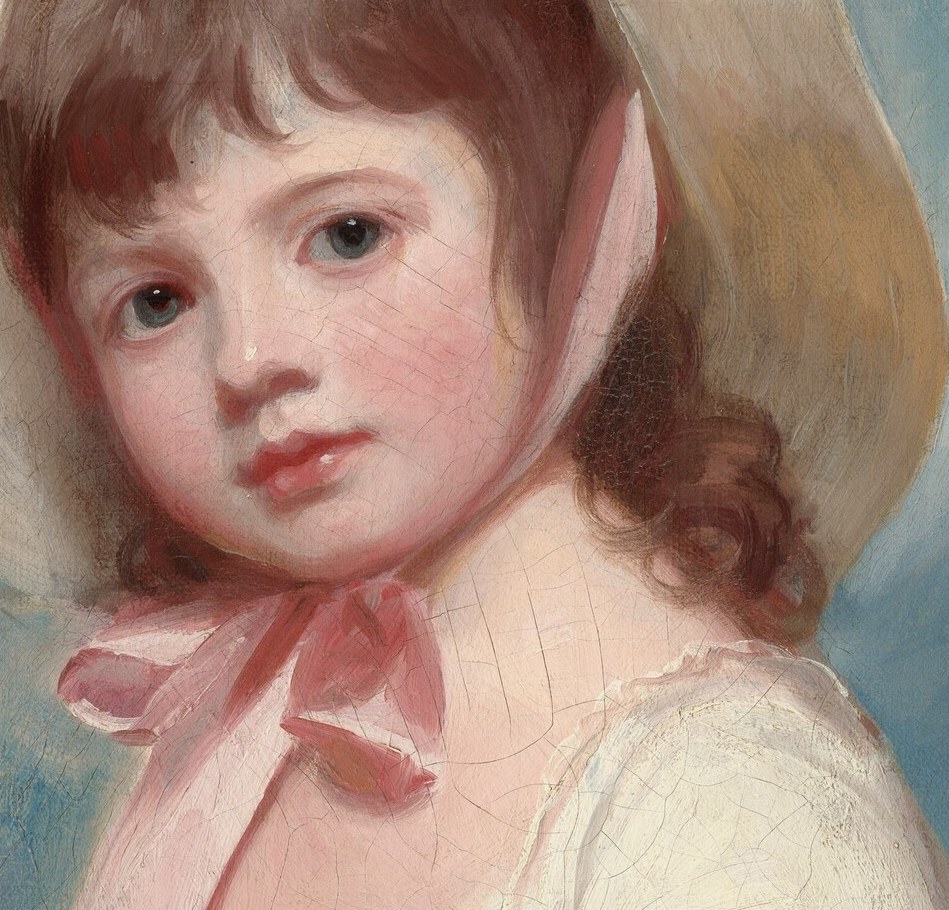
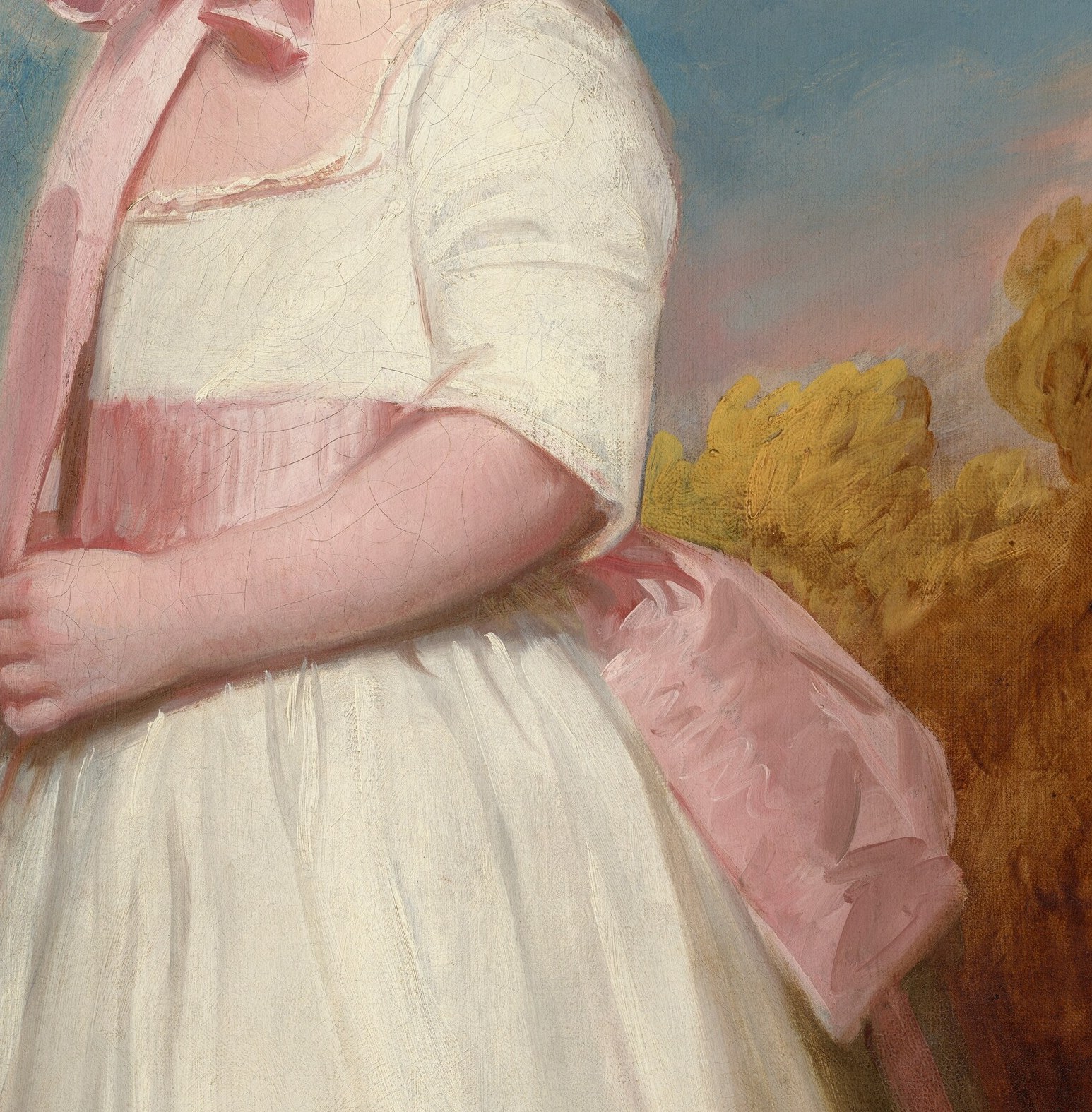
Look at the simplicity of her white cotton dress, offset by the vibrant, flowing pink sash. Her wide-brimmed straw hat frames her youthful face, and her hands are gently clasped, conveying a sense of calm.
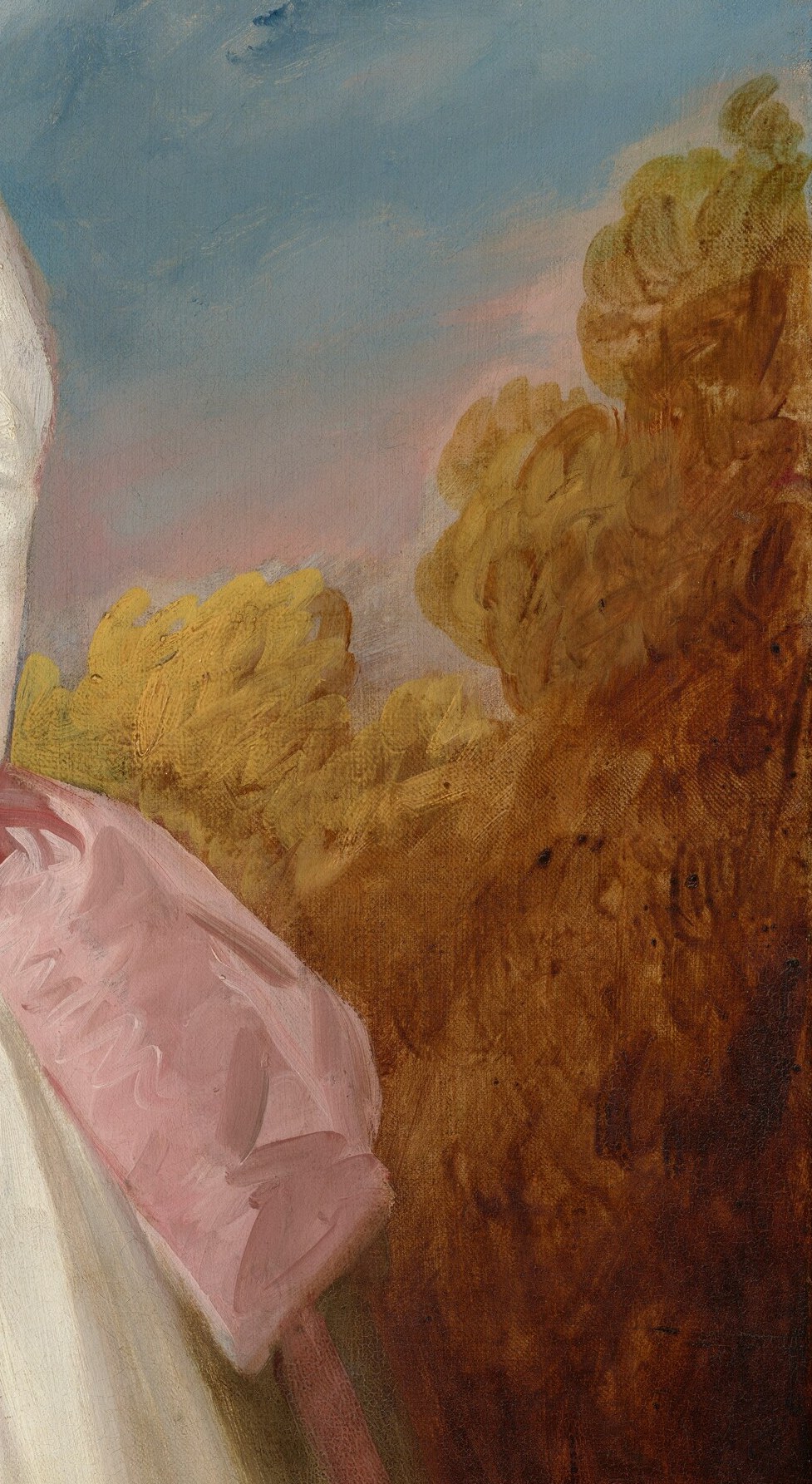
Romney, a prominent British portraitist, created this work during the Romanticism movement, which emphasized emotion and the glorification of nature. His characteristic softness in rendering figures and landscapes contributes to the painting's serene atmosphere, a style shared with contemporaries like Thomas Gainsborough.
The direct, curious gaze of Miss Willoughby continues to captivate viewers centuries later, inviting us into her world. What do you see in her eyes?
Details
Transcript
She looks out from the 1780s, straight at you. Her dress is simple, a child's white cotton. But the wide pink sash tells a different story. She was painted by George Romney, a renowned portraitist. His soft style was part of the Romantic art movement. Now, look closely at her wide, green eyes. That direct, innocent gaze still holds our attention today.