Still life with a salt cellar by Pieter Claesz
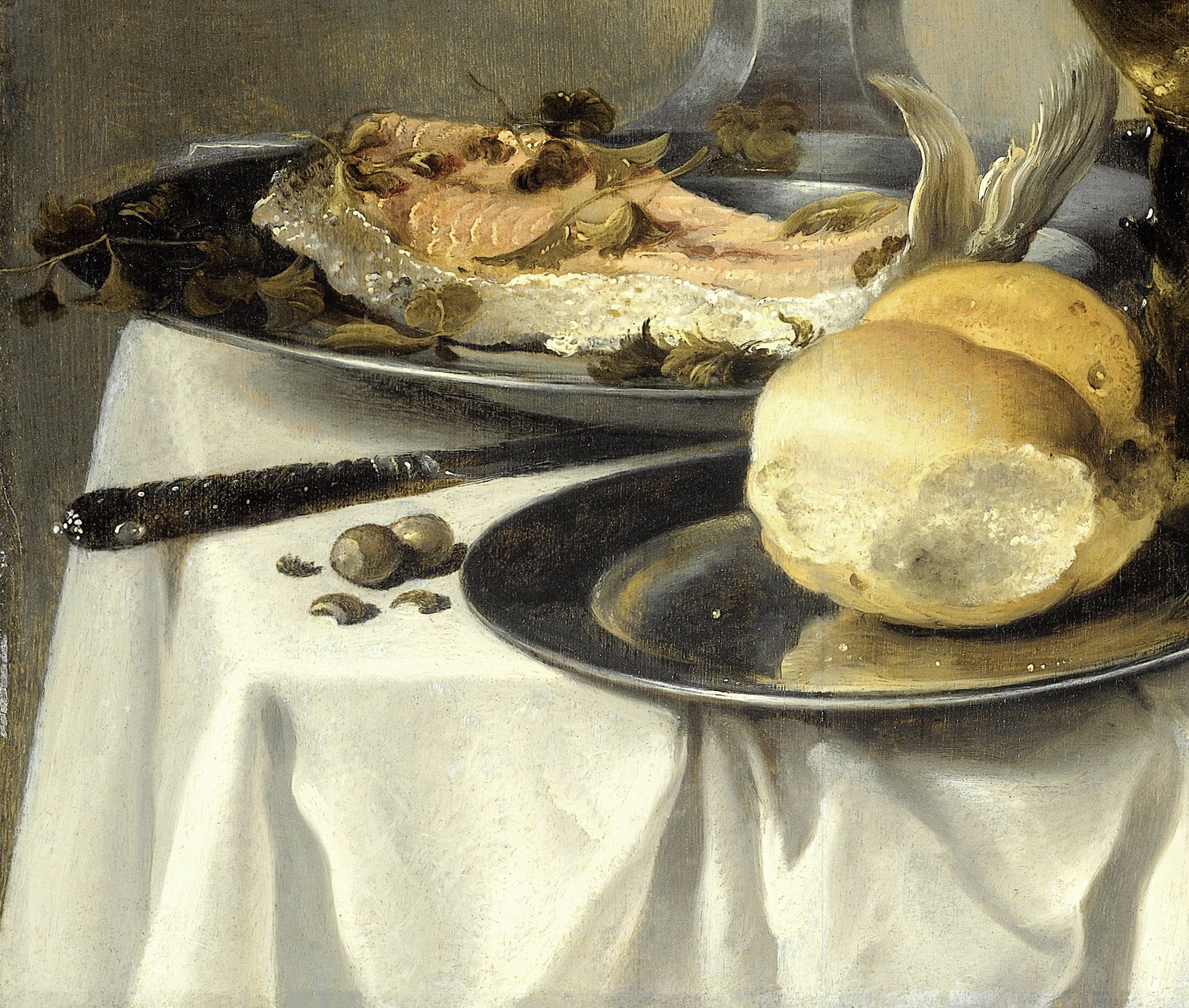
Still Life with a Salt Cellar, painted by Pieter Claesz in 1644, lives in a quiet corner of the Dutch Golden Age. It's a modest table, a simple meal, but it's one of the most technically relentless demonstrations of oil paint you will ever see. Claesz's project was to make you forget you're looking at a flat canvas.
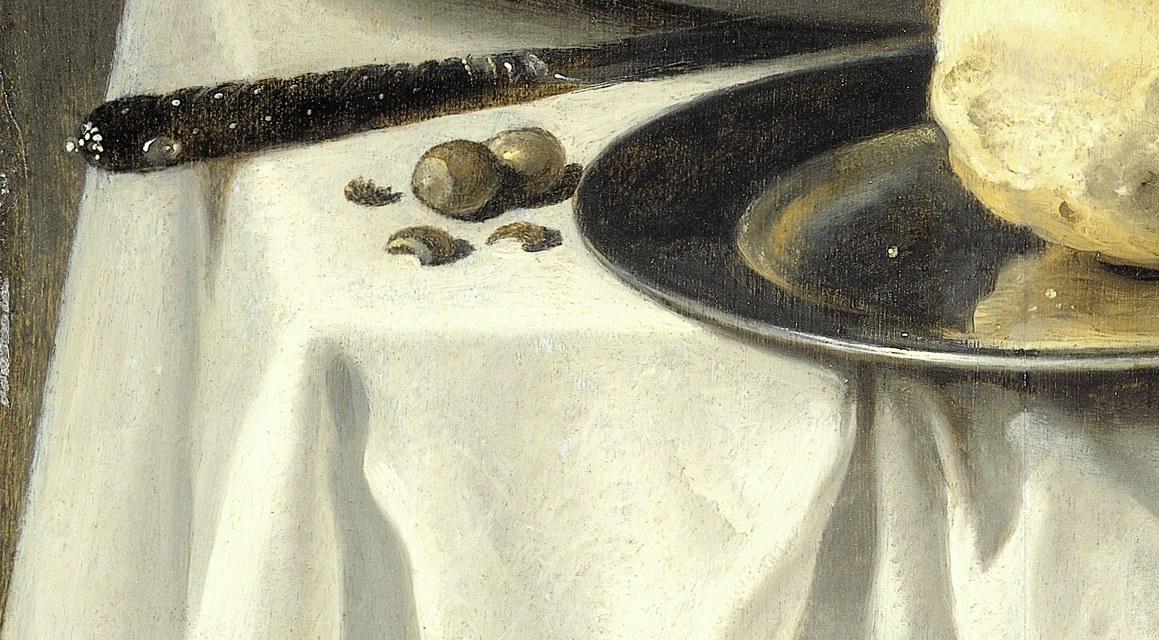
The knife at the front is the first assault on your senses. It projects over the table's edge, a classic Dutch illusionistic trick that blurs the line between the painting's space and your own. Then your eye moves to the crumpled white tablecloth, which is not made of white paint at all. Up close, it's a series of tonal glazes, gray, cream, taupe, that your brain assembles into linen.
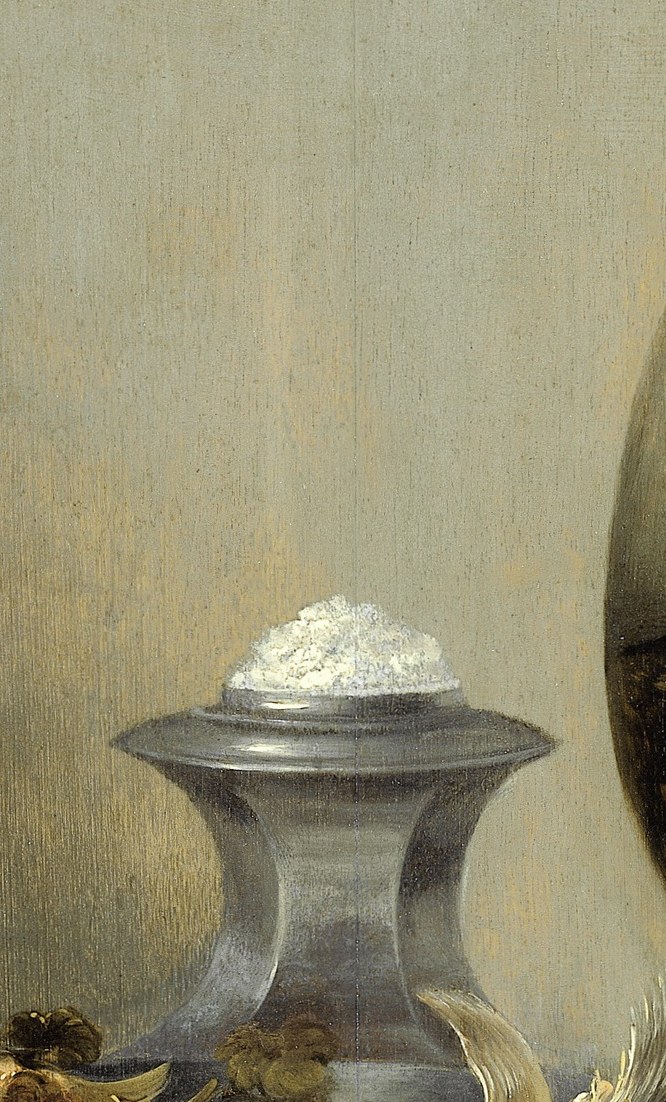
Pieter Claesz was born in Berchem and worked in Haarlem, the epicenter of the Dutch still-life boom. This kind of painting, called an 'ontbijtje' or 'little breakfast,' was its own thriving market. A successful composition like this one balanced humble Protestant restraint with the quiet prosperity signaled by imported wine, white salt, and fresh shellfish. The salt itself was a luxury: pure white salt was mined in the Netherlands but remained costly and was often locked away.
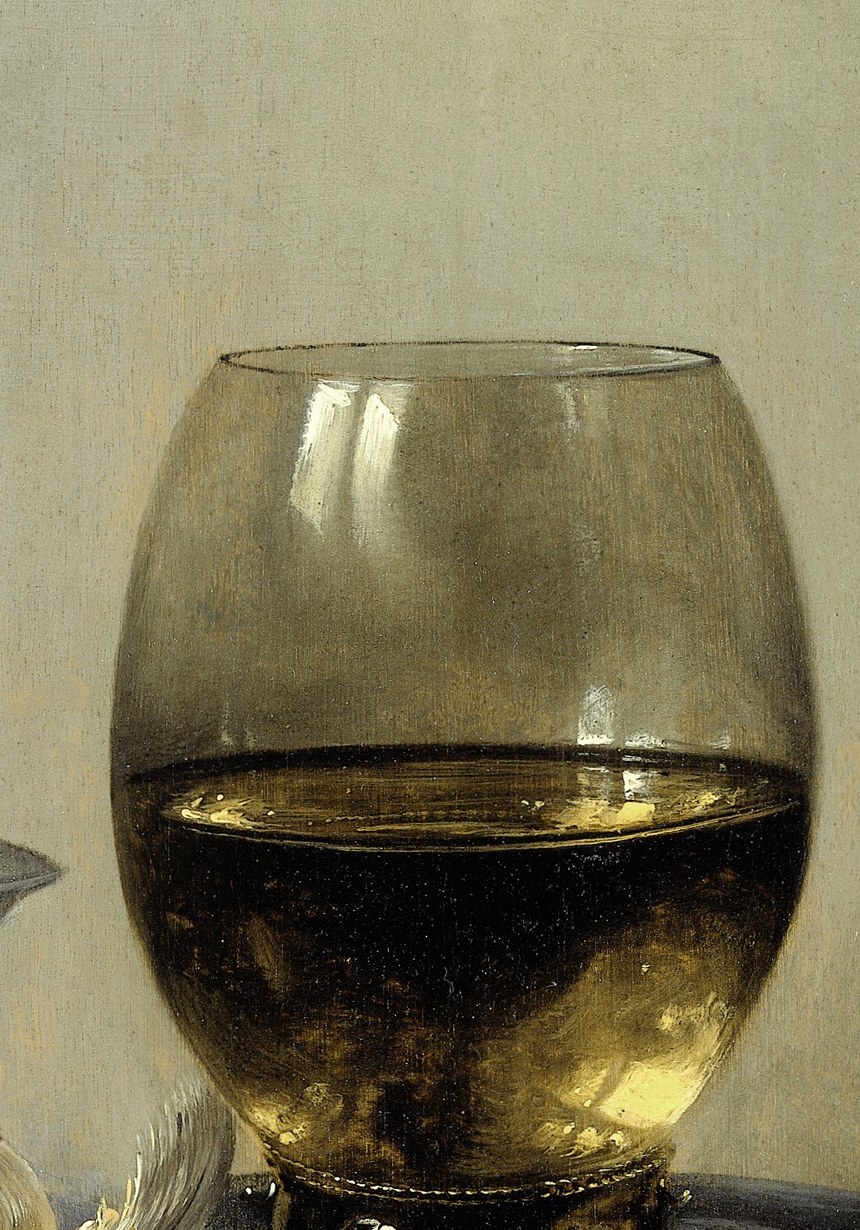
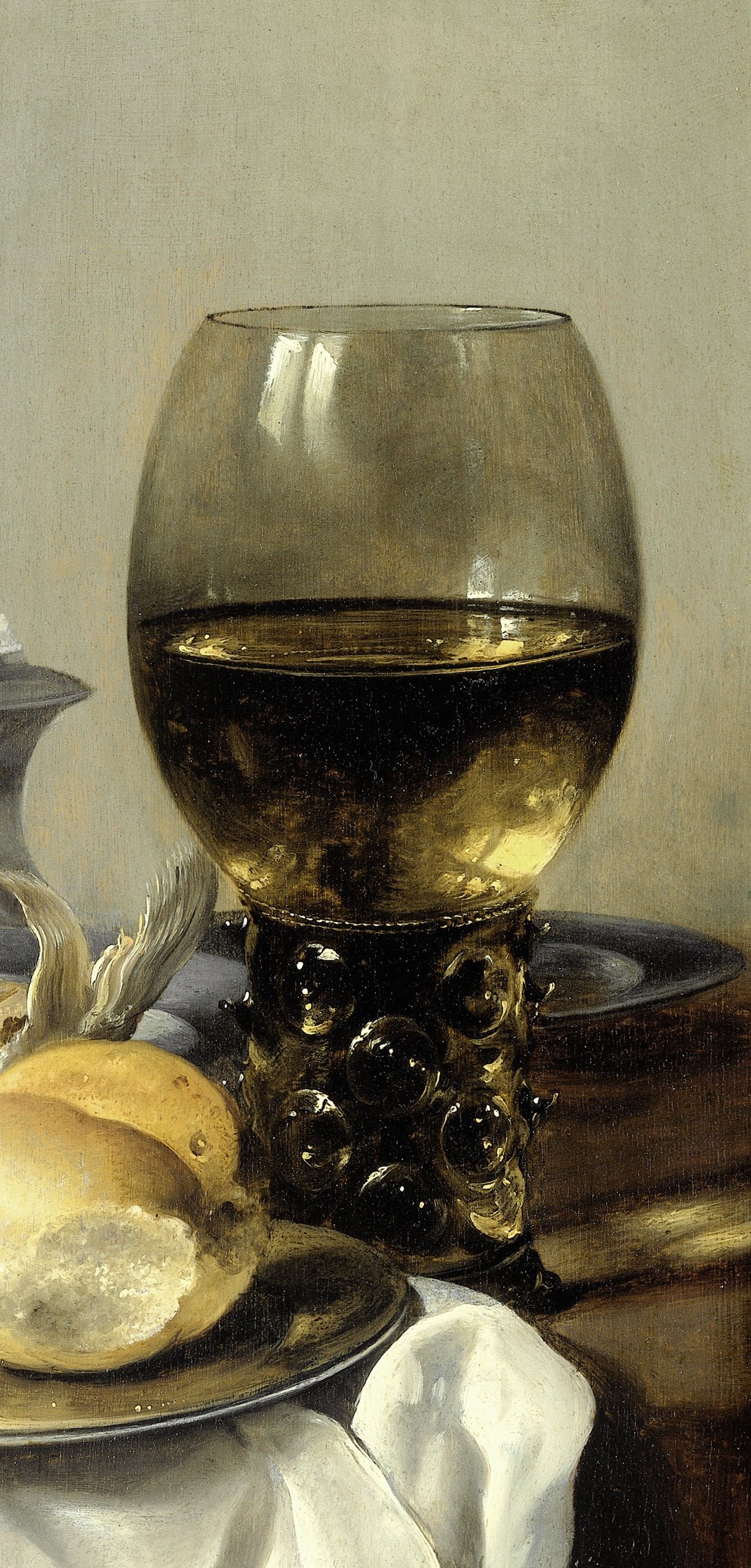
The glass of wine is the painting's final exam. In one vertical object, Claesz renders the glossy highlight on the rim, the deep red-brown of the wine inside, and a ghostly reflection of the room itself, perhaps even a tiny window, on the glass bowl. Three completely different optical phenomena, resolved with a single brush.
Details
Transcript
It starts with a knife. Just a dark-handled knife. But it breaks the picture plane. It feels like it's on our side of the table. Now look at the white tablecloth. Not one brushstroke reads as 'cloth' up close. Only layered gray glazes. The salt cellar is solid silver, built from cool white highlights. But the real trick is the glass of wine. Transparent glass, dark wine, and a room reflected inside it. All at once.