A Foggy Sky by John Frederick Kensett
John Frederick Kensett's "A Foggy Sky" from 1872, at the Metropolitan Museum of Art, showcases the artist's extraordinary ability to capture the subtle nuances of light and atmosphere. This painting, a testament to the Luminist style, invites viewers into a serene, almost meditative landscape.
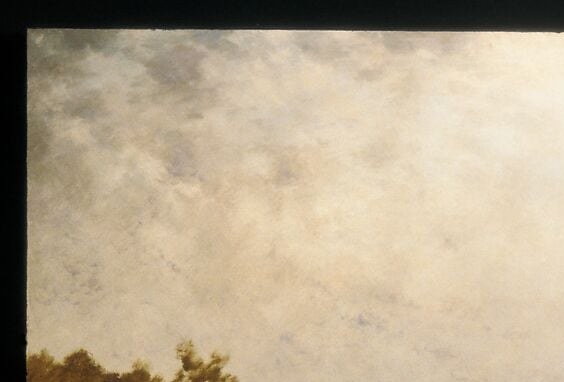
Observe how Kensett masterfully blends the sky and water, creating a seamless transition that emphasizes the vastness and stillness of the scene. The delicate light at the edge of the canvas hints at a distant, unseen sun, illuminating the pervasive fog without dispelling its mystery.
Completed in the final year of Kensett's life, this work reflects a contemplative mood, moving away from dramatic grandeur towards a quiet appreciation of nature's transient qualities. It's a poignant example of his mature style.
How does this subtle interplay of light and fog make you feel?
Details



Transcript
This painter was a master of subtle light. He captures the quiet of a foggy morning, just before daybreak. Notice how the clouds dissolve into the vast, pale sky. The soft light at the canvas edge suggests a hidden sun. His brushwork blends sky and water seamlessly at the horizon. The water's surface reflects the sky with a mirror-like stillness. This painting was finished the year he died, in 1872.