The Nativity by Zanobi Strozzi
View the artwork: The Nativity →
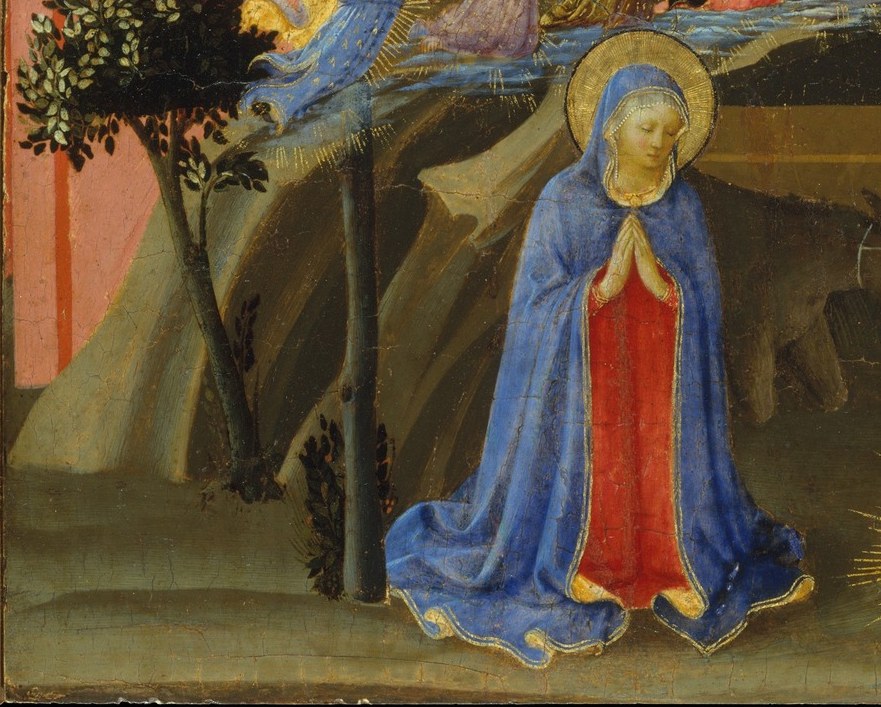
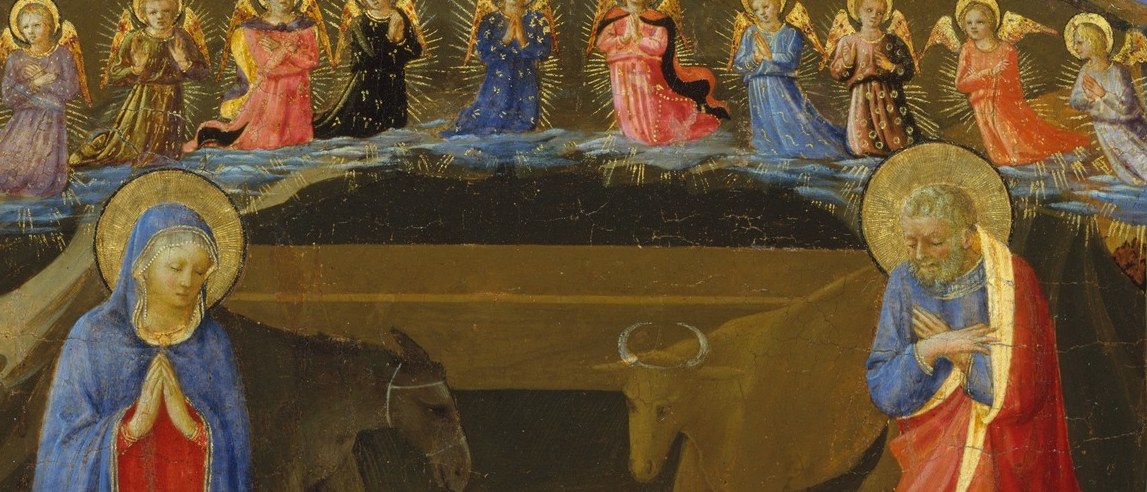
This is Zanobi Strozzi's 'The Nativity,' painted around 1433. Most people scanning a Nativity see the familiar scene and move on, but the real emotional weight is in Mary's hands.
Look at them. In earlier medieval Nativities, Mary is the exhausted midwife-mother reaching toward her child or cradling him. Here, her hands are clasped in prayer. She has pulled back. She is not tending the infant, she is adoring him. Strozzi made a quiet but radical iconographic shift: Mary becomes the first Christian, kneeling before the divine rather than holding the baby she just delivered.
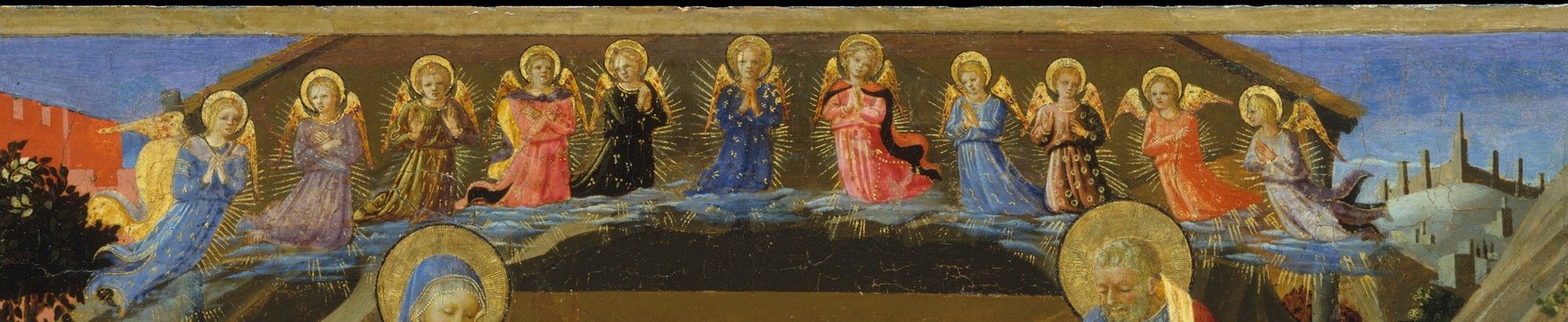
The painting lives in a transitional moment. The golden hills and the crisp halo against bare earth still belong to the gold-ground icon tradition, but the landscape behind Bethlehem is rendered with a Tuscan eye. Strozzi was a pupil of Fra Angelico and spent most of his career illuminating manuscripts, you can see that decorative precision in the angel choir's tight, varied faces.
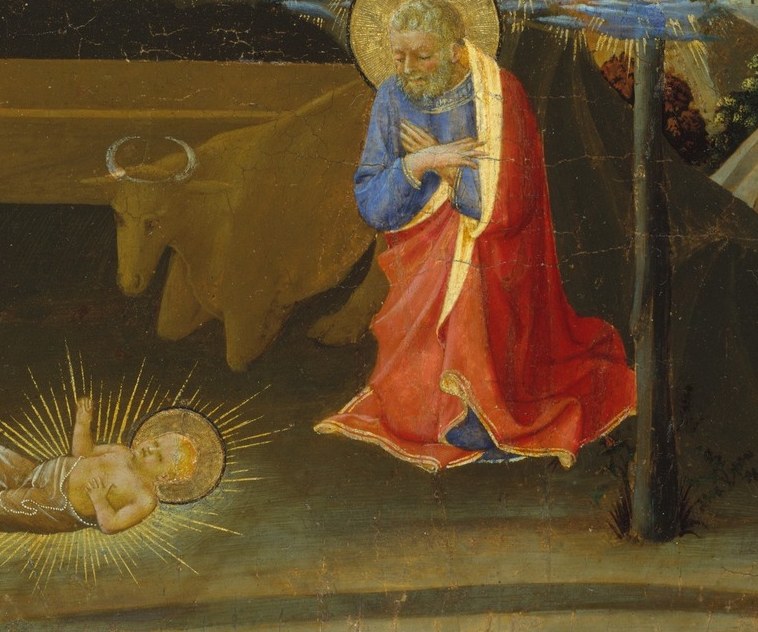
The ox and donkey are there because Isaiah said they would be. The angels sing overhead. But the film of this painting is Mary, hands folded, still kneeling in the straw, long after the labor is over.
#arthistory #renaissance #nativity
Details
Transcript
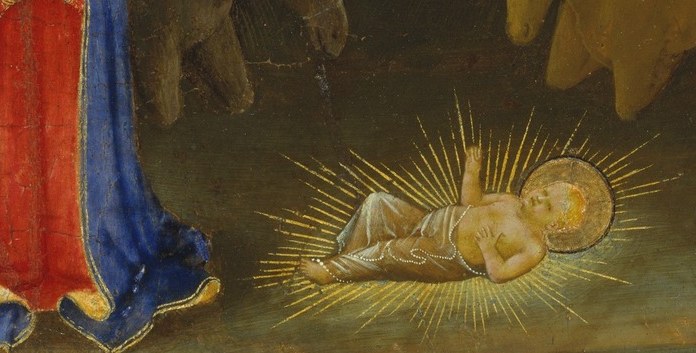
A birth, but no one touches the child. Every figure pulls back to make space. The infant lies on bare ground, glowing. Look at Mary's hands. In earlier paintings, Mary reaches for her son. Here, her hands are pressed in prayer. Strozzi painted her as humanity's first believer. The mother became the worshipper.