Artwork
The Nativity
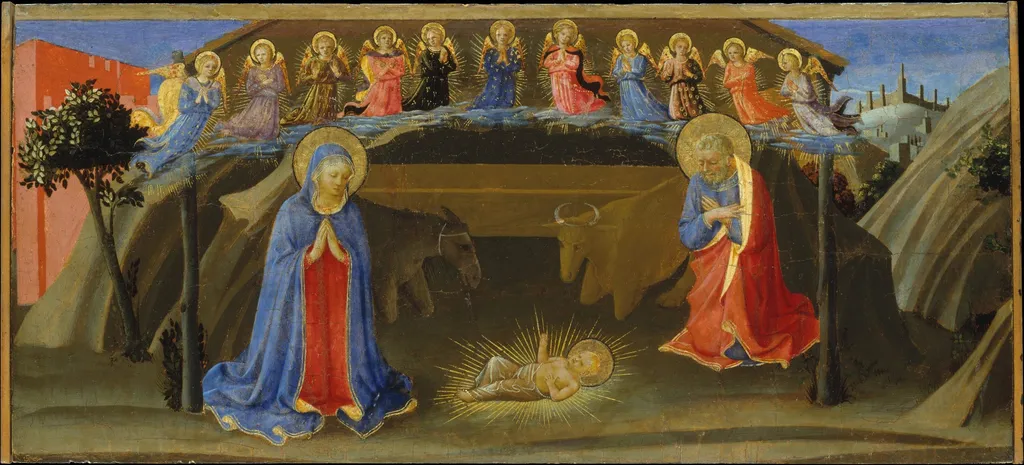
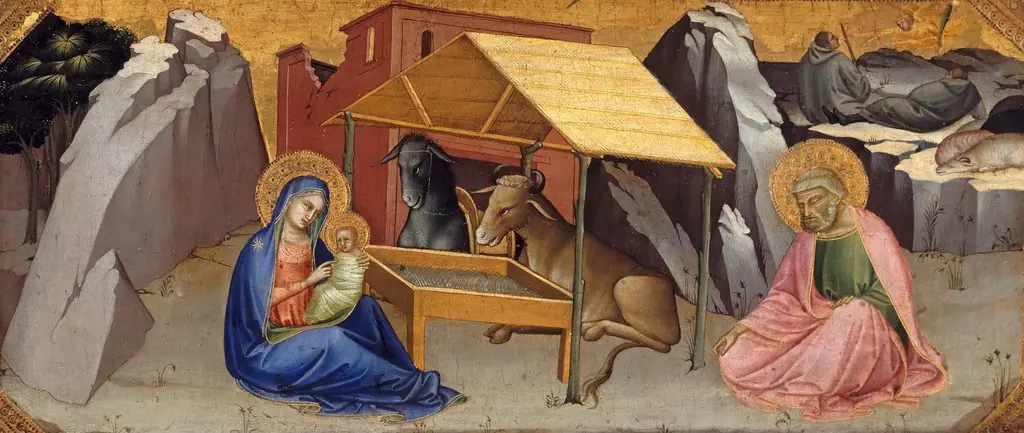
The Nativity is an unspecified painting by the Early Renaissance artist Zanobi Strozzi. It dates from 1433 and is held in the collection of the Metropolitan Museum of Art.
About this work
Subject & Meaning
The presence of humble animals underscores the humanity of the scene, while the angelic figure signals divine announcement.
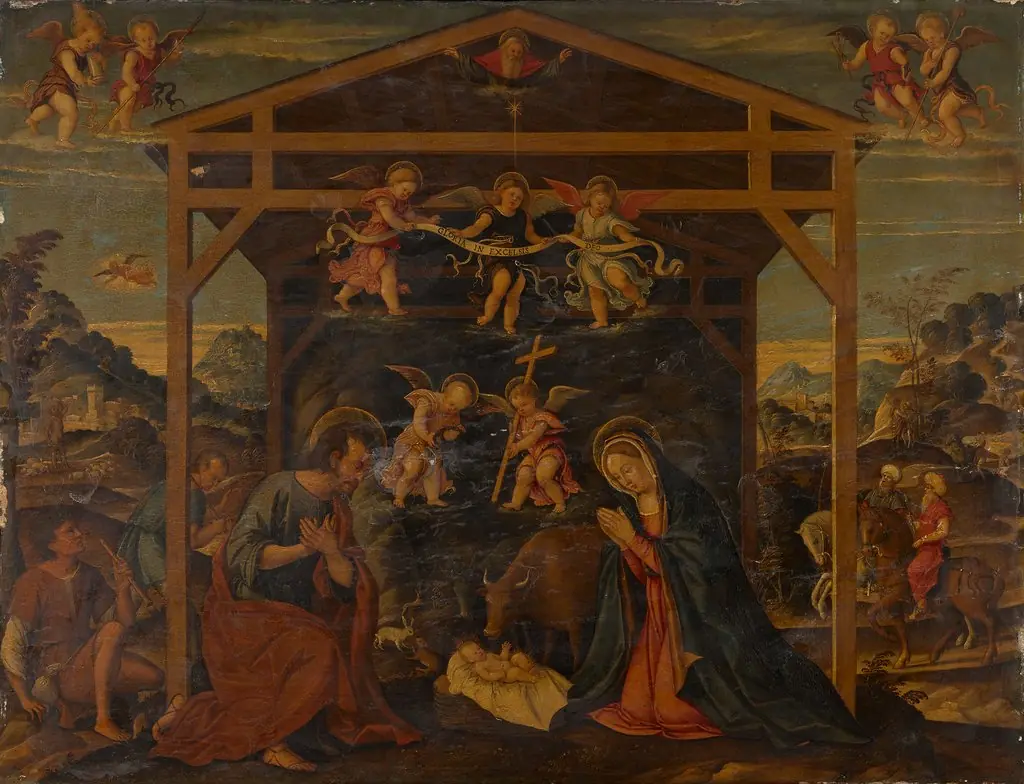
The Nativity by Zanobi Strozzi, painted in 1433, portrays the moment of Christ’s birth as described in the Gospel of Luke. The composition includes the Virgin Mary cradling the infant Jesus, Saint Joseph, an angel, a donkey, cattle, and the Christ Child, all identified in the work’s iconography. The presence of humble animals underscores the humanity of the scene, while the angelic figure signals divine announcement.
By situating the holy family within a domestic setting, the painting emphasizes the incarnation’s significance as a humble, earthly event that conveys salvation. This subject matter reflects the devotional focus on the Nativity of Jesus in early Renaissance religious art.
Technique & Style
Created in 1433, The Nativity by Zanobi Strozzi is a religious painting of relatively small scale, measuring 18.7 cm in height and 43.5 cm in width. This horizontal format accommodates a detailed depiction of the Nativity of Jesus, featuring figures such as Mary, the Christ Child, Joseph, an angel, a donkey, and cattle. The work is classified within the genre of religious art and reflects the formal and stylistic qualities associated with early 15th-century devotional painting.
While the specific medium and support are not detailed in the available records, the attribution has been a subject of scholarly consideration, as it is credited to 'Attributed to Zanobi Strozzi', suggesting some nuance regarding its definitive authorship. The painting is held in the collection of the Metropolitan Museum of Art.
History & Provenance
The Nativity is attributed to Zanobi Strozzi and dated to 1433. The painting is part of the Metropolitan Museum of Art’s collection, where it is currently housed. No further details about its original commission, earlier owners, or provenance are provided in the available references.
Context
The Nativity by Zanobi Strozzi, dated 1433, exemplifies early Renaissance devotional painting in Florence, where intimate scenes of the Christ Child’s birth were used to reinforce communal piety. Art historical analysis situates the work within Florentine painting of the period, highlighting its stylistic link to contemporary altarpieces that blend naturalistic detail with symbolic iconography. Scholars note the inclusion of Joseph, an angel, a donkey, Mary, and the infant Christ surrounded by cattle as a conventional yet emotionally resonant composition that reflects the period’s emphasis on humility and divine incarnation.
The painting is housed in the Metropolitan Museum of Art, underscoring its significance within the canon of 15th‑century Nativity imagery.
Overview
This painting depicts the Nativity, a central event in Christian theology. At its core, a baby lies in a manger, emanating a soft glow, suggesting divine presence. Two adults stand close by, observing the scene.
Above them, a celestial choir of winged figures hovers, some with hands joined in prayer. The setting includes a simple stable roof sheltering a donkey and a cow, while distant buildings are visible amidst trees, grounding the sacred event in a terrestrial landscape.
Artist & collection
Artist
Zanobi di Benedetto di Caroccio degli Strozzi (17 November 1412 – 6 December 1468) was an Italian Renaissance painter and manuscript illuminator active in Florence and nearby Fiesole.

- The Nativity
 The Nativity
 The Nativity
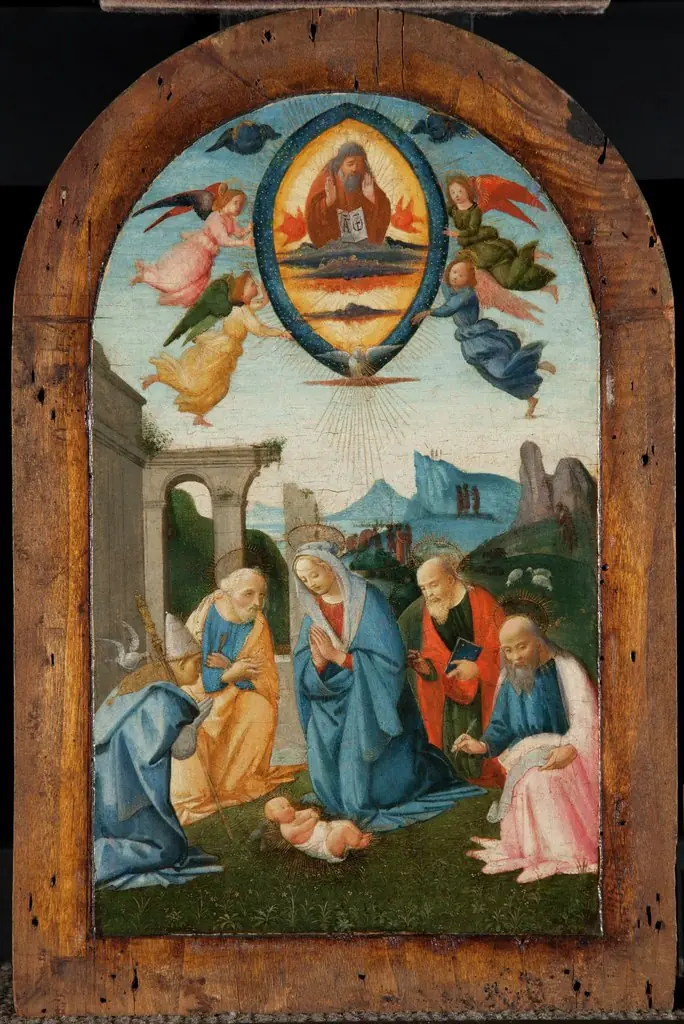 The Madonna and Four Saints Adoring the Infant Jesus
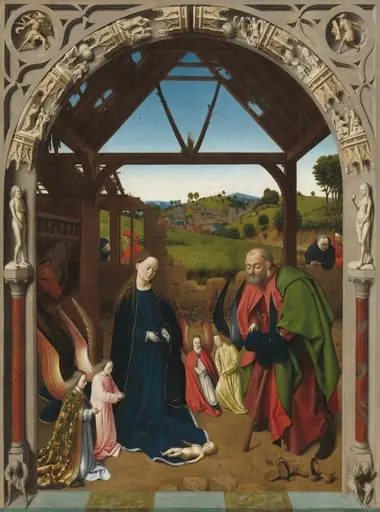 The Nativity
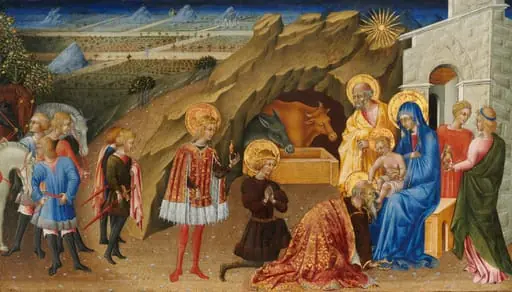 The Adoration of the Magi
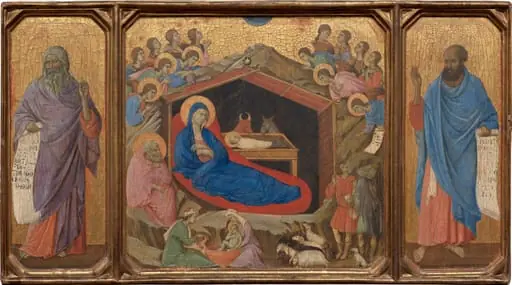 The Nativity with the Prophets Isaiah and Ezekiel
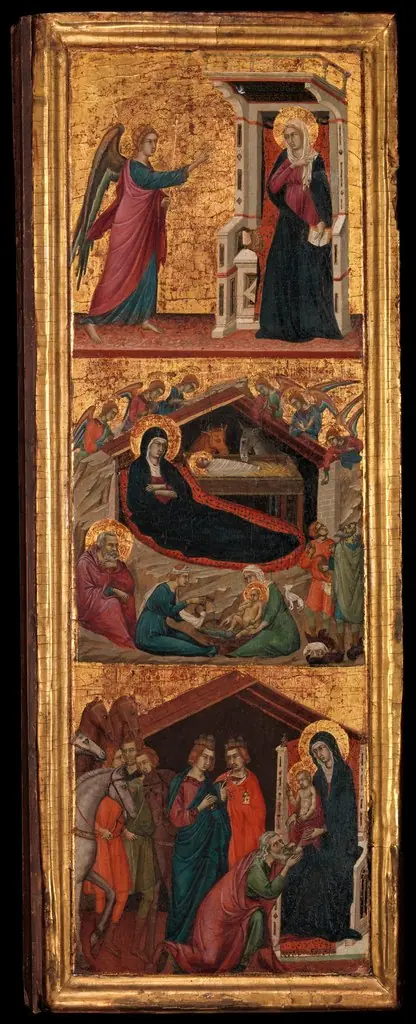 Saints and Scenes from the Life of the Virgin
 Nativity
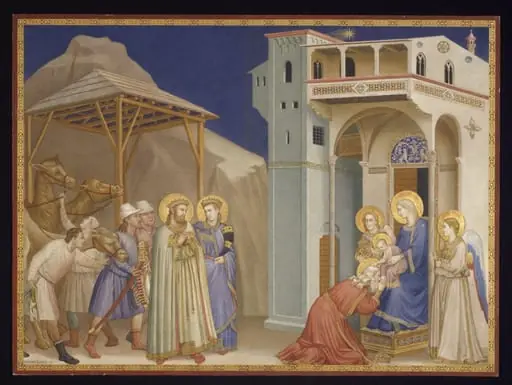 Copy after the painting Adoration of the Magi by Taddeo Gaddi in Lower Church, San Francesco, Assisi
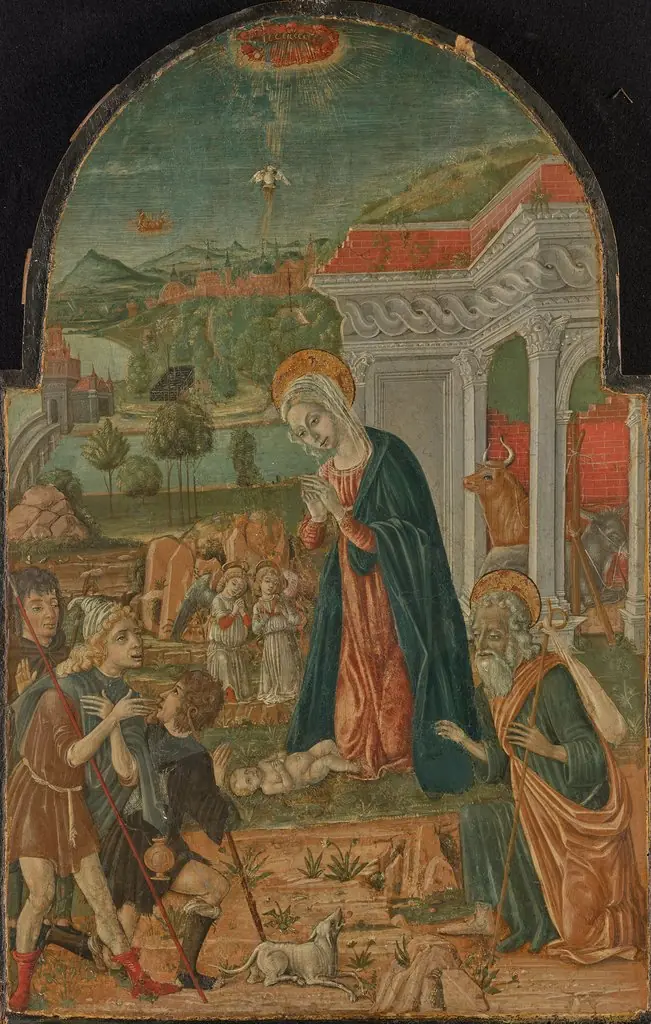 The adoration of the Shepherds
 The Birth of Christ