Ojibbeway Indians in Paris by Catlin, George
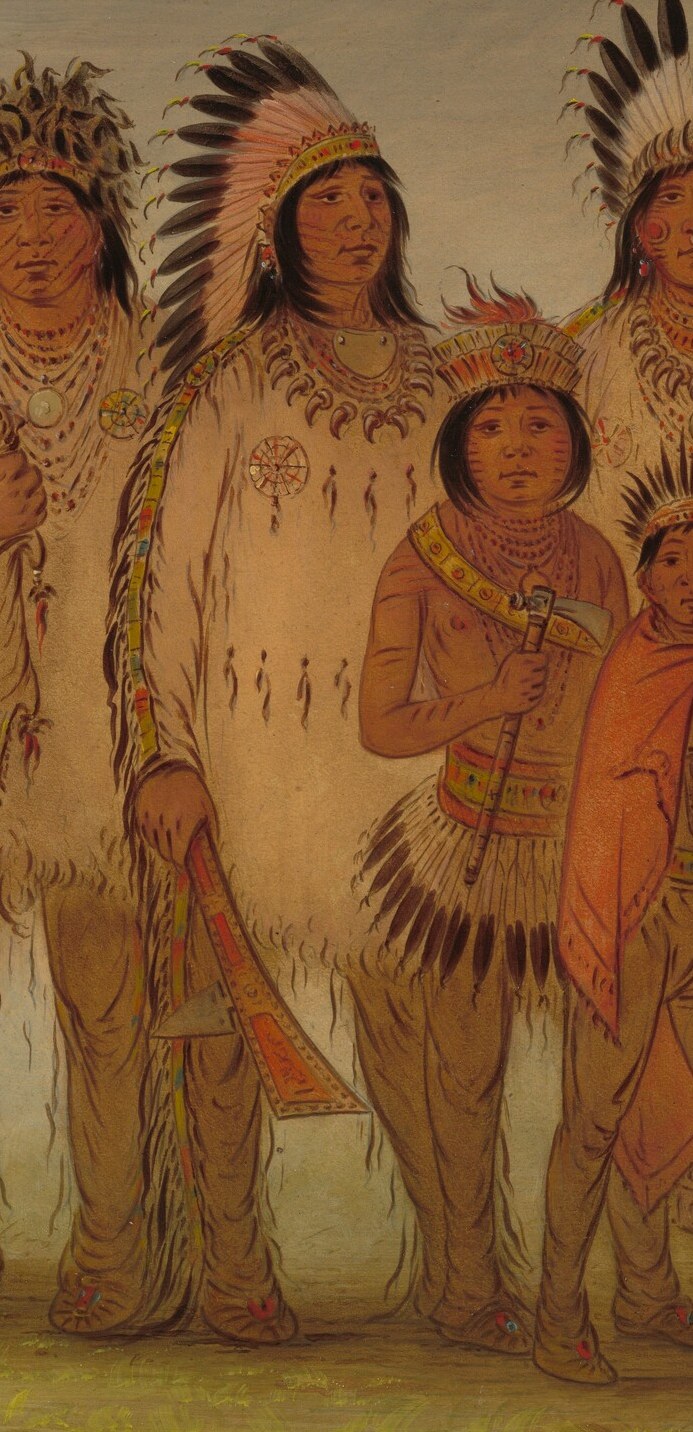
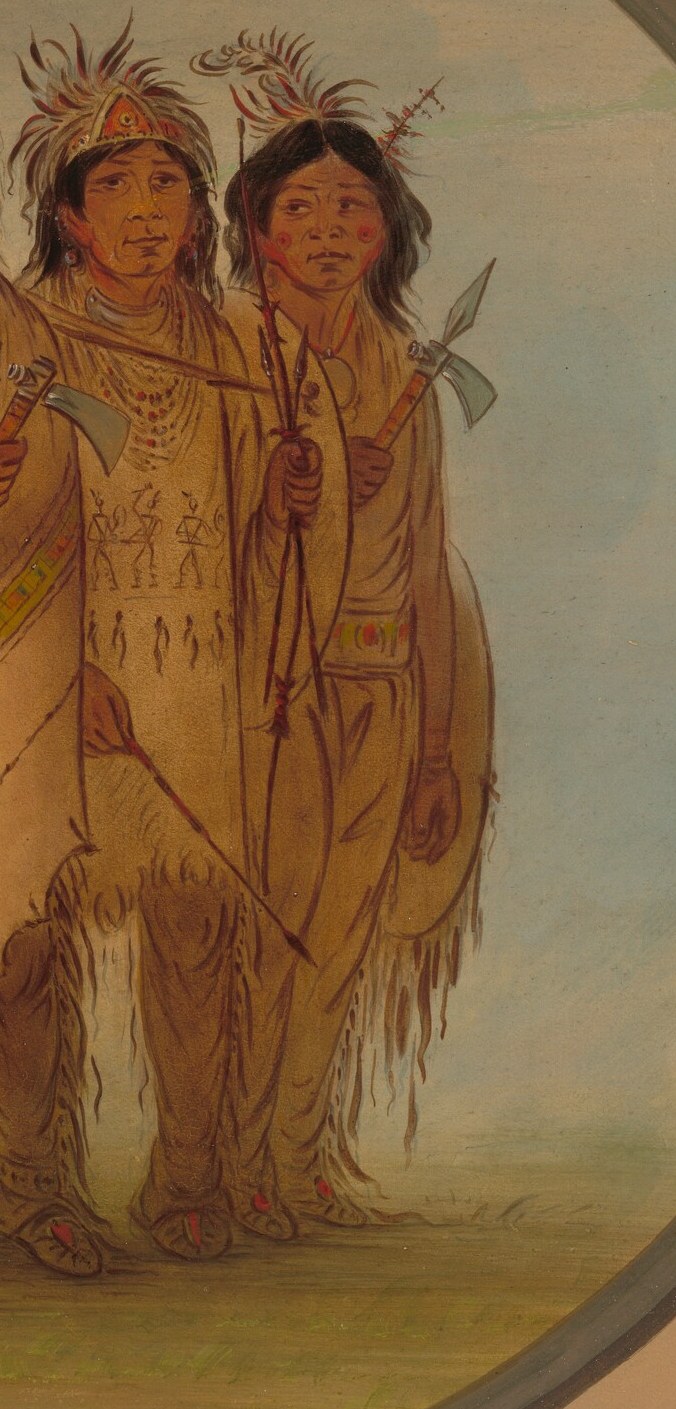
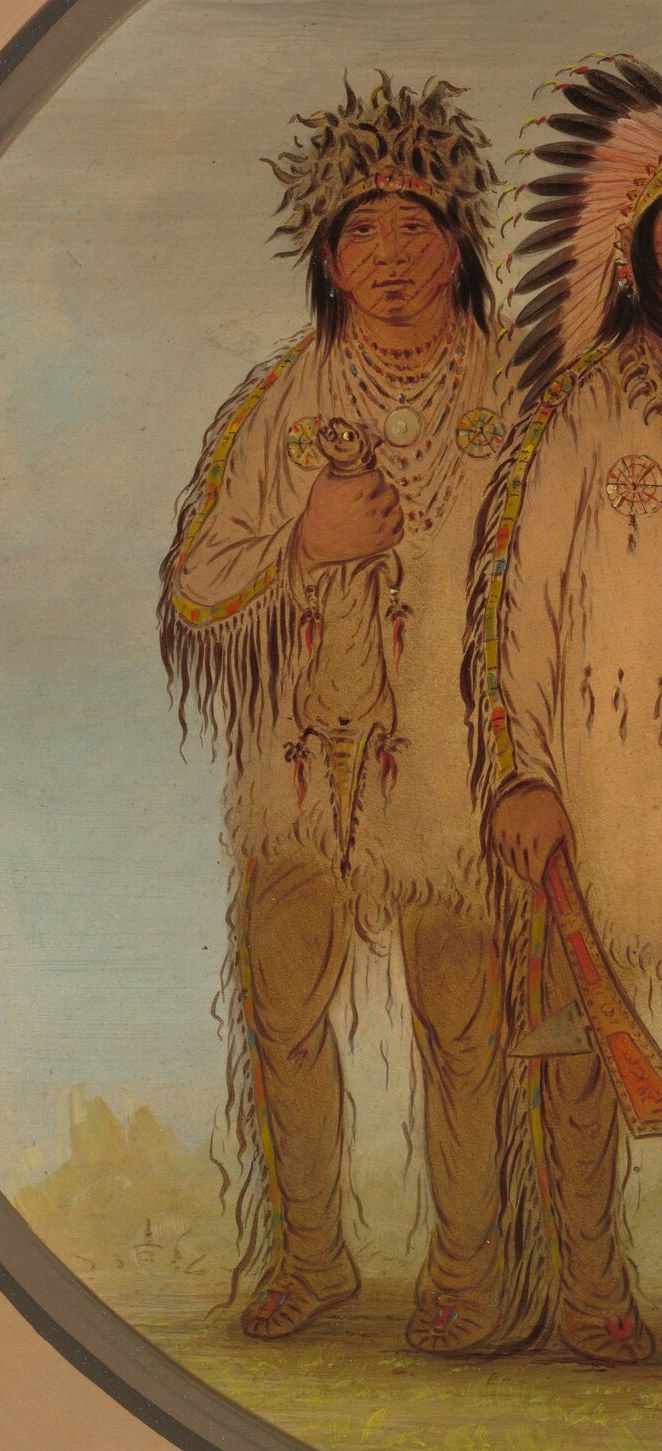
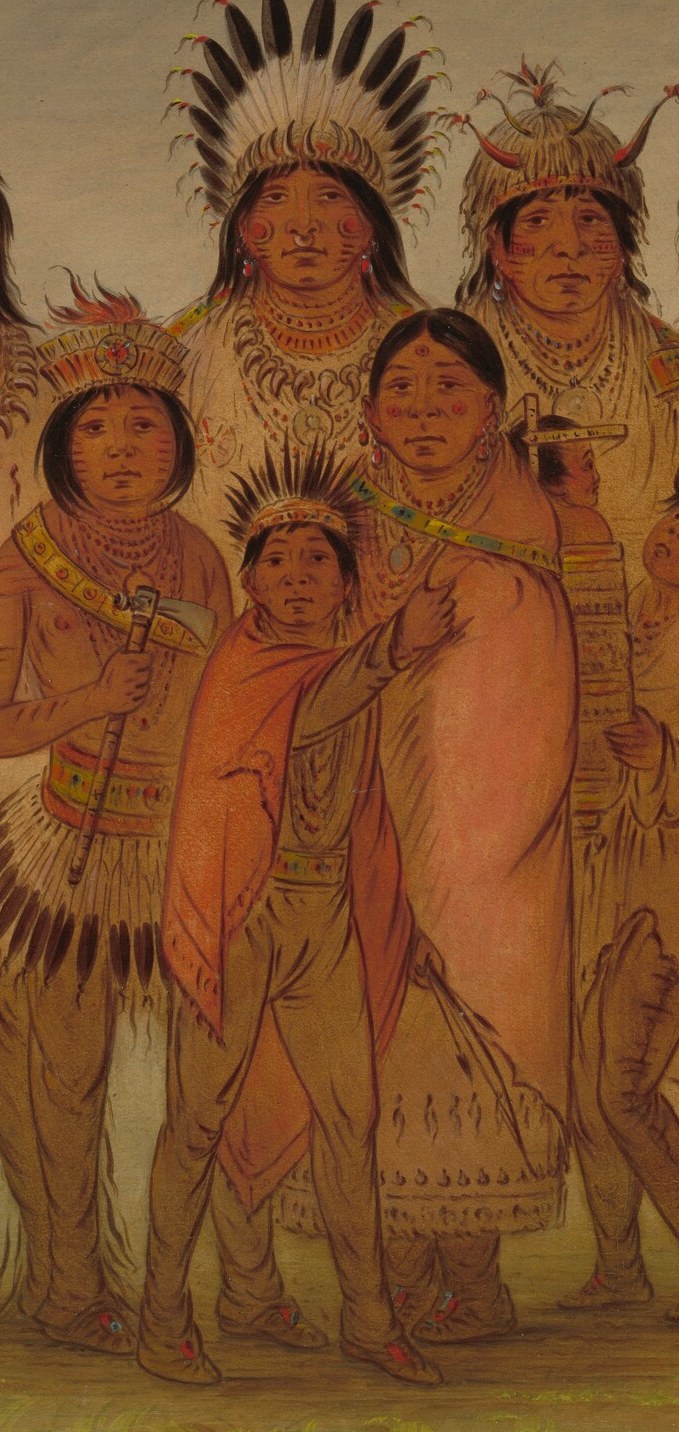
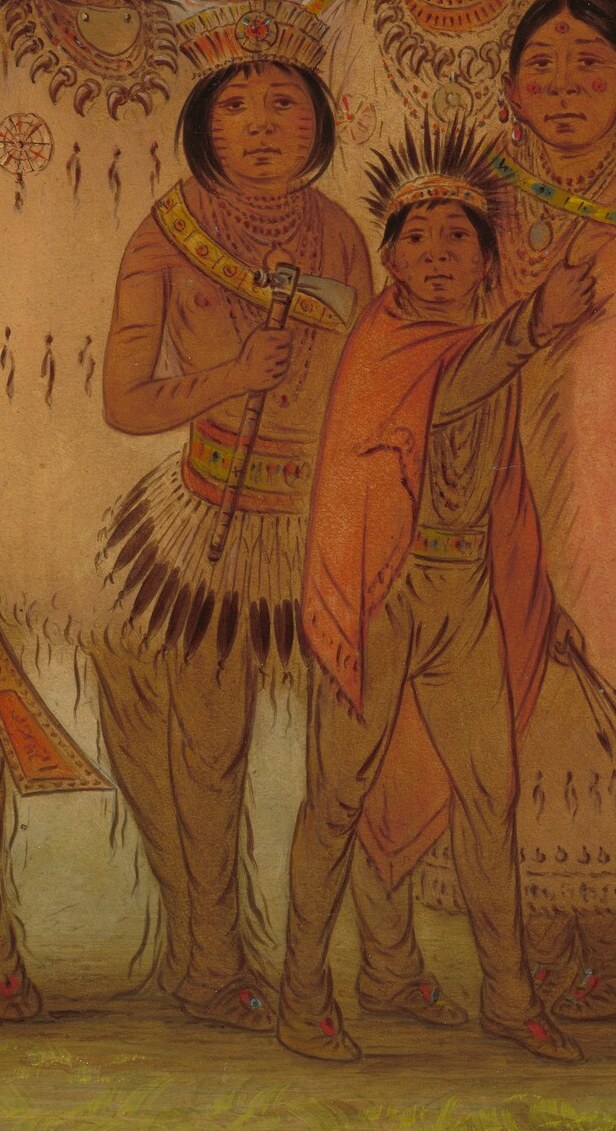
George Catlin's 1865 painting, "Ojibbeway Indians in Paris," documents a significant moment when Ojibwe individuals visited Europe. This oil on card, now at the Smithsonian American Art Museum, captures their presence and cultural identity in an unfamiliar setting.
Observe the rich details in their attire, from the intricate beadwork on necklaces to the feathered headdresses. Each element, like the spear carried by one man, speaks to their traditional way of life and craftsmanship.
Catlin, an American lawyer and painter, dedicated much of his career to documenting Native American life, particularly the Plains Indians, during his expeditions in the American West in the 1830s. This later work reflects his continued commitment to portraiture, offering a historical record of Indigenous peoples for audiences.
This painting is a window into a specific cultural exchange. What do you notice first about their expressions?
Details
Transcript
In 1865, a group of Ojibwe people traveled to Europe. This American painter captured them, in Paris, wearing traditional regalia. Look at the intricate beadwork on this woman's necklace. And this man carries a feathered spear, a symbol of defense. His headdress suggests leadership and cultural pride. The artist specialized in documenting Native American life in America. But these portraits emphasize their identity in an unfamiliar setting.