Surprised, or Infidelity Found Out by Christian Wilhelm Ernst Dietrich
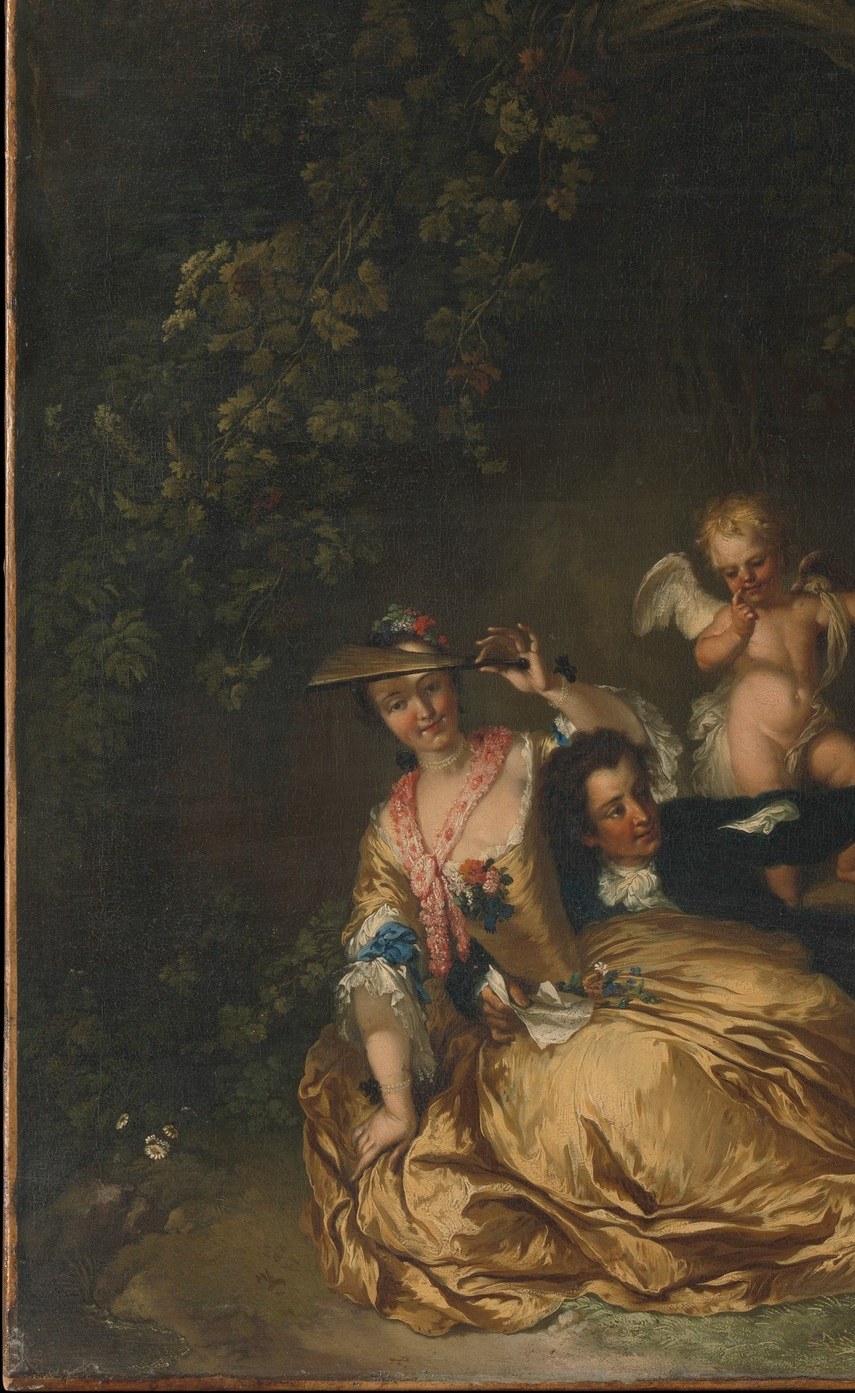
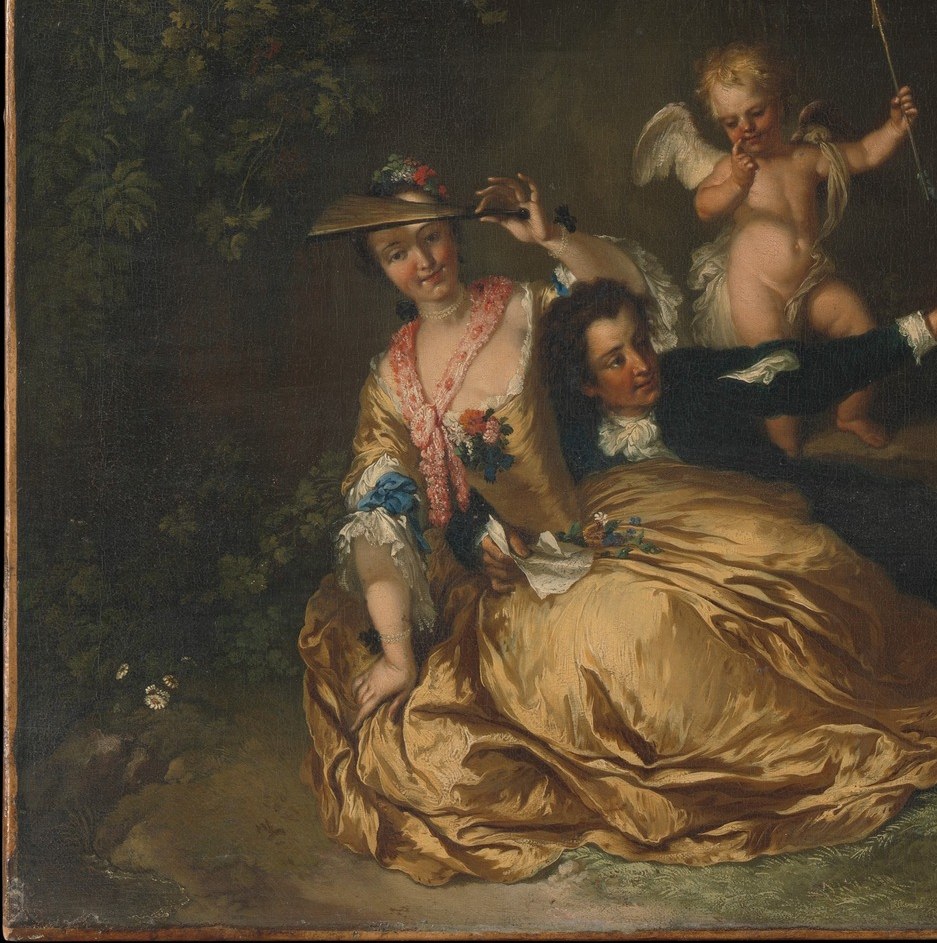
Christian Wilhelm Ernst Dietrich painted Surprised, or Infidelity Found Out in 1753, and honestly, the man did not leave much to the imagination with that title. It is a Rococo stage play in oils, set in a dusky garden, where a woman has just discovered her partner’s secret. The painting is in the collection of The Metropolitan Museum of Art.
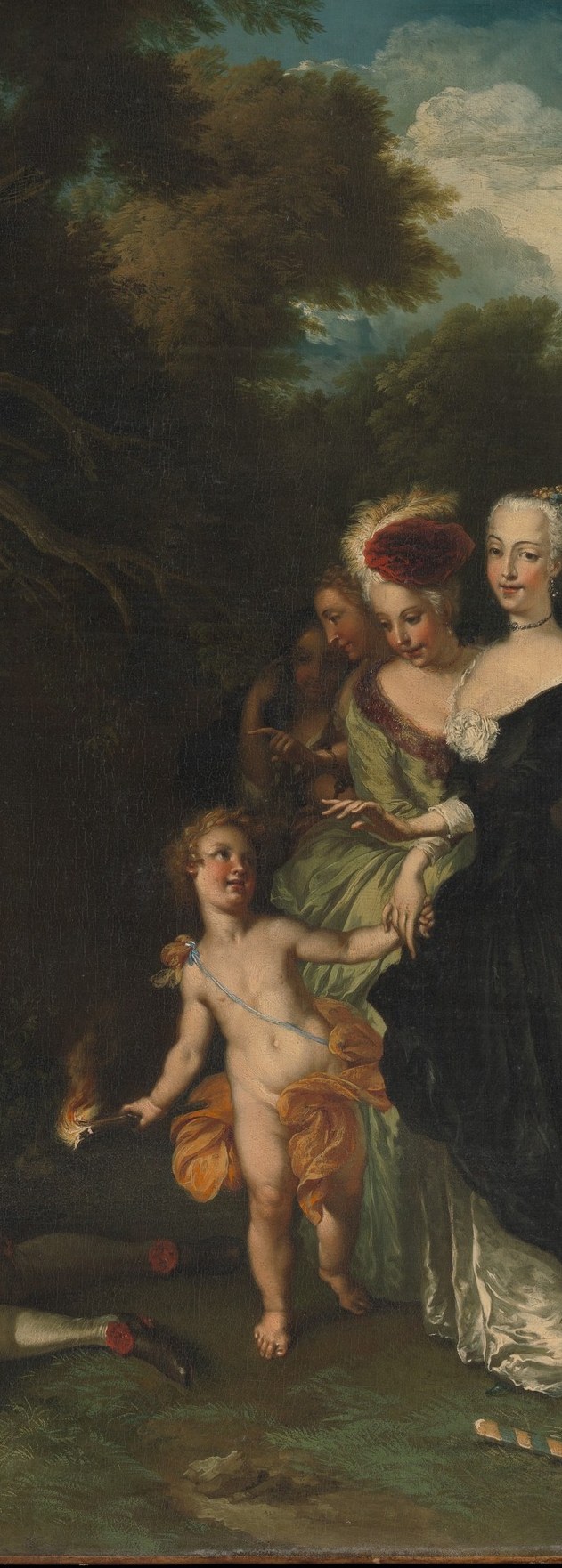
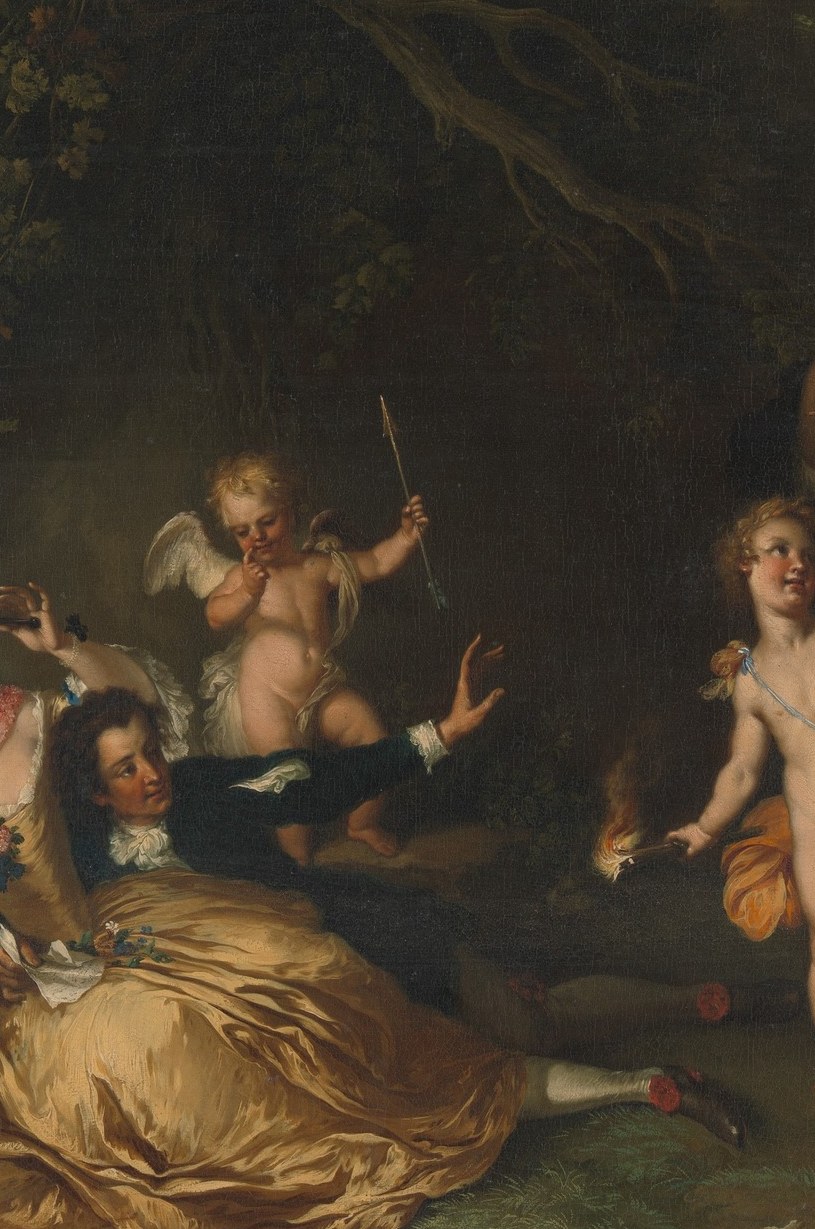
The eye goes straight to the woman in the golden dress, collapsed on the ground with her luxurious fabric pooling around her. Her face carries the shock of the whole scene. Standing rigidly upright is another woman in formal pale dress, she is the wronged party, and her posture is the moral verdict. A cluster of winged putti in the center do the dirty work, physically revealing the affair. They act as agents of gossip, not as sweet cherubs.
Dietrich was a German painter and court administrator who worked mostly for Augustus III in Dresden. He was famous in his lifetime for being able to paint in the exact style of Rembrandt, Watteau, or Salvator Rosa on command. The problem was he never developed a single style of his own. He was a brilliant copyist who could channel any master, and this Rococo pastoral scene shows him channeling the French taste of the moment.
A canvas where the title, the gestures, and the faces all tell one loud, damning story. If the garden gate could talk, it would probably just nod along.
Details
Transcript
The title gives the whole game away: Infidelity Found Out. A woman in gold has collapsed. Her billowing dress spills across the floor. Look at her face. This is a woman caught in the middle of a live scandal. Standing over her, another woman in icy formal dress. She is not surprised. Three winged putti drive the whole ugly revelation. They are not just decoration. Dietrich worked for the Dresden court, but he was a master imitator without a signature style. A critic once wrote that Dietrich painted himself into a corner by copying everyone else.