Philip IV (1605–1665) in Parade Armor by Gaspar de Crayer
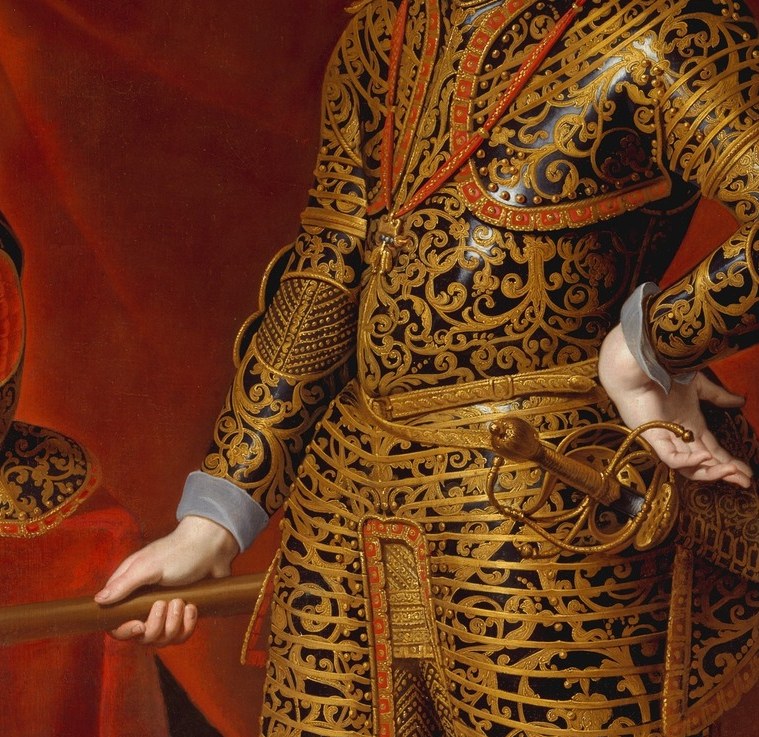
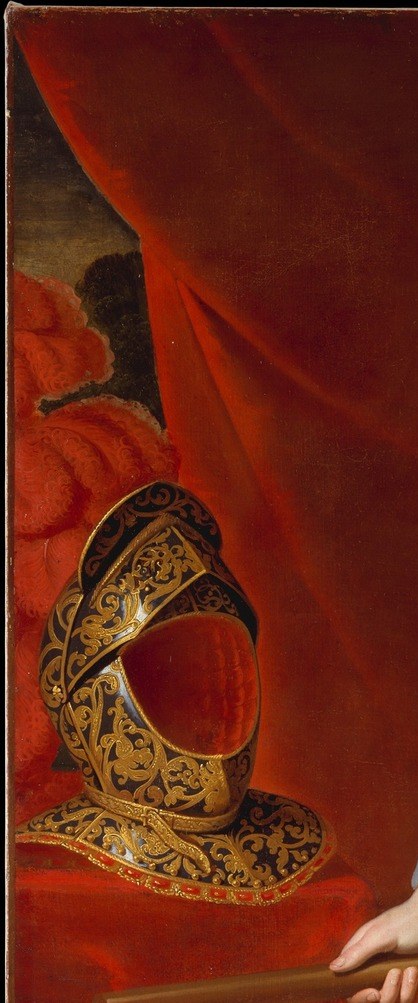
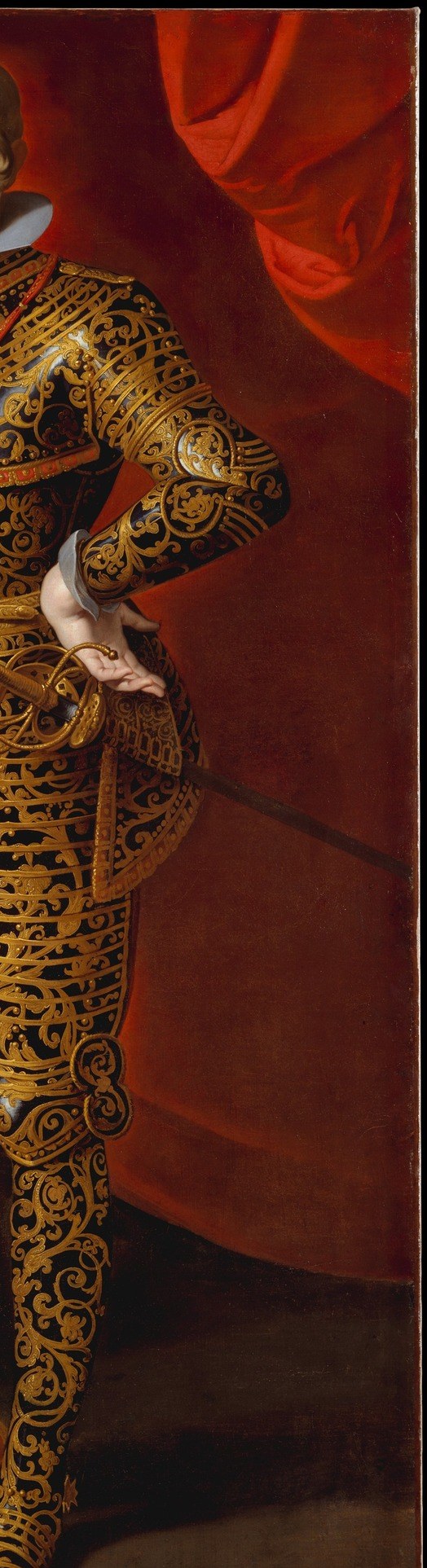
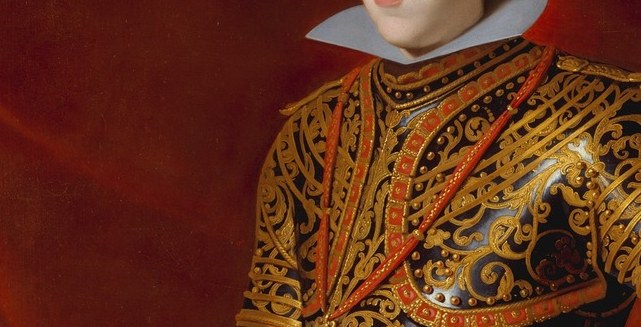
This is "Philip IV in Parade Armor" by Gaspar de Crayer, painted in 1628 and held at The Metropolitan Museum of Art. It looks at first like a standard royal portrait, but the armor is the real message. Every surface carries gilded etching that repays the closest possible look.
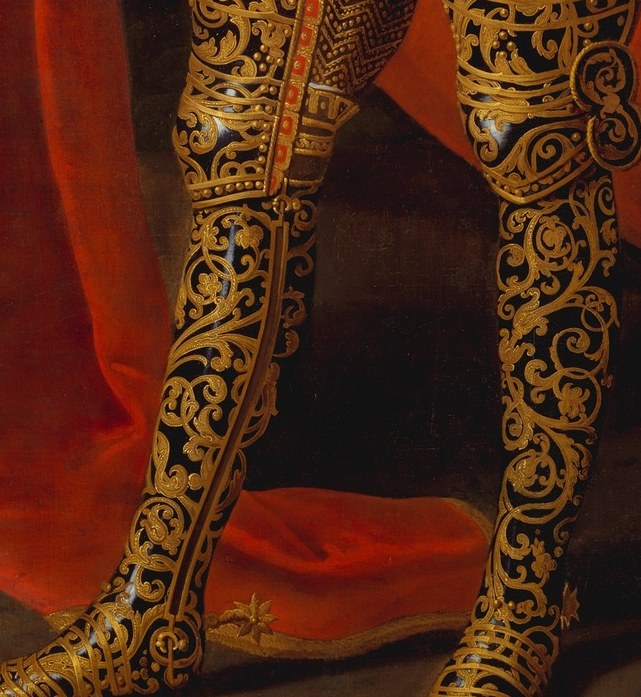
When you zoom in, the dense blackwork on the breastplate reveals Habsburg heraldry, eagles and emblems embedded in the scrollwork. The same gilded pattern runs unbroken down the greaves, confirming this was pure parade armor, too precious and too laden with symbolism for any actual battlefield.
De Crayer was the court painter to the governors of the Southern Netherlands and a key figure in spreading Rubens's style across Flanders. This portrait shows him handling one of the hardest assignments in oil painting: convincing jointed, reflective steel. The armor's overlapping plates catch light at slightly different angles, and the gilded inlay has to read as gold catching its own separate light.
Look also at the dark shape in the upper-left corner. It appears empty, but close examination suggests an architectural element, a column base or pilaster, that has nearly vanished under centuries of darkened varnish. The painting may still hold secrets a cleaning would uncover.
Details
Transcript
Look at the armor. Not the king, the armor. This is parade armor, too ornate for battle. Now zoom into that gilded etching. Inside the scrollwork: an eagle, the Habsburg emblem. The same etching runs uninterrupted down his greaves. And the dark void at the upper left? Not empty. It likely hides a column base, swallowed by darkened varnish.