Capriccio of a Harbor by Guardi, Francesco
Francesco Guardi’s "Capriccio of a Harbor," painted around 1760-1770, is not a depiction of a real Venetian port, but an imaginative "capriccio." This oil on canvas, characteristic of the Rococo period, blends architectural elements into an imagined, atmospheric scene.
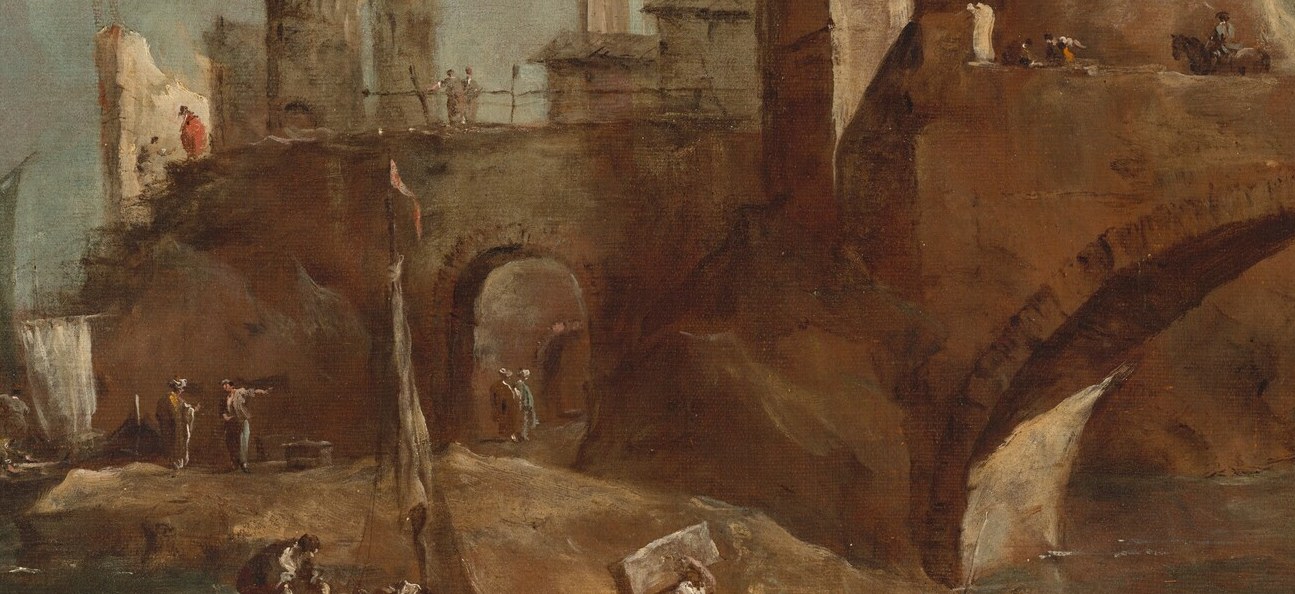
Observe the lively figures populating the quay and bridge; their small scale emphasizes the grandeur of the invented structures. Guardi's loose, gestural brushstrokes give the scene a vibrant, almost dreamlike quality, distinguishing his style from more detailed contemporary cityscapes.
Guardi, born into a noble Venetian family, initially collaborated on religious works before turning to these expressive vedute (cityscapes) after 1760. This painting exemplifies his later, more fluid approach, moving away from strict topographical accuracy towards a focus on mood and emotion.
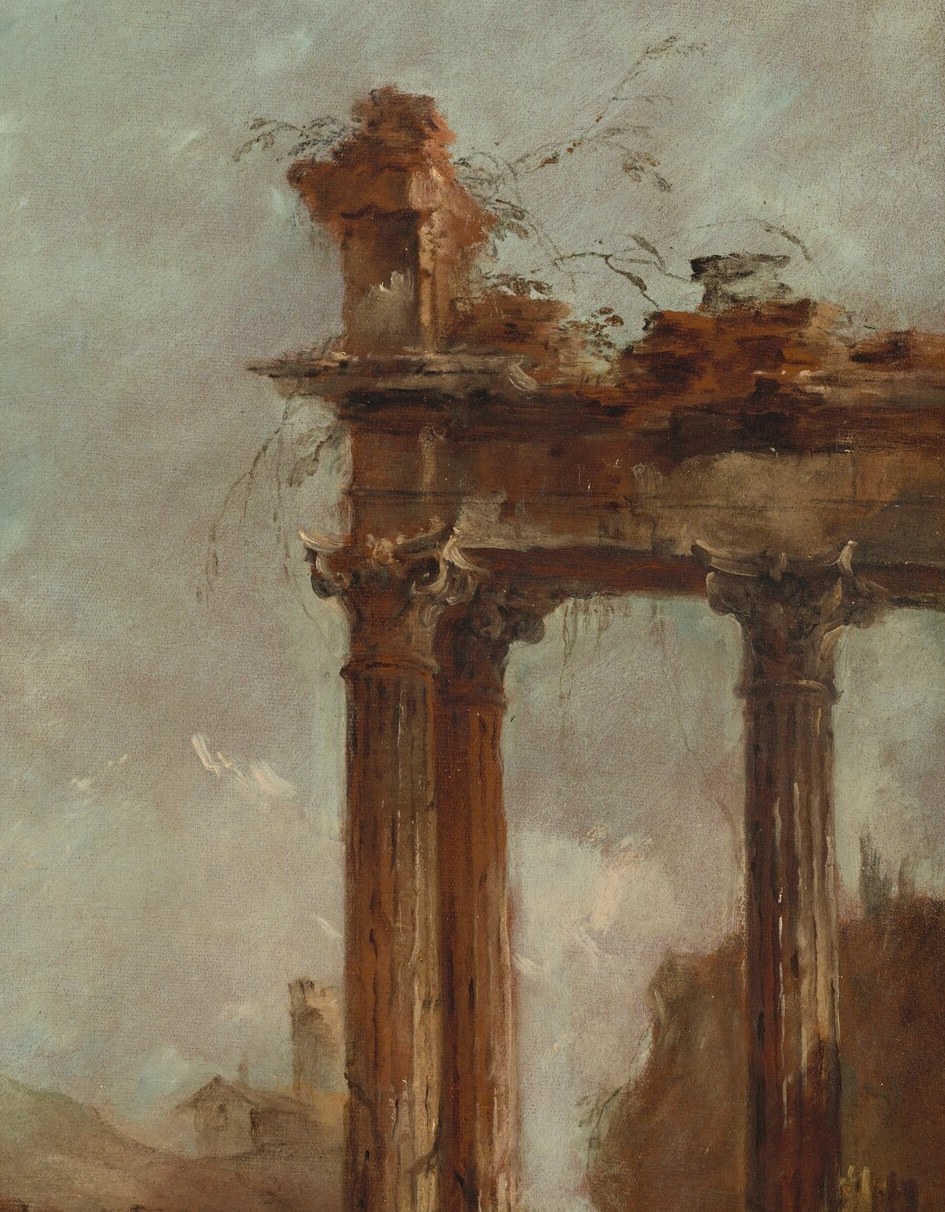
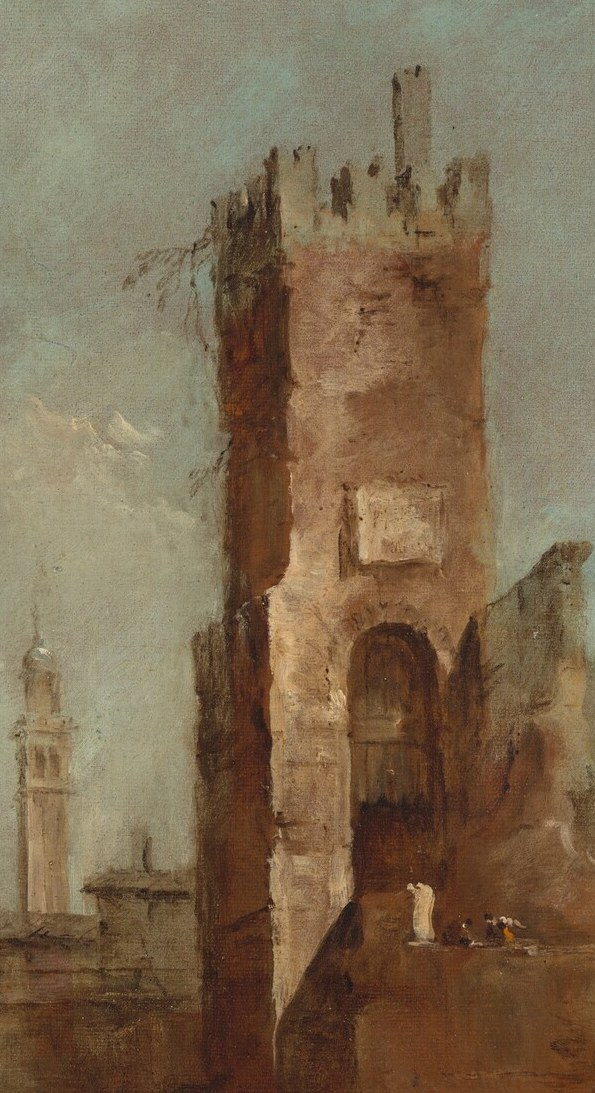
What details do you discover upon a closer look at Guardi's imagined world?
Details
Transcript
This Venetian harbor scene is not a real place. It's a capriccio, an imagined landscape. The painter invented these crumbling ruins and grand bridge. Look closely at the figures on the quay. Small, gestural strokes bring them to life. The artist specialized in these expressive cityscapes. His brushwork feels more fluid than precise.