The Burial of Saint Wenceslas by Master of Eggenburg
The Burial of Saint Wenceslas, painted by the Master of Eggenburg around 1496, hangs in The Metropolitan Museum of Art. It depicts a political murder transfigured into a holy death. Wenceslas I, Duke of Bohemia, was killed by his own brother in 935, and within decades he was venerated not only as a martyr who died for his Christian faith but as the eternal spiritual protector of the Bohemian state. This panel shows the moment his mortal body became an object of devotion.
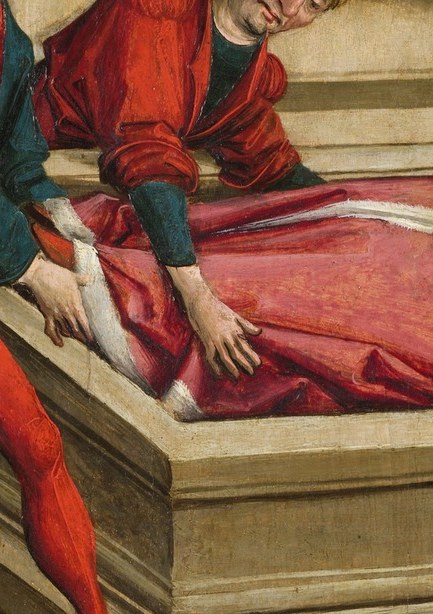
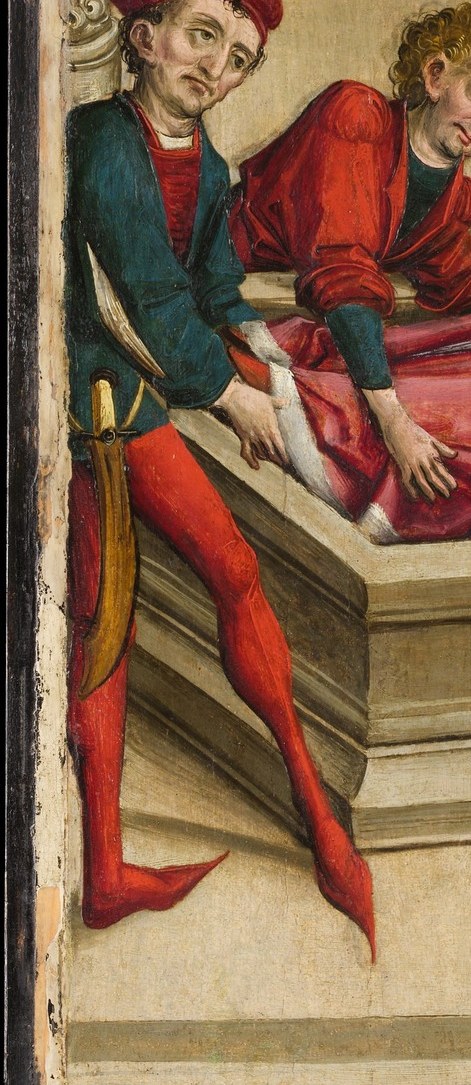
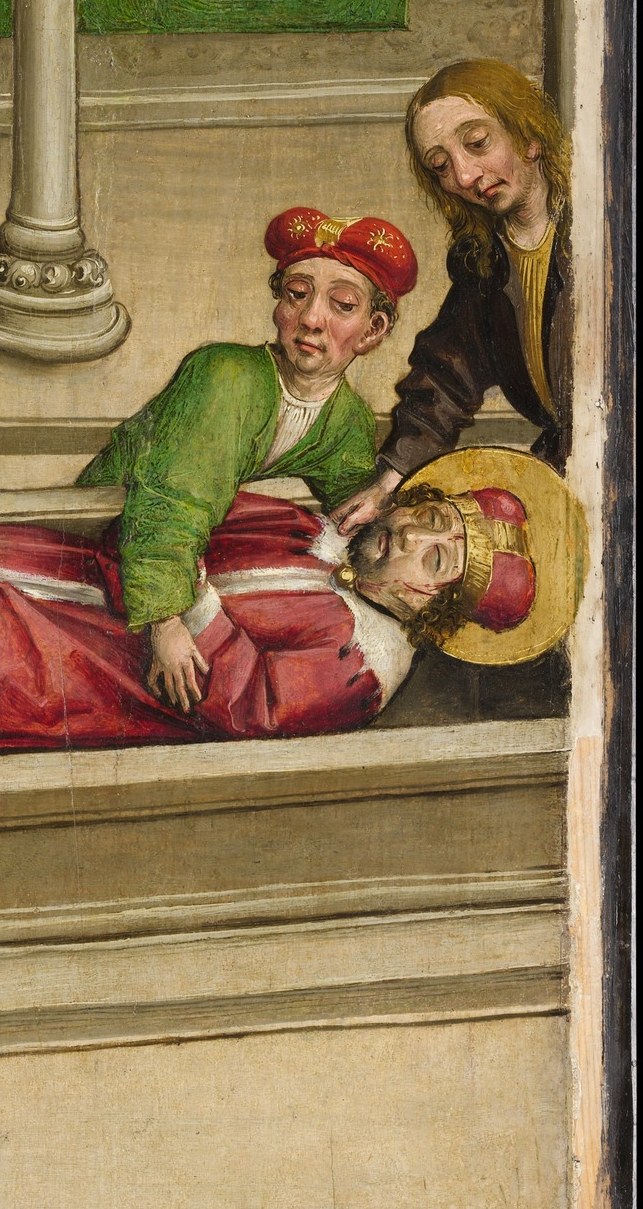
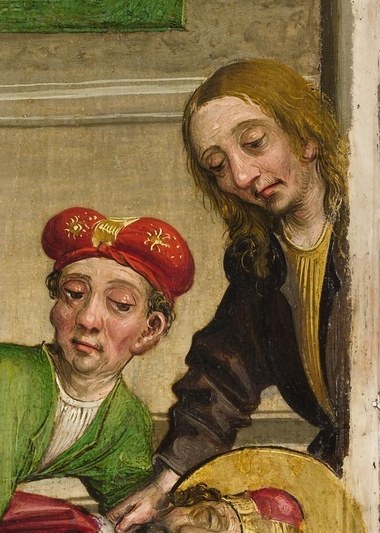
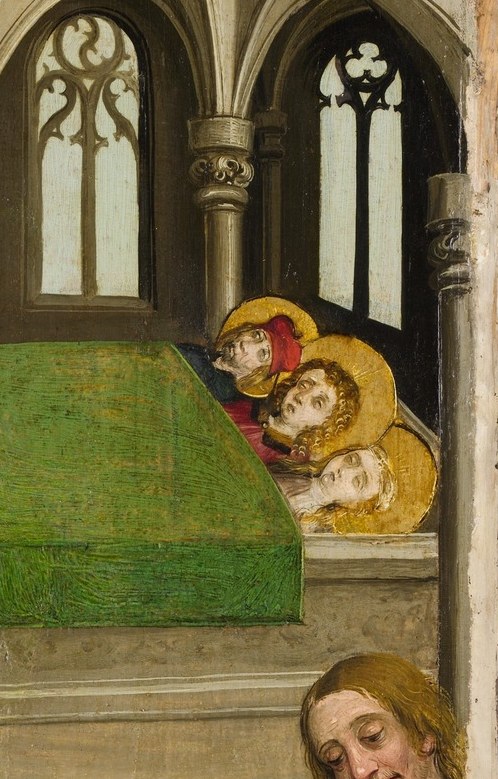
Look at the contrast between the two groups of mourners. At the saint's feet, a single attendant in vivid red hose bends low in intimate, personal grief. On the right, multiple faces are compressed into one tight cluster, a study in communal lamentation. The outermost witness stares forward, a classic Late Gothic device to draw you into the scene and make you a participant in the grief. Above them, the golden Bohemian lion signals that this is a state burial as much as a sacred vigil.
The painting belongs to the close of the fifteenth century, a time when the cult of Saint Wenceslas was central to Bohemian identity. The artist, whose real name is lost to us but who is identified through a body of work made in and around Eggenburg, renders the bedchamber as a sacred space through the Gothic arcade and the stone slab that transforms the deathbed into a tomb. The saint's red burial cloth carries a double meaning: the crimson of a martyr's blood and the royal dignity of a duke. By 1496, a saint's body was not just a memory; it was a relic, a physical link between a nation and its divine protector, and Wenceslas is shown being laid upon a stone platform that reads as an altar as much as a bier.
This is not a scene of quiet passing. It is a declaration that the murdered man belongs to his people now, and forever. What do you notice first when you look at the faces pressed together in the crowd?
Details
Transcript
A body dressed in red, ringed in gold. This is a duke, murdered by his brother in 935. A loyal attendant bends over his feet in private grief. While across the room, a crowd presses together, mourning as one. One man gazes out, asking you to witness this. The golden lion behind him is the emblem of Bohemia. Wenceslas was a duke first, and a saint second. His body rests on stone, already a relic.