Panel with the Birth of St. John the Baptist from Retable by Domingo Ram
A face watches from the darkness in a 15th-century Spanish altarpiece. This is the Birth of St. John the Baptist, painted in tempera and gold leaf by Domingo Ram around 1450.
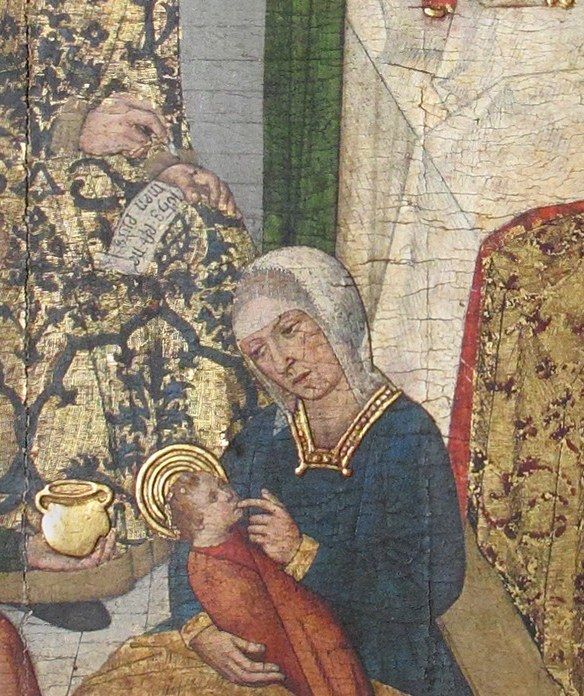
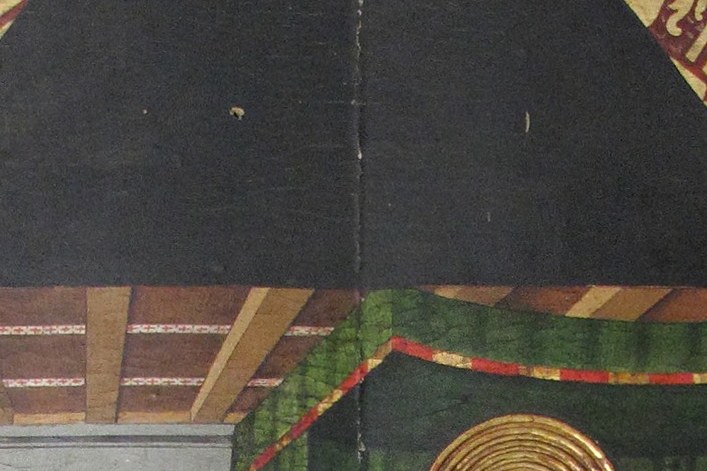
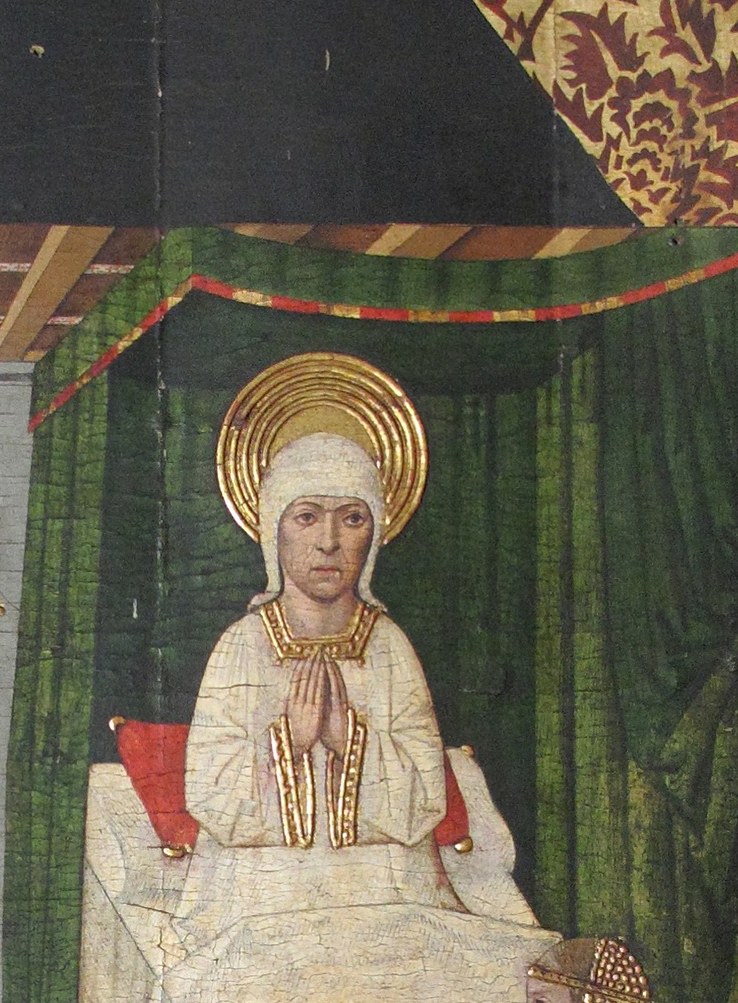
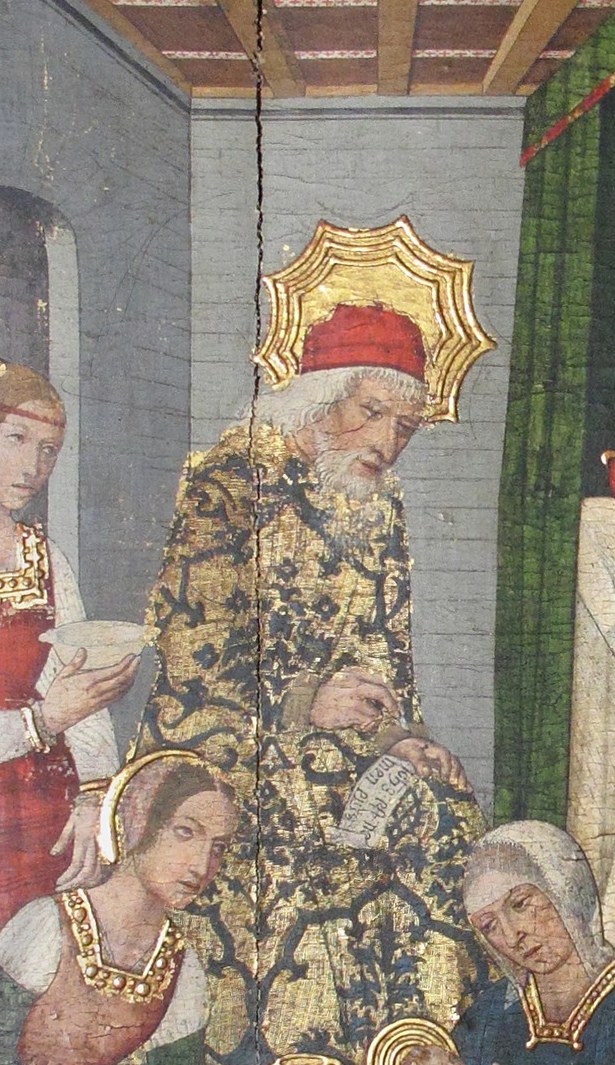
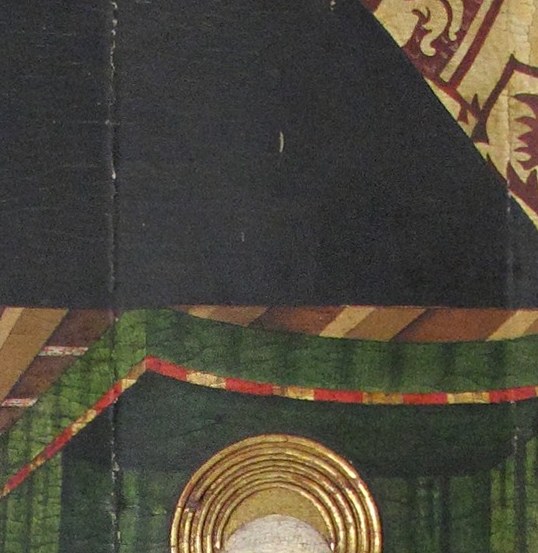
The panel shows the elderly Elizabeth seated in white with the haloed newborn presented to her, surrounded by richly dressed attendants. But the most arresting detail demands a second look. In the narrow recess between the red canopy and the green curtain behind Elizabeth, a shadowed face peers into the room, barely visible at normal scale.
Domingo Ram worked in Aragon during a period when altarpieces were the primary means of telling biblical stories to congregations who could not read. This panel once formed part of a larger retable, likely commissioned for a church, where each scene provided a visual focal point for devotion. The hidden observer may be a servant, a midwife, or simply the artist's quiet joke, a small figure tucked where few would notice.
What other figures might be hiding in the dark corners of this painted room?
Details
Transcript
A mother, a newborn, and a room of attendants. The infant John already wears a halo. Look into the gap between the canopy and the green curtain. A face is hiding there, watching from the dark. This panel was made for a cathedral altarpiece in Aragon.